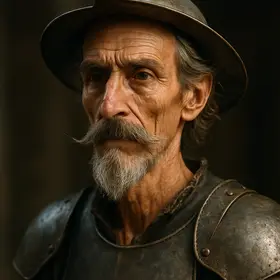
Don Quixote in Don Quixote
Protagonist
An aging country gentleman who renames himself Don Quixote and sets out as a knight-errant to right wrongs and defend honour.
Who is Don Quixote?
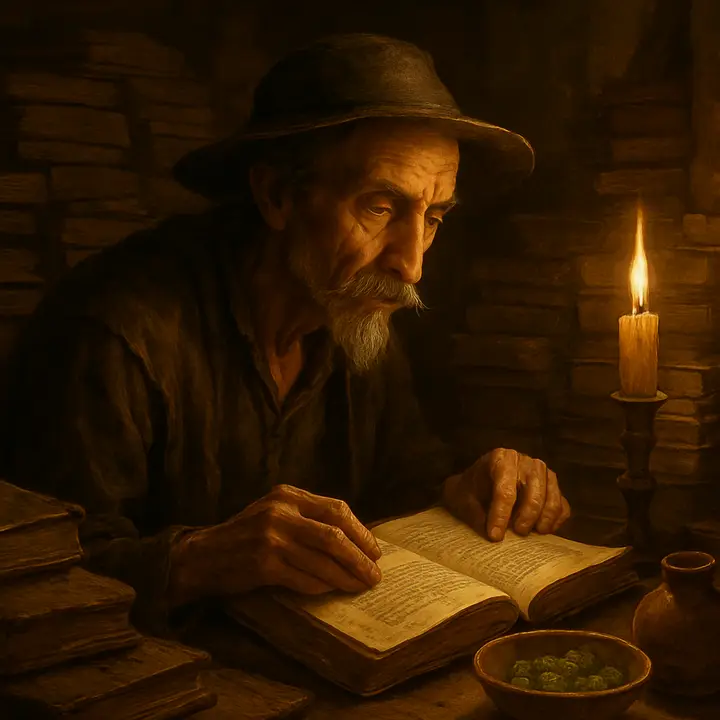
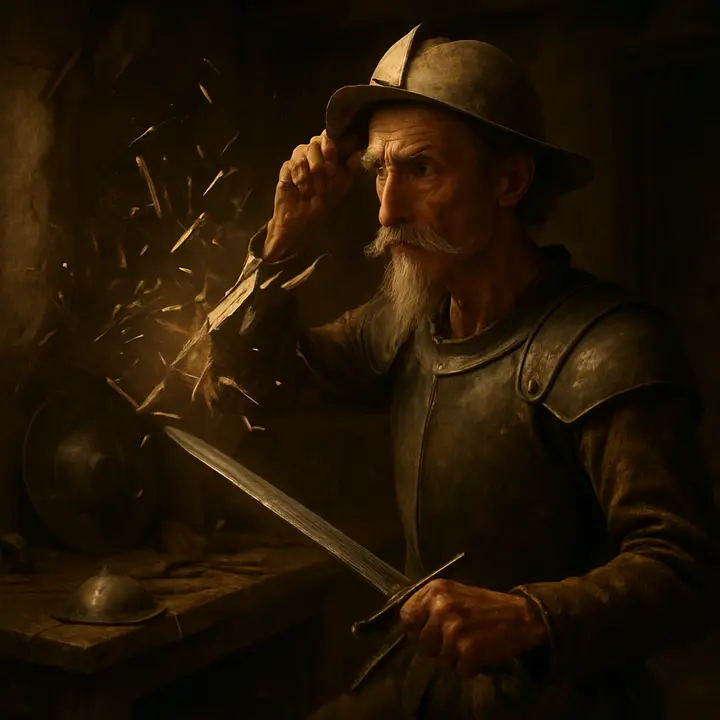
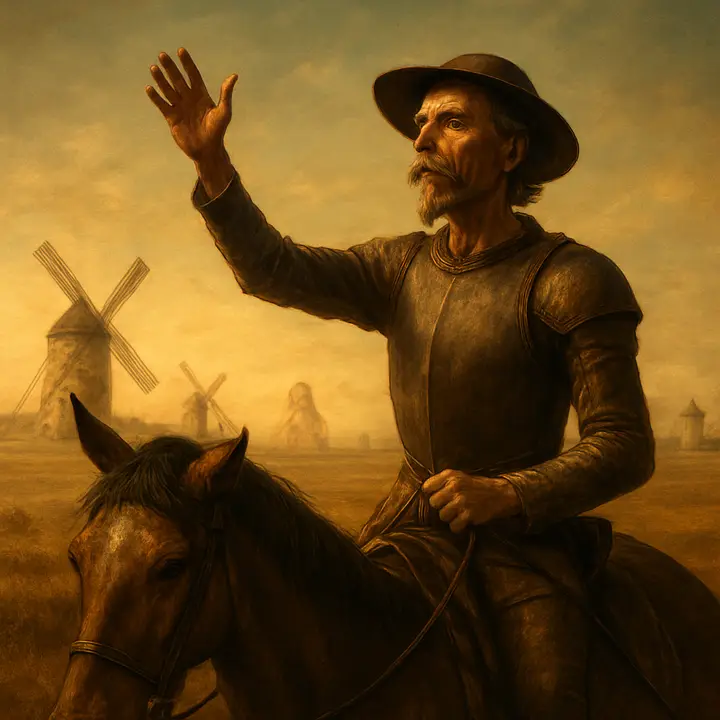
Don Quixote is a modest country gentleman of La Mancha who, obsessed with books of chivalry, remakes himself into a wandering knight-errant. Convinced that the romances are literal truth, he refurbishes ancestral armour, renames his horse Rocinante, and crowns a peasant woman as his lady, Dulcinea del Toboso. Setting out on repeated sallies, he interprets ordinary people and places as enchanted or heroic—mistaking inns for castles, windmills for giants, flocks for armies, and a barber’s basin for Mambrino’s helmet. His deeds alternate between genuine generosity (freeing galley slaves, attempting to defend the weak) and comic self-delusion that brings violence, humiliation, and intervention from friends. Don Quixote’s mission—pursuing chivalric honour and defending ladies—drives the narrative and produces debates about books, reality, and virtue as others (the curate, the barber, Sancho, and later the duke and duchess) respond by trying to cure, contain, or play with his madness. Throughout, his actions anchor the novel’s exploration of imagination, identity, and the ethical consequences of believing in heroic fictions.
In the book: Don Quixote is an aging country gentleman who, inspired by books of chivalry, remakes himself as a wandering knight-errant determined to right wrongs and defend the helpless. Accompanied by his practical squire, Sancho Panza, he transforms ordinary encounters into grand adventures, creating a comic yet poignant contrast between idealism and reality. His quest anchors the novel’s exploration of imagination, identity, and the power—and peril—of stories.
Personality
- Idealistic
- Declares himself a knight-errant and vows service to Dulcinea after refurbishing armour and renaming Rocinante (Ch.1–3).
- Delusional
- Mistakes windmills for giants and charges them, shattering his lance (Ch.8).
- Generous
- Forces Andrés’ master to promise wages and frees galley slaves, even when those freed later abuse him (Ch.4; Ch.22–23).
- Eloquent
- Gives long, reasoned defences of knight-errantry and discourses on arms and letters at inns and before hosts (Ch.38; Ch.32).
- Stubborn
- Refuses to admit ordinary explanations—insisting on enchantment when his books are hidden and when Dulcinea appears as a peasant (Ch.7; Ch.10 of Part I).
Character arc
From his first appearance as a book-obsessed gentleman who decides to become a knight-errant, Don Quixote remains committed to the chivalric identity he adopts. Early episodes show him inventing titles, performing a mock-knighting at an inn, and setting out with grand rhetoric (Ch.1–3). His second sally intensifies his public misreadings of the world—attacking windmills, intervening with traders and friars, and suffering beatings (Ch.8–11). Friends repeatedly try to restrain or cure him: his books are burned and his household walls up (Ch.5–7), Samson Carrasco later schemes to bring him home by disguise (Part II, Ch.14–15). Despite humiliations—being pelted by freed slaves, beaten by inn crowds, bound in a cage, and mocked at ducal entertainments—he persistently reinterprets defeats as enchantments or moral trials (Ch.22–23; Ch.46–49; Ch.34–35). Encounters with sympathetic hosts (Don Diego, the duke and duchess) reveal moments of lucid dignity in his rhetoric (Ch.17–18; Ch.31–33), yet his core identity does not abandon the chivalric delusion: he continues to act and speak as a knight to the end of the episodes covered, refusing mundane explanations and insisting on the moral necessity of his vocation.
Don Quixote in pictures
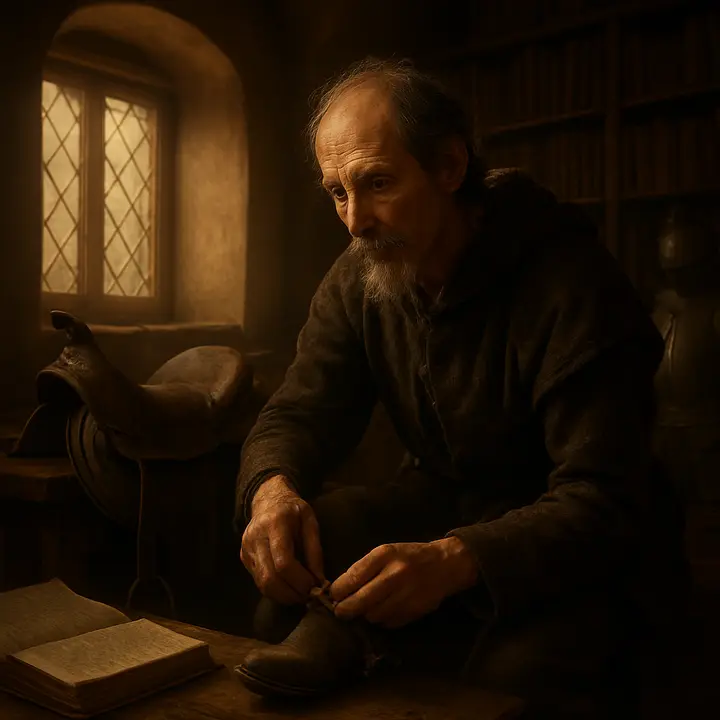
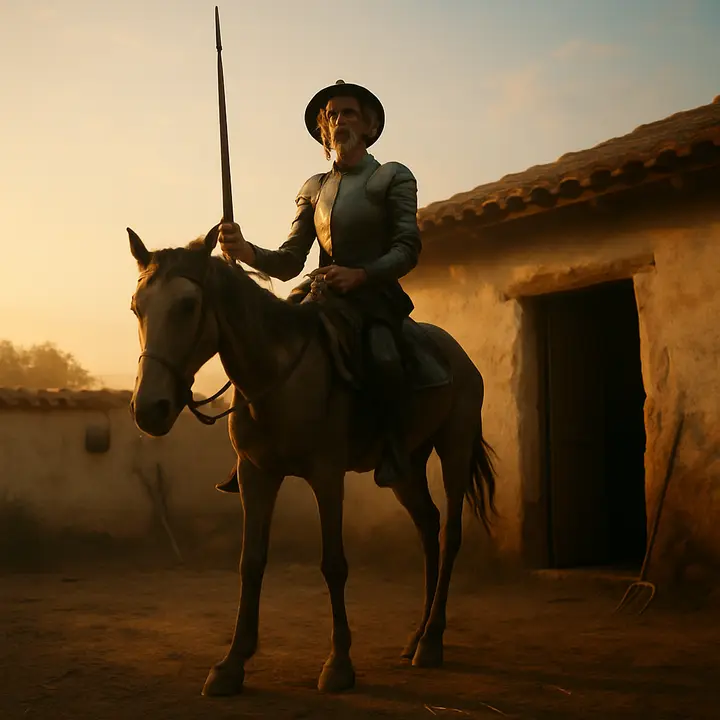
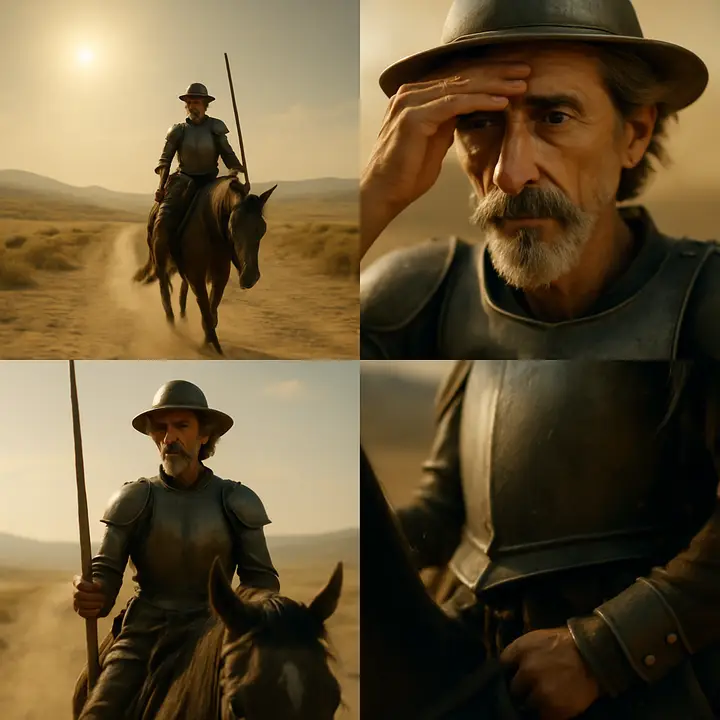
Relationships
- Sancho Panza Practical squire and foil: loyal, worldly, and promised an island; he alternates mockery and care for Don Quixote throughout their travels.
- The curate A friend who condemns the books that caused Don Quixote’s madness and who repeatedly tries to restrain or cure him (books burned, interventions).
- The barber Ally of the curate who helps conceal and correct Don Quixote’s excesses, participates in disguises and schemes to control him.
- Samson Carrasco A bachelor who teases and ultimately devises a ruse (as the Knight of the Mirrors) to force Don Quixote home by tricking him into submission.
- Dulcinea del Toboso Object of Don Quixote’s devotion—an idealized lady (Aldonza Lorenzo) whom he esteems despite her ordinary reality.
- The Duke A noble who, with the duchess, patronizes and stages elaborate entertainments that both flatter and mock Don Quixote’s knightly pretensions.
Quotes by Don Quixote
“My armour is my only wear, My only rest the fray.”
Chapter 2He declares a knight's identity and willingness to endure hardship, asserting chivalric values to the innkeeper.
“Your ladyships need not fly or fear any rudeness, for that it belongs not to the order of knighthood which I profess to offer to anyone, much less to highborn maidens as your appearance proclaims you to be.”
Chapter 2Don Quixote courteously addresses the two girls at the inn, mistaking them for noble ladies and revealing his delusional role-playing.
“Oh, never, surely, was there knight So served by hand of dame, As served was he, Don Quixote hight, When from his town he came;”
Chapter 2He recites a mock-ballad adapting chivalric verse to announce his name and to dramatize his arrival at the 'castle' (the inn).
“I looked for no less, my lord, from your High Magnificence," replied Don Quixote, "and I have to tell you that the boon I have asked and your liberality has granted is that you shall dub me knight to-morrow morning, and that to-night I shall watch my arms in the chapel of this your castle; thus to-morrow, as I have said, will be accomplished what I so much desire, enabling me lawfully to roam thro”
Chapter 3Don Quixote kneels and formally demands the innkeeper perform the knighting ceremony and allow him to keep vigil over his armour.
“Aid me, lady mine, in this the first encounter that presents itself to this breast which thou holdest in subjection; let not thy favour and protection fail me in this first jeopardy;”
Chapter 3He invokes his lady, Dulcinea, before striking the first carrier who touches his armour.
“All the world stand, unless all the world confess that in all the world there is no maiden fairer than the Empress of La Mancha, the peerless Dulcinea del Toboso.”
Chapter 4His grandiose demand to the traders that they acknowledge the unmatched beauty of his imagined lady.
Why Don Quixote matters
Don Quixote embodies the collision between imagination and reality; his persistent adoption of chivalric identity foregrounds themes about the power of stories to shape action, virtue, and selfhood. Through his idealism and frequent misinterpretations, the novel interrogates whether noble intent redeems folly, how society responds to eccentric devotion, and whether fiction can morally instruct. His behavior provokes debates about books, authority, and human dignity, making him the axis around which questions of perception, laughter, and sympathy revolve.
Chapters with Don Quixote
- INTRODUCTION › THE AUTHOR’S PREFACE
- Chapter 1
- Chapter 2
- Chapter 3
- Chapter 4
- Chapter 5
- Chapter 7
- Chapter 8
- Chapter 9
- Chapter 10
- Chapter 11
- Chapter 12
- Chapter 13
- Chapter 14
- Chapter 16
- Chapter 17
- Chapter 18
- Chapter 19
- Chapter 20
- Chapter 21
- Chapter 22
- Chapter 23
- Chapter 24
- Chapter 25
- Chapter 26
- Chapter 27
- Chapter 29
- Chapter 30
- Chapter 31
- Chapter 32
- Chapter 35
- Chapter 36
- Chapter 37
- Chapter 38
- Chapter 42
- Chapter 43
- Chapter 44
- Chapter 45
- Chapter 46
- Chapter 47
- Chapter 48
- Chapter 49
- Chapter 50
- Chapter 52
- The Author’s Preface
- Chapter 1
- Chapter 2
- Chapter 3
- Chapter 4
- Chapter 5
- Chapter 6
- Chapter 7
- Chapter 8
- Chapter 9
- Chapter 10
- Chapter 11
- Chapter 12
- Chapter 14
- Chapter 15
- Chapter 16
- Chapter 17
- Chapter 18
- Chapter 19
- Chapter 20
- Chapter 21
- Chapter 22
- Chapter 23
- Chapter 24
- Chapter 25
- Chapter 26
- Chapter 27
- Chapter 28
- Chapter 29
- Chapter 30
- Chapter 31
- Chapter 32
- Chapter 33
- Chapter 34
- Chapter 35
- Chapter 36
- Chapter 37
- Chapter 38
- Chapter 39
- Chapter 40
- Chapter 41
- Chapter 42
- Chapter 43
- Chapter 44
- Chapter 45
- Chapter 46
- Chapter 47
- Chapter 48
- Chapter 50
- Chapter 51
- Chapter 52
- Chapter 53
- Chapter 54
- Chapter 55
- Chapter 56
- Chapter 57
- Chapter 58
- Chapter 59
- Chapter 60
- Chapter 61
- Chapter 62
- Chapter 63
- Chapter 64
- Chapter 65
- Chapter 66
- Chapter 67
- Chapter 68
- Chapter 69
- Chapter 70
- Chapter 71
- Chapter 72
- Chapter 73
- Chapter 74
More Don Quixote characters
 Sancho PanzaMajor character
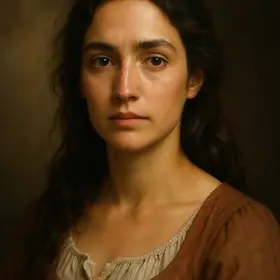 Dulcinea del TobosoMinor character
- RRocinanteMajor character
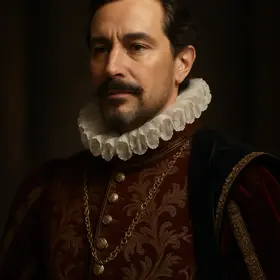 The DukeMajor character
- DDappleMinor character
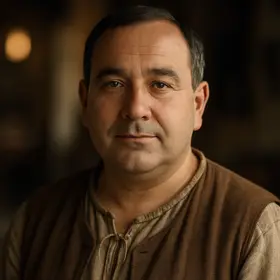 The BarberMajor character
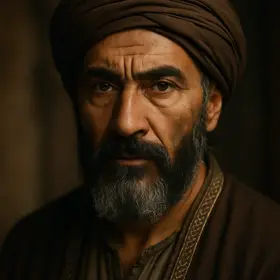 Cide Hamete BenengeliNarrator
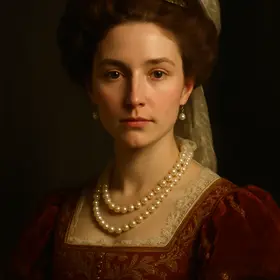 The DuchessMajor character
All chapter summaries ›Characters ›
Read Don Quixote illustrated
Every scene in these notes comes from the Book2Life reader, where the full public-domain text is illustrated as you read, with character portraits and narration. Free in your browser, on iPhone and on Android.