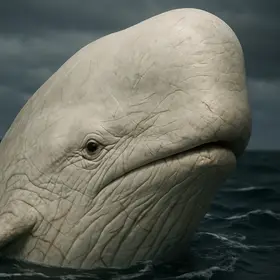
Moby Dick in Moby-Dick
Antagonist
The colossal white sperm whale whose inscrutable, violent presence becomes the Pequod’s obsessive quarry and the focus of Ahab’s vengeance.
Who is Moby Dick?
Moby Dick appears as a legendary, almost supernatural white sperm whale whose distinctive injuries and whiteness mark him in sailors’ lore. Described by Ahab and recognized by the harpooneers, the whale functions less as a natural animal and more as a charged symbol around which rumor, dread, and ritual crystallize. He repeatedly eludes capture, casts eerie spouts that lure and unnerve the Pequod, and in direct encounters smashes boats, mauls men, cripples ships, and ultimately drives the climactic confrontations. The whale’s actions—biting a boat to trap Ahab, tearing boats and fouling lines, and finally battering the Pequod—produce the physical and moral testing of Ahab and his crew. Throughout the chapters in which he appears, Moby Dick provokes obsession, reveals the limits of human calculation, and transforms ordinary whaling into a fatal, metaphysical chase led by Ahab’s monomania.
In the book: Moby Dick is the legendary White Whale whose singular presence exerts a magnetic, almost mythic pull on the narrative, turning a whaling voyage into a relentless pursuit. More symbol than creature, he embodies nature’s vast power and inscrutability, provoking human obsession, fear, and defiance. His role anchors the novel’s central conflicts—man versus nature, free will versus fate—and propels the crew of the Pequod into a confrontation that tests the limits of purpose and madness without relying on simple villainy.
Personality
- Inscrutable
- Ishmael and Ahab repeatedly insist the whale’s motives and nature are unknowable, and his eluding of the midnight spout (Chapter 51) amplifies that mystery.
- Formidable
- He snaps and smashes boats—biting Ahab’s cedar boat in Chapter 133 and later wrecking multiple boats and fouling lines in Chapters 134–135.
- Symbolic
- Ishmael theorizes about the whiteness of the whale as a source of existential dread in Chapter 42, turning the animal into a cultural and metaphysical emblem.
- Relentless
- Across several chase days (Chapters 133–135) the whale repeatedly attacks and refuses to be subdued, driving the Pequod into escalating violence.
- Cataclysmic
- In Chapter 135 Moby Dick’s final assaults open seams in the Pequod and precipitate the ship’s destruction and sinking.
Character arc
Moby Dick’s presence in the narrative is consistent rather than developmental: he appears and reappears as a force that resists explanation or change. First invoked by description (Chapter 36) and by rumor (Chapter 41), he acquires an almost mythic whiteness (Chapter 42) and becomes the object of Ahab’s mapped pursuit (Chapter 44). He manifests intermittently—casting spirit-like spouts (Chapter 51), surfacing as a monstrous living squid is mistaken for him (Chapter 59), and later appearing in direct, violent encounters during the three days of chase (Chapters 133–135). Rather than undergoing transformation, the whale functions as an unchanging principle: inscrutable, powerful, and implacable. His actions escalate in intensity—elusive sightings give way to physical attacks that first wound boats, then slaughter men and finally destroy the Pequod. In that sense his arc is one of increasing consequence: his static, inscrutable nature drives a rising series of confrontations that culminate in catastrophic resolution without revealing motive or yielding to human attempts to master him.
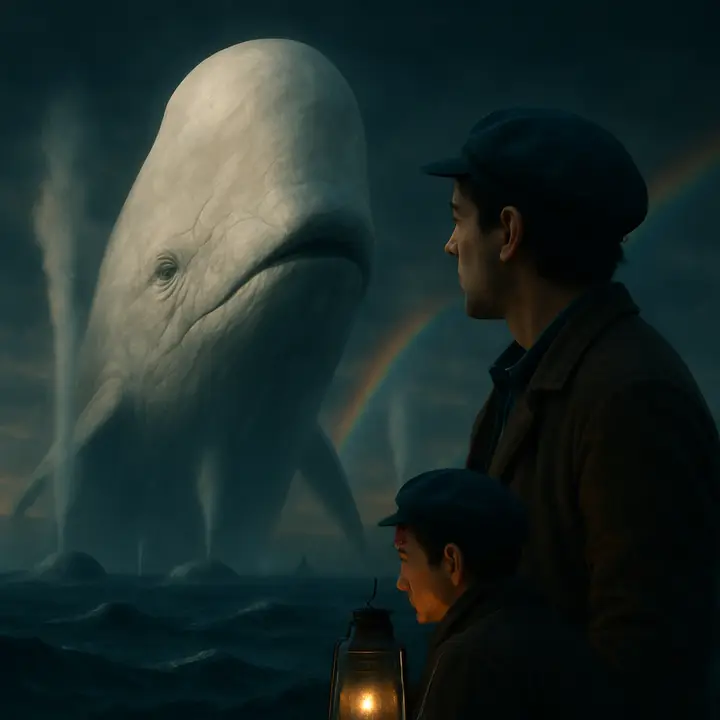
Moby Dick in pictures
Relationships
- Ahab Primary antagonist to Ahab’s monomaniacal pursuit; Ahab projects vengeance and metaphysical meaning onto the whale.
- Ishmael Object of Ishmael’s reflection and essayistic meditation; Ishmael analyzes the whale’s whiteness and the cultural meanings attached to him.
- Tashtego One of the harpooneers who recognizes the whale from Ahab’s description and participates in the physical chases against him.
- Fedallah Linked indirectly through Ahab’s secret hunt and the Parsee’s eventual death entangled with the whale during the final chases.
- Starbuck Moby Dick becomes the moral focus of Starbuck’s opposition to Ahab’s vengeance and the source of Starbuck’s dread and resistance.
- Pequod The ship becomes the whale’s arena: Moby Dick’s attacks culminate in the vessel’s damage and ultimate sinking.
Why Moby Dick matters
Moby Dick embodies the novel’s central conflicts: man versus nature, the futility of absolute vengeance, and the limits of human knowledge. His whiteness and inscrutability provoke philosophical and religious reflection, allowing Ishmael to explore terror, symbolism, and cultural meaning. As an antagonistic force, he externalizes Ahab’s internal rage and tests the crew’s loyalties and moral limits; as an unemotional natural power, he undermines human attempts to ascribe clear motive or justice to catastrophic events. The whale’s unchanging, destructive presence thus crystallizes Melville’s inquiry into obsession, fate, and the ambiguous boundary between personified evil and indifferent nature.
Chapters with Moby Dick
More Moby-Dick characters
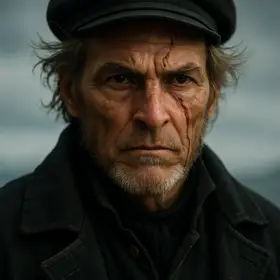 Ahab
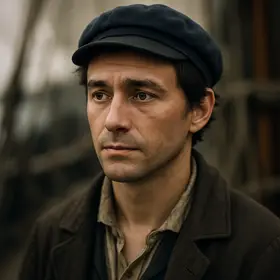 Ishmael
 Stubb
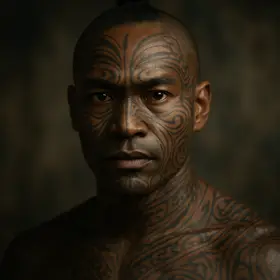 Queequeg
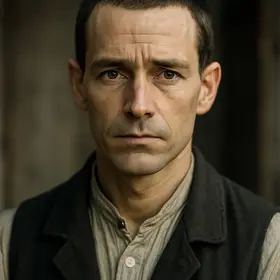 Starbuck
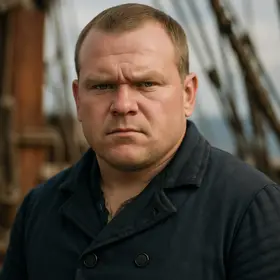 Flask
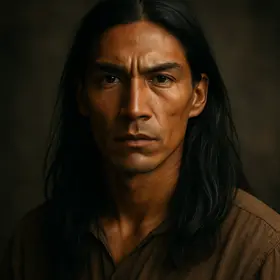 Tashtego
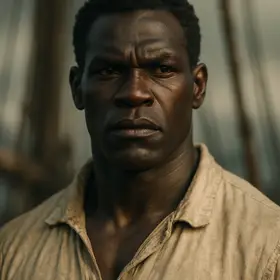 Daggoo
All chapter summaries ›Characters ›
Read Moby-Dick illustrated
Every scene in these notes comes from the Book2Life reader, where the full public-domain text is illustrated as you read, with character portraits and narration. Free in your browser, on iPhone and on Android.