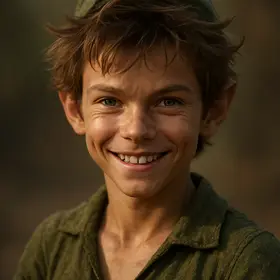
Peter Pan in Peter Pan
Protagonist
The ageless, flying boy who refuses to grow up and leads the Lost Boys on dangerous, imaginative adventures in Neverland.
Who is Peter Pan?
Peter Pan is the fearless, flight-gifted leader of the Lost Boys who appears in the Darling nursery and whisks Wendy, John, and Michael to Neverland. He wants to remain a child forever and to be master of adventure, freedom, and play; he resists mothers, rules, and the responsibilities of growing up. Across the chapters he charms Wendy into becoming a mother-figure, organizes the underground home, outwits pirates, and stages raids to rescue the children when Hook captures them. Peter repeatedly courts risk—teasing danger on the flight to Neverland, imitating the crocodile’s ticking to approach Hook’s ship, and dueling Hook in single combat—while showing inventive resourcefulness (the Never bird rescue, improvising a craft from a hat). He can be impulsive, competitive, and stubbornly non‑sentimental about attachments, yet at moments of fatigue and sleep the narrative reveals tenderness that Wendy recognizes. Ultimately Peter catalyzes the Darling children’s passage between domestic order and wild imagination, embodying the pleasures and costs of perpetual childhood.
In the book: Peter Pan is the fearless, flight-gifted boy who refuses to grow up and leads the Lost Boys in Neverland, whisking children from the ordinary world into a realm of pirates, fairies, and adventures. He embodies freedom, imagination, and the bittersweet allure of perpetual childhood, acting as both catalyst and companion to the Darling children while challenging the boundaries between youth and responsibility.
Personality
- Fearless
- He flies into danger and faces Hook directly, declaring 'Hook or me this time' and dueling him on the brig (Chapter 15).
- Playful trickster
- He mimics Hook and the crocodile’s ticking to deceive pirates and reach their ship unchallenged (Chapters 8 and 15).
- Refuses to grow
- He insists on remaining a child, rejects mothers generally, and later cannot accept Wendy’s adulthood, looking instead for a new girl to be his mother (Chapters 7, 11, 17).
- Resourceful
- When stranded on Marooners’ Rock he uses Starkey’s hat and the Never bird’s nest to fashion a floating craft and save the eggs (Chapter 9).
- Manipulative yet vulnerable
- He deliberately bars the Darling window to create a pretext involving Wendy, yet is later shown crying in his sleep and comforted by Wendy (Chapter 16 and Chapter 15).
Character arc
From his first dramatic entrance into the nursery Peter is established as an irresistible, untamed force: a boy who knows how to fly, boast, and command loyalty. Early chapters show him as boastful and heedless—stealing children away, teasing peril on the flight to Neverland, and forbidding domestic duties—but also inventive in crisis, as when he rescues himself on the lagoon and improvises solutions for the Lost Boys. As Wendy becomes the boys’ mother and the Lost Boys make a home, Peter both benefits from and resents that domestic warmth; he refuses to adopt their tender practices and snarls at praise of mothers. When Hook attacks and captures the children, Peter’s role shifts from playful provocateur to resolute rescuer: he stages stealthy approaches, frees the prisoners, and fights Hook in single combat. After victory he returns the children to London but cannot join in the domestic reunion; he momentarily manipulates events to test Wendy’s place and then departs to remain a boy. Over time his refusal to grow becomes fixed rather than resolved—he mourns Wendy’s growing up but moves on by finding a new child (Jane) to fill that role—so his arc is a preservation of childishness rather than transformation, ending with the bittersweet continuity of perpetual youth.
Peter Pan in pictures
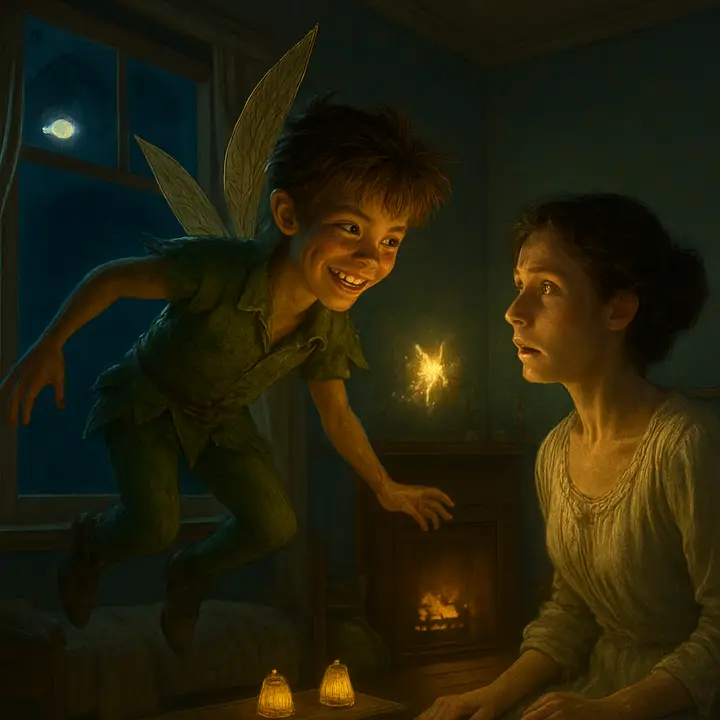
Relationships
- Wendy Darling Wendy becomes his mother-figure and the closest person to whom he shows affection, though he resists acknowledging adult attachment.
- Tinker Bell A jealous, devoted fairy companion whose actions both help and complicate Peter’s plans, including sacrificing herself to save him (Chapter 13).
- The Lost Boys He is their charismatic leader and protector, arranging their underground home and commanding them in fights and games.
- Captain Hook Peter’s principal antagonist and foil—the object of his combative courage and arch-enmity culminating in their duel (Chapters 8, 14–15).
- Mrs. Darling A grown-up figure who recognizes Peter’s difference and whose sorrow and domestic love he briefly witnesses, provoking private conflict (Chapter 16).
- John Darling One of the Darling brothers who follows Peter to Neverland and pledges loyalty; Peter teaches and endangers him in flight and battle.
Quotes by Peter Pan
“"Second to the right," said Peter, "and then straight on till morning."”
Chapter 3Peter gives his fantastical address for where he lives, signalling his otherworldly orientation and reluctance toward ordinary domestic life.
““Second to the right, and straight on till morning.””
Chapter 4Peter’s offhand directions introduce the journey and his impulsive, unreliable leadership that sets the flight in motion.
““She can’t put it out. That is about the only thing fairies can’t do.”
Chapter 4Peter explains why Tinker Bell’s light cannot be controlled, highlighting the danger her shining poses and the limits of fairy agency.
“I have brought at last a mother for you all.”
Chapter 6Peter proclaims the great news on returning to the band, announcing Wendy as the long-awaited mother-figure.
“See," he said, "the arrow struck against this. It is the kiss I gave her. It has saved her life.”
Chapter 6Peter interprets the button-on-a-chain as the physical token (his kiss) that miraculously prevented the arrow from killing Wendy.
“Those of a devoted son, Wendy.”
Chapter 10Peter’s awkward denial of adult feelings crystallizes his insistence on perpetual boyhood and strains his relationship with Wendy.
Why Peter Pan matters
Peter embodies the book’s central tension between imaginative freedom and the obligations of maturity. He represents the exhilaration and cruelty of perpetual childhood: spontaneous courage, inventiveness, and unfettered play alongside fickle attachments and refusal to accept care or responsibility. Through Peter’s adventures, Barrie explores how innocence both delights and alienates—how the refusal to grow protects a realm of wonder while denying the consolations of human relations. Peter’s victories over Hook, his leadership of the Lost Boys, and his ultimate inability to dwell in the Darling family underline the novel’s meditation on loss, nostalgia, and the generational cycle that replaces one child-mother with the next.
Chapters with Peter Pan
More Peter Pan characters
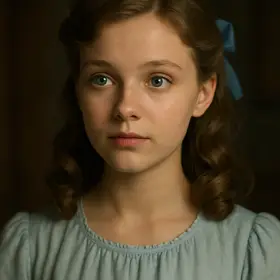 Wendy DarlingMajor character
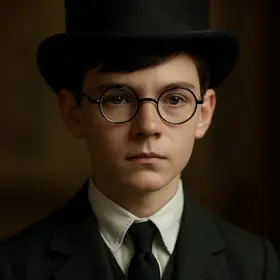 John DarlingMajor character
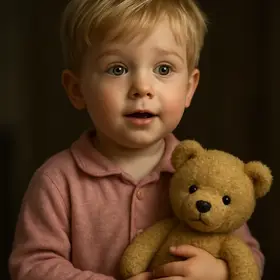 Michael DarlingMajor character
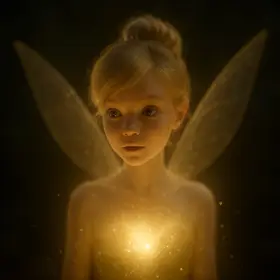 Tinker BellMajor character
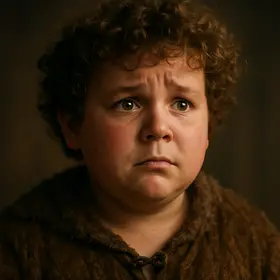 CurlyMajor character
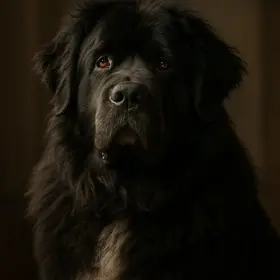 NanaMajor character
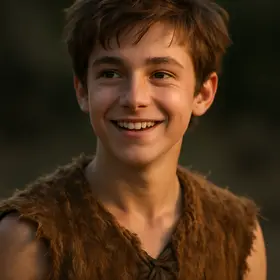 NibsMinor character
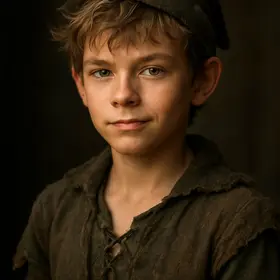 SlightlyMinor character
All chapter summaries ›Characters ›
Reading Peter Pan aloud with kids
Book2Life reads Peter Pan aloud with each word highlighted as it is spoken, and a picture of the scene appears as the chapter goes, so young listeners can follow the story. A parent holds the account and reads along.
Read Peter Pan illustrated
Every scene in these notes comes from the Book2Life reader, where the full public-domain text is illustrated as you read, with character portraits and narration. Free in your browser, on iPhone and on Android.