
Robinson Crusoe in Robinson Crusoe
Protagonist
An adventurous, stubborn Englishman turned resourceful castaway who survives, rules, and eventually leaves a desert island.
Who is Robinson Crusoe?
Robinson Crusoe is a restless third son who flees his family's safe plans for the law and pursues a life at sea. Early voyages bring hardship: storm, capture by a Turkish rover, and eventual escape in a provisioned longboat with the boy Xury. Years later he is wrecked on an uninhabited island, where he salvages tools, food, and arms from the stranded ship and constructs fortified habitations, fields, and stock. A severe illness triggers a deep religious conversion and a disciplined routine of prayer and labor. Over decades he refines agriculture, pottery, and boatbuilding, tames goats, and fortifies against visiting cannibals. Discovery of a human footprint forces him to increase security until he rescues and civilizes Friday, whom he teaches language, tradescraft, and Christian faith. Crusoe leads armed actions against cannibals and mutineers, helps recover a ship, and finally leaves the island after twenty-eight years to reclaim property and return to Europe materially restored and spiritually changed.
In the book: When we first meet him, he’s a restless young Englishman who can’t sit still for the safe life his family wants. He bolts from home to chase the sea out of Hull, and a savage early storm quickly teaches him how rough that choice can be. Even then, you can tell he’s stubborn enough to keep going.
Personality
- restless
- He slips away from his parents at eighteen and repeatedly chooses voyages over his father's counsel (Chapter 1).
- resourceful
- He salvages tools, cloth, powder and other goods from the wreck and fashions shelters, pottery, a periagua, and fences (Chapters 4–10).
- pious
- After a violent ague and a terrifying dream he kneels, begins regular Bible reading and prayer, and frames his survival as Providence (Chapter 6).
- pragmatic
- Confronted with cannibal sites, he resists vengeance and instead fortifies, conceals his presence, and plans measured responses (Chapter 12).
- authoritative teacher
- He teaches Friday language, farming, Christian doctrine, and military discipline, turning him into a loyal companion (Chapters 15–16).
Character arc
Crusoe begins as an impulsive young man who cannot accept his father's safe, middling plan and therefore seeks the sea. Early misfortunes — shipwreck, capture and slavery, and the loss of companions — harden his independence and practical learning, culminating in his being stranded on the island with only salvaged goods. Solitary survival forces him to convert restlessness into daily routines: he organizes shelter, cultivates crops, invents pottery and tools, and tames animals. A life-threatening illness precipitates spiritual conversion and steadier moral reflection. Fear of other humans later drives him to extreme caution until discovery of the footprint and the wrecked Spaniards shift him back into action: he fortifies, ambushes cannibals only when necessary, and ultimately accepts a leadership role by rescuing and instructing Friday and dealing shrewdly with mutineers. By the end he transforms from isolated survivor into a pragmatic colonial authority and agent of rescue, returning to Europe materially enriched and inwardly more devout and disciplined than the impulsive youth who first fled home.
Relationships
- Xury A ship's boy who escapes with Crusoe from captivity and accompanies his initial landing on the wild coast (Chapter 2–3).
- The Portuguese Captain A rescuer and beneficial correspondent who aids Crusoe’s escape and later maintains business ties connected to his plantation (Chapters 3 and 19).
- Friday A native Crusoe rescues from cannibals, teaches language, religion, and skills, and who becomes his loyal companion and servant (Chapters 14–16).
- Friday's Father A man Crusoe helps free from the cannibals during the rescue of prisoners and whom he shelters and tends (Chapter 16).
- The Spaniard A European prisoner rescued from cannibals who lives under Crusoe’s protection and advises on local matters (Chapters 13 and 16–17).
- The Mutineers Hostile seamen whose landing and takeover Crusoe helps counter, capturing and managing many of them to protect the island and secure a vessel (Chapters 17–18).
Quotes by Robinson Crusoe
““You fool,” says I, “he will eat you up.””
Chapter 20Crusoe reproaches Friday for provoking the obviously dangerous bear.
Why Robinson Crusoe matters
Crusoe embodies themes of enterprise, colonization, and providence: his self-reliance and improvement of the island read as a narrative of labor, mastery, and domestic order. His spiritual conversion reframes survival as moral testing and divine providence, turning personal fortune into a sign of God’s guidance. The relationship with Friday raises questions about authority, cultural pedagogy, and the ethics of civilizing missions: Crusoe’s teaching and governance show both compassion and hierarchical control. Throughout, his pragmatic mix of ingenuity and moral reasoning anchors the book’s exploration of individual responsibility, human adaptability, and the tenuous boundary between civilization and wilderness.
Chapters with Robinson Crusoe
More Robinson Crusoe characters
 FridayMajor character
 The CannibalsAntagonist
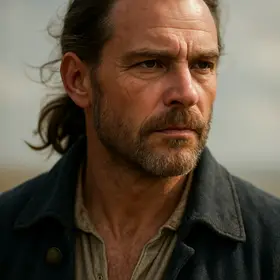 The English CaptainMajor character
 The Portuguese CaptainMinor character
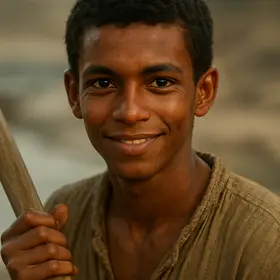 XuryMinor character
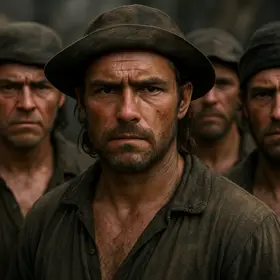 The MutineersAntagonist
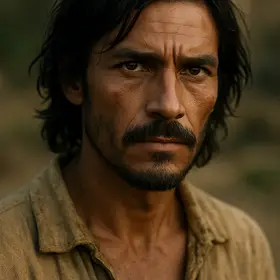 The SpaniardMajor character
 The WidowMinor character
All chapter summaries ›Characters ›
Read Robinson Crusoe illustrated
Every scene in these notes comes from the Book2Life reader, where the full public-domain text is illustrated as you read, with character portraits and narration. Free in your browser, on iPhone and on Android.