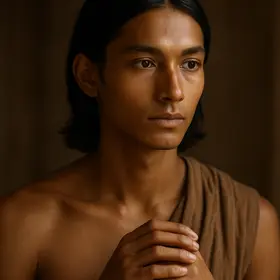
Siddhartha in Siddhartha
Protagonist
A Brahmin's son turned seeker who rejects dogma, lives many lives, and learns wisdom by listening to the river.
Who is Siddhartha?
Siddhartha begins as a brilliant, beloved son of a Brahmin who feels an inner lack despite ritual success. Driven by a thirst for the true Self (Atman), he leaves home with his friend Govinda to join the Samanas and subjects himself to severe ascetic practices. Finding those practices and later Gotama's teachings insufficient for personal enlightenment, he strikes out alone, experiences a profound awakening, and embraces sensory life: love with Kamala, commerce with Kamaswami, and eventual decadence. After a period of moral collapse and despair he contemplates suicide but is reborn by a river, is taken in by the ferryman Vasudeva, and learns to listen to the river's voice. He becomes a compassionate ferryman, adopts Kamala's son, suffers the boy's departure, and finally attains inner unity through listening and acceptance. Govinda later recognizes Siddhartha's attained serenity, confirming his role as a living, experiential teacher rather than a doctrinal one.
In the book: When we first meet Siddhartha, he’s the brilliant, much‑admired son of a Brahmin, already skilled in study and meditation but quietly restless. He loves his family and friend Govinda, yet he’s itching to go beyond what he’s been taught, soon deciding to leave home to seek deeper wisdom with wandering ascetics.
Personality
- Restless seeker
- He leaves his Brahmin home at dawn to join the Samanas after feeling rituals and learning cannot reveal the Atman.
- Independent
- He respectfully declines Govinda's invitation to join Gotama's disciples, insisting he must find his own path.
- Adaptive
- After asceticism he quickly learns worldly manners to win Kamala's favor and enters Kamaswami's service.
- Reflective
- By the river he listens deeply, learns from Vasudeva, and recognizes the river's lessons as central to his insight.
- Compassionate
- He cares patiently for Kamala when she dies and tends to her son with tenderness despite the boy's cruelty.
Character arc
Siddhartha's journey moves from idealized Brahmin youth to austere ascetic, then to worldly hedonist, and finally to a peaceful, listening ferryman. Initially defined by scholarly promise and ritual belonging, he abandons caste and teachers in search of inward truth, testing extreme self-denial with the Samanas and measuring teachings against personal experience. Confronted with Gotama's perfected teaching, he refuses formal discipleship, realizing doctrine cannot be transferred. Freed from doctrinal dependence he awakens to immediate reality, embraces love and commerce, then falls into moral exhaustion and despair in Sansara. At the river an inward Om rekindles life; living with Vasudeva teaches him patient listening. He endures the pain of a rejected son, processes it through empathy and openness, and ultimately achieves a single, accepting awareness symbolized by the river's all-embracing sound. By the end he stands transformed: no longer a seeker in motion but a quiet presence whose wisdom arises from lived experience rather than instruction.
Relationships
- Govinda Lifelong friend and former companion who follows Siddhartha early on but later becomes a devotee of Gotama; they reunite and Govinda recognizes Siddhartha's realization.
- Siddhartha's Father Beloved but anguished parent who ultimately gives consent for Siddhartha to leave home after long sleepless hours.
- Gotama The perfected Buddha whom Siddhartha admires but refuses to join because he believes enlightenment cannot be taught by doctrine.
- Kamala A courtesan who becomes his lover and teacher in the art of love and with whom he fathers a son.
- Kamaswami A wealthy merchant who employs Siddhartha and introduces him to worldly commerce during his period in the city.
- Vasudeva The ferryman who welcomes Siddhartha by the river, listens without judgment, and teaches him to learn from the river's voice.
Quotes by Siddhartha
“Early tomorrow morning, my friend, Siddhartha will go to the Samanas. He will become a Samana.”
Chapter 1Siddhartha announces to Govinda his intention to leave home and join the ascetics, beginning his quest.
“I will stand and wait.”
Chapter 1Siddhartha's repeated, measured replies to his father's attempts to dissuade him, showing his determination and readiness to sacrifice comfort for his path.
“What is meditation? What is leaving one’s body? What is fasting? What is holding one’s breath? It is fleeing from the self, it is a short escape of the agony of being a self, it is a short numbing of the senses against the pain and the pointlessness of life.”
Chapter 2Siddhartha critiques ascetic practices as temporary escapes rather than true liberation.
“It was the self, I wanted to free myself from, which I sought to overcome.”
AwakeningSiddhartha names the real object of his search — his own self — and admits he has been fleeing it rather than understanding it.
“I want to learn from myself, want to be my student, want to get to know myself, the secret of Siddhartha.”
AwakeningHe resolves to abandon external teachings and to pursue self-knowledge through his own experience.
“I have awakened, I have indeed awakened and have not been born before this very day.”
AwakeningThis moment expresses the intensity of his inner renewal and the sense of beginning life anew.
Why Siddhartha matters
Siddhartha embodies the novel's inquiry into experiential versus taught wisdom. His refusals of ritual, ascetic extremes and doctrinal discipleship highlight the limits of transmitted knowledge; his detour through sensual life exposes the emptiness of mere pleasure. His final attunement to the river models the book's central theme: truth arises through patient, nonverbal listening and integration of life's contradictions. Siddhartha's path argues that true unity is lived, not proclaimed, and that self-realization requires passing through and reconciling the multiplicity of human experience.
Chapters with Siddhartha
More Siddhartha characters
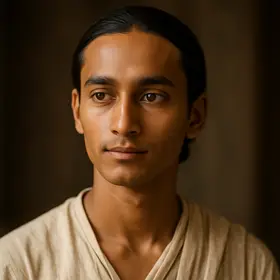 GovindaMajor character
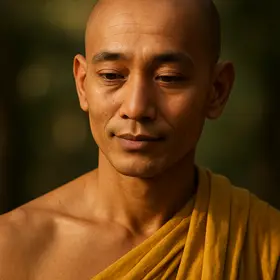 GotamaMajor character
 KamalaMajor character
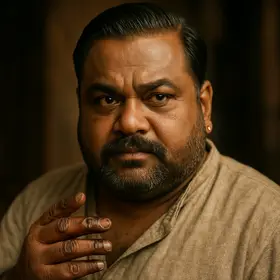 KamaswamiMinor character
 The RiverMajor character
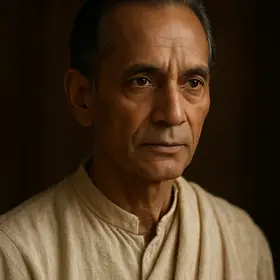 Siddhartha's FatherMinor character
 VasudevaMajor character
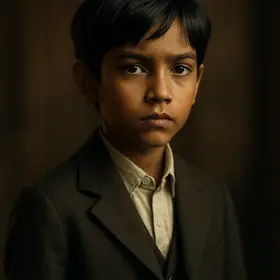 Siddhartha's SonMinor character
All chapter summaries ›Characters ›
Read Siddhartha illustrated
Every scene in these notes comes from the Book2Life reader, where the full public-domain text is illustrated as you read, with character portraits and narration. Free in your browser, on iPhone and on Android.