

Frankenstein
by Mary Shelley
Explore AI-generated storyboard scenes, character portraits, and more for Frankenstein on Book2Life.
About This Book
Mary Shelley's Frankenstein is the groundbreaking novel that gave birth to science fiction. Written when Shelley was just eighteen years old, the story follows Victor Frankenstein, a brilliant young scientist who discovers the secret of animating lifeless matter and creates a living creature from assembled body parts.
Horrified by what he has made, Victor abandons his creation, setting in motion a tragic chain of events. The Creature, intelligent and sensitive but rejected by everyone who sees him, turns from loneliness to rage. As creator and creation pursue each other across Europe and into the Arctic, Shelley explores the devastating consequences of unchecked ambition and the human need for connection.
First published in 1818, Frankenstein remains startlingly modern in its themes. It asks questions we are still grappling with today: What responsibility do creators have for their creations? What happens when scientific progress outpaces moral understanding? And what makes someone, or something, human?
Characters in Frankenstein
AI-generated character portraits and descriptions

The Creature
The Creature is Victor Frankenstein’s artificial being, brought to life by scientific ambition and abandoned at birth, whose search for acceptance and companionship drives the novel’s central conflict. Intelligent, sensitive, and eloquent, he reflects the consequences of unchecked creation and the moral duties of a maker to his work. Through his encounters with humanity and his turbulent bond with Victor, the story explores isolation, prejudice, responsibility, and the struggle between compassion and vengeance without simple heroes or monsters.

Elizabeth Lavenza
Elizabeth Lavenza is Victor Frankenstein’s beloved childhood companion and later fiancée, a figure of warmth, kindness, and domestic stability in contrast to Victor’s consuming scientific pursuits. Through her letters and presence, she anchors the family sphere and highlights themes of empathy, moral responsibility, and the human need for connection. Her character’s gentle influence and the dangers that encroach upon it underscore the novel’s tensions between ambition and duty without delving into the book’s major revelations.

William Frankenstein
William Frankenstein is Victor Frankenstein’s youngest brother, cherished by his family and emblematic of innocence and domestic joy. His presence underscores what is at stake in Victor’s pursuit of knowledge, and events surrounding him become a powerful spur to Victor’s guilt and decisions, intensifying the novel’s themes of responsibility, secrecy, and the consequences of unchecked ambition.

M. Krempe
M. Krempe is Victor Frankenstein’s professor of natural philosophy at Ingolstadt. He brusquely dismisses Victor’s early fascination with outdated alchemists and pushes him toward contemporary scientific study, serving as a harsh, corrective force and a foil to the gentler M. Waldman in shaping Victor’s academic path.

Margaret Saville
Margaret Saville is the unseen addressee of Captain Robert Walton’s letters, which frame the narrative of Frankenstein. As his sister in England, she serves as the moral and emotional anchor for Walton’s explorations, giving the story its epistolary shape and grounding the extraordinary events in a domestic, familiar relationship.

Robert Walton
Robert Walton is the ambitious explorer whose letters to his sister frame the novel, carrying the reader into the polar seas where he encounters Victor Frankenstein. Through Walton’s keen observations and yearning for discovery, the story’s themes of aspiration, isolation, and the costs of pursuing knowledge are introduced and echoed. His perspective provides an outer lens on the events and characters, shaping how the tale is told without being its central actor.

Alphonse Frankenstein
Alphonse Frankenstein is Victor’s wise, compassionate father and a stabilizing presence whose counsel and affection embody duty, moderation, and moral responsibility. Through his guidance, letters, and steady concern for family, he anchors the human world that Victor drifts from, highlighting themes of parental care, social obligation, and the costs of isolation without revealing key plot turns.

Mr. Kirwin
Mr. Kirwin is the Irish magistrate who presides when Victor Frankenstein is detained abroad; unlike many around him, he shows practical compassion, ensures Victor receives medical care, and facilitates contact with his family, embodying lawful fairness and humane concern without becoming central to the larger scientific-and-gothic drama.

M. Waldman
M. Waldman is Victor Frankenstein’s compassionate chemistry professor at Ingolstadt, whose encouragement and clear, inspiring lectures redirect Victor from outdated occult studies toward rigorous modern science. As a humane counterpoint to harsher academic figures, Waldman becomes a pivotal mentor whose approval fuels Victor’s intellectual ambition and helps set the course of his subsequent investigations, embodying the allure and promise of enlightened inquiry without overt moralizing.

Victor Frankenstein
Victor Frankenstein is the gifted, obsessive student of natural philosophy whose daring pursuit of forbidden knowledge propels the story. As narrator and protagonist, he embodies Romantic-era ambition and the dangers of intellectual hubris, raising questions about scientific responsibility, the ethics of creation, and the isolating cost of genius. His choices set the novel’s tragedies in motion and frame its enduring debate over creator and creation, duty and consequence.

Agatha De Lacey
Agatha De Lacey is the daughter in the humble De Lacey household that the Creature secretly observes, and through her daily labors, tenderness toward her father, and quiet suffering, he begins to learn language, ethics, and the rhythms of human life. Her presence embodies domestic virtue and kindness, making her a moral touchstone that deepens the Creature’s yearning for connection and shapes his early understanding of society, without herself occupying the story’s central conflicts.

Justine Moritz
Justine Moritz is a servant and beloved companion in the Frankenstein household, cherished especially by Elizabeth. Her kindness, piety, and humility make her a moral touchstone in the early narrative. When she becomes entangled in a grave accusation, her situation becomes a catalyst that exposes the novel’s central concerns with justice, social judgment, and the destructive ripple effects of secrecy and guilt, profoundly shaping Victor’s inner turmoil and the story’s moral stakes.

Safie
Safie, the daughter of a foreign merchant, joins the De Lacey family and becomes a catalyst for harmony and education in their cottage. As Felix teaches her language and culture, the Creature secretly observes and learns alongside her, making Safie central to his acquisition of speech and understanding of society. Her presence also embodies themes of independence, cross-cultural encounter, and the promise of companionship, deepening the novel’s exploration of what it means to belong.
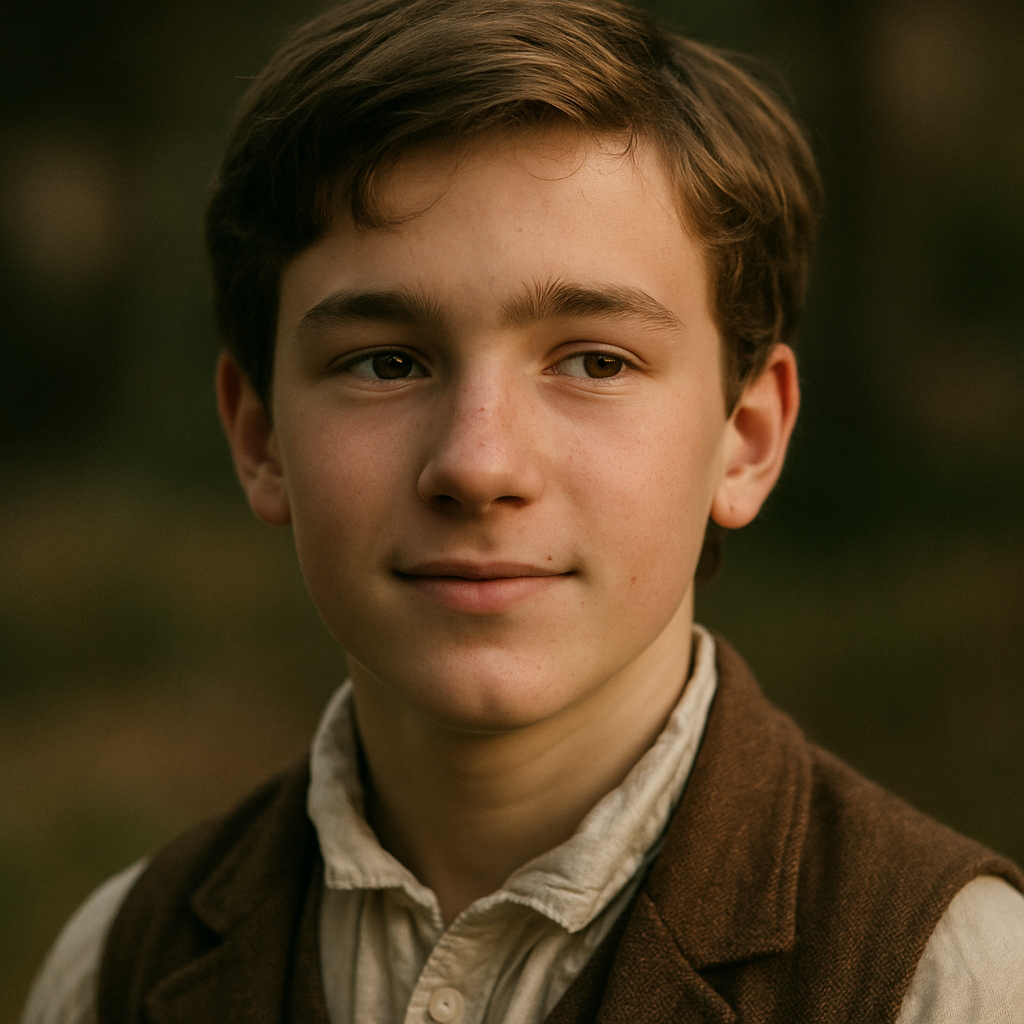
Ernest Frankenstein
Ernest is Victor Frankenstein’s younger brother, a minor but telling presence who embodies the normal family life and civic-minded hopes that Victor abandons. His simple desires and everyday concerns contrast with Victor’s obsessive pursuits, sharpening the novel’s themes of responsibility, kinship, and the costs of isolation. Though he rarely drives events, Ernest’s quiet steadiness and vulnerability heighten the emotional stakes and underscore what is at risk when ambition severs one from family and society.

Henry Clerval
Henry Clerval is Victor Frankenstein’s closest childhood friend and moral foil, embodying warmth, kindness, and a humanistic love of learning—especially languages and poetry. His presence highlights what balanced ambition and empathy look like, grounding the story’s darker scientific pursuits in compassion. Through his loyalty and idealism, he reveals the costs of obsession and the value of friendship, serving as a touchstone for the novel’s ethical and emotional stakes without driving the central experiment himself.

De Lacey
De Lacey is the benevolent patriarch of the cottagers whom the creature secretly observes. His kindness, music, and conversations with his children become the creature’s first lessons in language, compassion, and human society. As a figure of dignity and warmth, he symbolizes the possibility of sympathy across differences and shapes the creature’s earliest hopes about humanity.

Caroline Beaufort Frankenstein
Caroline Beaufort Frankenstein is Victor Frankenstein’s mother and a model of tenderness, generosity, and self-sacrifice. Formerly impoverished, she rebuilds a household grounded in charity and affection, shaping Victor’s earliest ideas about duty, care, and family. Her choices—especially her acts of adoption and nurturing—set key relationships in motion and establish moral contrasts that echo throughout the novel, and the profound impact of her absence later in Victor’s life helps drive his character and the story’s central tensions.

Felix De Lacey
Felix is the devoted son of the De Lacey family and the fiancé of Safie. Through his daily labors and his patient lessons to Safie, he unintentionally becomes the creature’s first model for human language, compassion, and social life. His kindness to his family contrasts with his alarmed response to the unknown, making him central to the creature’s early education and to a pivotal encounter that shapes the story’s themes of sympathy and prejudice without revealing later plot turns.
Key Scenes & Storyboard
AI-generated scene illustrations from Frankenstein

On the icy deck of an Arctic ship under a bruised sky, the Creature kneels beside Victor Frankenstein's lifeless body, cradling the face of his creator in a gesture of anguished tenderness. Ice floes and a distant aurora stretch to the horizon as Robert Walton stands in the doorway, small and conflicted, watching the creature's raw grief. The vast, frozen emptiness presses in, making the two figures seem painfully alone.

Inside a small warmed room in St. Petersburgh, Walton leans over parchment by candlelight, finishing the letter to his sister with a steady hand. Surrounding him are maps, a model ship, and a globe; through the frost-rimmed window a thin band of pale light on the horizon suggests the very polar sun he dreams of, reflecting his mix of hope and solemn farewell. He closes the letter with a look that is both determined and wistful.

Robert Walton strides through the snow-swept streets of St. Petersburgh, fur collar up, breath clouding the air as a keen northern wind plays across his cheeks. He gazes northward with rapt wonder; in the pale sky above him a faint, imagined disk of a low sun hovers on the horizon, hinting at the eternal light he dreams of.

A younger Walton labors on the icy, heaving deck of a Greenland whaler, ropes and frozen salt spray clinging to his coat as sailors bustle around him; he stands resolute despite cold and exhaustion. The ship's captain, off-frame or implied, gestures toward him in approval—the instant the offer of the ship's second dignity is made—Walton's face flushes with quiet pride and hard-won triumph.

Robert Walton stands on the snow-dusted deck of his newly hired ship as men stow barrels and coil ice-flecked ropes; gray clouds and a frozen wharf frame the vessel, and his breath hangs in the cold while he watches the rugged sailors with a mix of pride and loneliness. He clutches a rolled letter to Margaret, shoulders hunched against the wind, the smallness of his figure emphasising his missing friend and the isolation that propels his voyage.

Alone on deck beneath a bruised polar sky, Robert Walton gazes out over an endless field of drifting ice and distant bergs — the 'land of mist and snow' he both covets and fears. He stands small against the immense, white horizon, hand on the rail, letter open at his feet, eyes shining with a trembling blend of exhilaration and dread at the unexplored wilderness ahead.

At twilight on his ship's deck, Robert Walton grips a letter addressed to Margaret Saville while staring toward a vast horizon of mist and low polar light; the ropes and mast frame his lonely silhouette, the promise of unexplored ice-fields beyond. The small, planted reference to the 'Ancient Mariner' lingers in his expression—equal parts eager, fearful, and tender for the sister reading his words.

Robert Walton stands on the ship's deck at twilight, leaning on the rail as vast floes of ice drift past and a brilliant band of stars stretches overhead. The warm southern gales lift his coat while his face is lit by starlight and a distant lantern; he gazes upward as if the heavens themselves witness his resolve.
Themes
Why Read Frankenstein?
Frankenstein is one of those rare novels that everyone thinks they know but few have actually read, and the real story is far more complex and moving than the popular image suggests. Shelley's Creature is not a mindless monster but a tragic figure who learns language, reads Milton, and desperately wants to be loved. The novel's exploration of what it means to be human is as relevant in the age of AI as it was two centuries ago.
Book 2 Life's AI storyboard captures the gothic atmosphere of Shelley's world (the lightning-struck laboratory, the Alpine wilderness, the frozen Arctic) and brings both Victor and his Creature to life with haunting visual detail.
Experience Frankenstein on Book2Life
Read with AI-generated visuals, character portraits, audio narration, smart summaries, and more. Available free on iOS.