

Pride and Prejudice
by Jane Austen
Explore AI-generated storyboard scenes, character portraits, and more for Pride and Prejudice on Book2Life.
About This Book
Jane Austen's Pride and Prejudice, published in 1813, is set in rural England at the turn of the nineteenth century and follows Elizabeth Bennet, the second of five sisters in a family of modest means, through the marriage market of Regency society.
When the wealthy and reserved Mr. Darcy arrives in the neighborhood, Elizabeth's first impressions of him curdle into dislike. Over a series of encounters and revelations, both she and Darcy are forced into some painful self-awareness, her prejudice against him and his pride in himself, before they can find their way to each other.
The novel is famous for its wit and its clear-eyed reading of manners and money. Austen's sense of how people misjudge one another, and of how marriage and reputation governed women's lives, still reads as sharp two centuries later.
Characters in Pride and Prejudice
AI-generated character portraits and descriptions

Mr. Gardiner

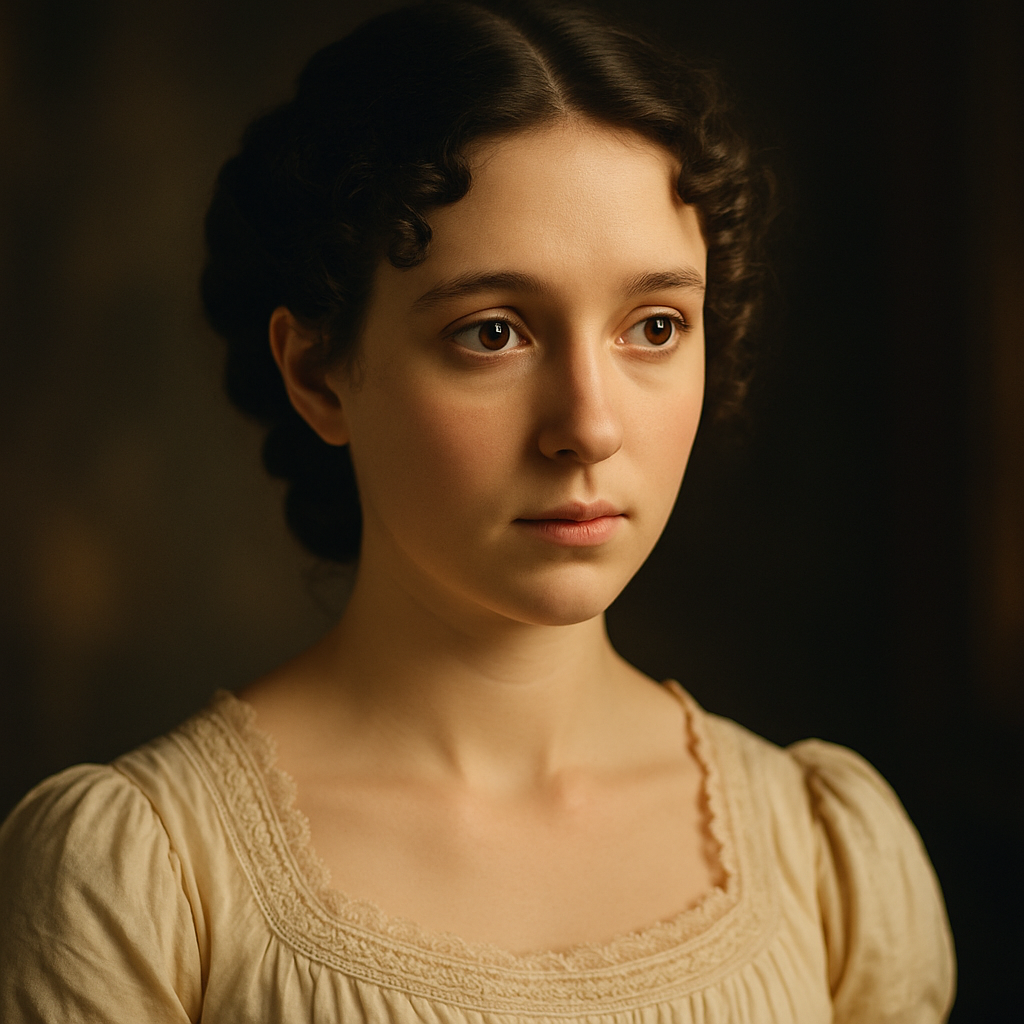
Mary Bennet
The middle Bennet sister, Mary is bookish, moralizing, and eager to display “accomplishments” like piano and singing despite limited talent. Her pedantry and solemn lectures provide gentle comic contrast to her livelier sisters and highlight Austen’s themes about sense, vanity, and the difference between true understanding and showy learning. Though not central to the plot, Mary’s presence rounds out the Bennet family dynamic and underscores the social pressures on young women to appear accomplished.
Maria Lucas

Mr. Darcy
Mr. Fitzwilliam Darcy is a wealthy, well-bred gentleman whose reserve, social confidence, and status make him a powerful presence in the world of Pride and Prejudice. Initially perceived as proud, he becomes a central figure through his evolving connection with Elizabeth Bennet, challenging her assumptions and illuminating the novel’s themes of class, first impressions, and self-knowledge. His character anchors the story’s exploration of personal growth and the difference between surface judgment and true worth.

Colonel Fitzwilliam

Mrs. Gardiner
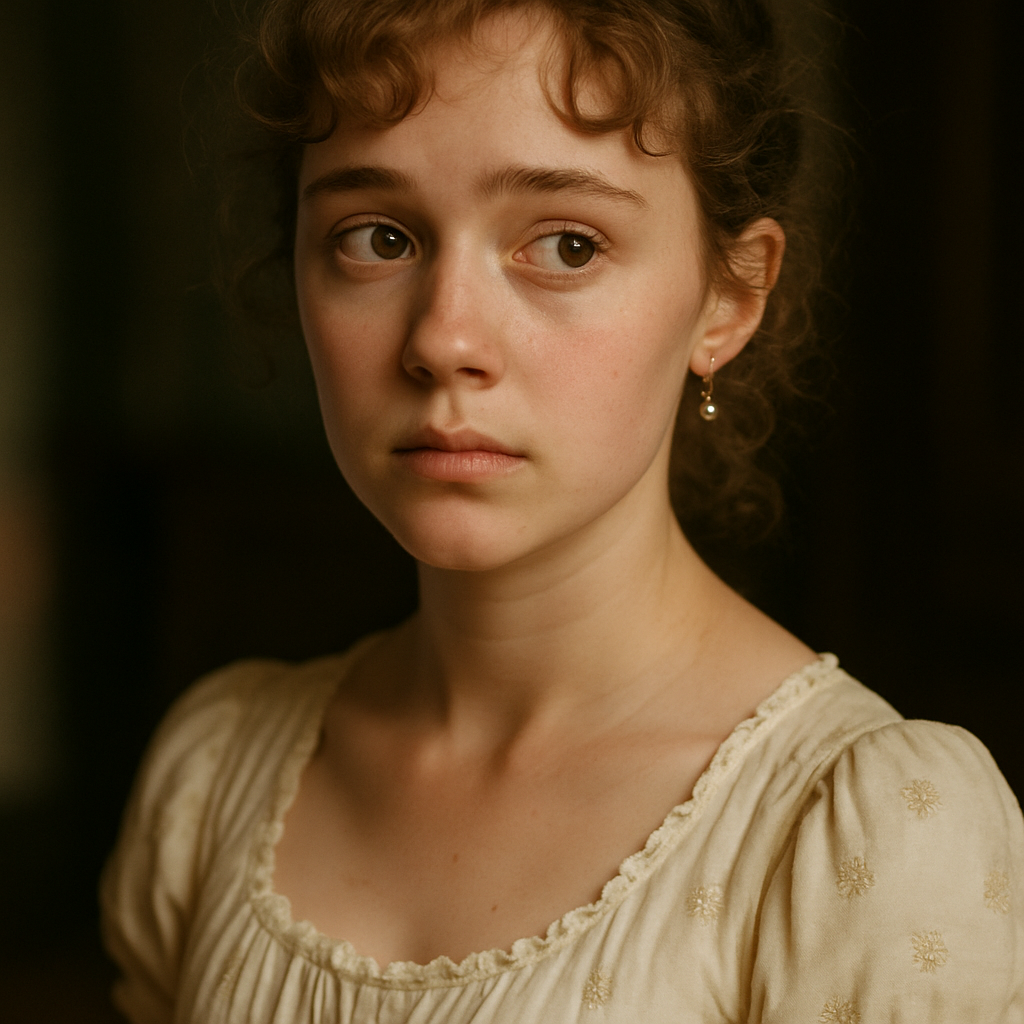
Kitty Bennet
The second-youngest Bennet sister, Kitty is Lydia’s constant companion and echo, a fretful, impressionable girl preoccupied with fashions, dances, and officers. She serves as a light comic presence and a foil to her more sensible sisters, illustrating how parental indulgence and peer influence shape youthful behavior. Through Kitty, the story explores themes of maturation and social guidance within the Bennet household, while her reactions help heighten the family’s anxieties and the novel’s social tensions.

Mrs. Hurst

Elizabeth Bennet
Elizabeth Bennet is the quick-witted, spirited second daughter of the Bennet family and the novel’s central consciousness, navigating the pressures of class, manners, and marriage in rural England. Her keen judgment, playful humor, and strong moral sense drive much of the social drama, as she learns to look past first impressions while challenging the assumptions of those around her.

Mr. Bingley
Mr. Bingley is a wealthy newcomer who rents Netherfield Park and quickly becomes a favorite in local society, his warmth and sociability contrasting with the reserve of his close friend, Mr. Darcy. His genial manners help set key social events in motion and soften tensions among characters. His developing attachment to a Bennet sister and his responsiveness to advice make him central to the novel’s exploration of first impressions, class expectations, and the balance between amiability and judgment, without being its primary moral guide.

Caroline Bingley

Lydia Bennet
The youngest Bennet sister, Lydia is impulsive, flirtatious, and obsessed with the local militia, providing comic energy that contrasts with her elder sisters’ sensibilities. Her heedless pursuits and lack of discretion create social risks for the Bennet family, becoming a key catalyst that raises the stakes of the plot and forces other characters to confront issues of reputation, responsibility, and maturity.

Lady Catherine de Bourgh
Lady Catherine de Bourgh is the wealthy, domineering mistress of Rosings Park, aunt to Fitzwilliam Darcy and mother to the sickly Anne de Bourgh. She embodies entrenched aristocratic privilege and social rigidity, using her status to dictate manners, marriages, and conversation. Her encounters with Elizabeth Bennet highlight themes of class, independence, and moral courage, and her attempts to manage others become a key force that tests—and reveals—the characters’ principles.

Anne de Bourgh

Georgiana Darcy
Georgiana is Mr. Darcy’s much younger sister, a shy, well-bred, and musically accomplished young woman whose sweetness and reserve reflect her sheltered upbringing. Though she spends little time onstage, her character helps illuminate Darcy’s private kindness and family loyalty, provides Elizabeth Bennet with a fuller view of his world, and quietly underscores themes of reputation, propriety, and the vulnerabilities of young women in Regency society.

Jane Bennet
As the eldest Bennet sister, Jane embodies warmth, composure, and charitable judgment, serving as a moral and emotional counterpoint to Elizabeth’s sharper wit. Her mutual attraction with a amiable gentleman helps set the novel’s social currents in motion, while her grace under pressure illuminates themes of class expectations, reputation, and the difference between genuine goodness and superficial charm.

Charlotte Lucas
Charlotte Lucas is Elizabeth Bennet’s close friend and a clear-eyed, pragmatic foil to Elizabeth’s wit and romantic ideals. As the daughter of a modestly connected family, she views marriage chiefly as a practical safeguard, and her choices spotlight the economic and social pressures shaping women’s lives in the Regency era. Through Charlotte, the novel contrasts affection-driven hopes with the realities of reputation, security, and social expectation, deepening its exploration of how people navigate love and livelihood.

Mr. Collins
Mr. Collins is a clergyman and the Bennet sisters’ obsequious cousin who stands to inherit their home, Longbourn, because of the entail. Socially awkward yet self-important, he is devoted to his lofty patroness, Lady Catherine de Bourgh. His visit and clumsy courtship efforts create comedic tension, illuminate the era’s marriage and class pressures, and serve as a satirical foil to the novel’s more discerning characters without driving the central romance himself.

Mr. Bennet
Mr. Bennet is the wry, intellectually inclined patriarch of the Bennet family and father to five daughters. From his study, he observes household dramas with amused detachment, often answering folly with irony. His indifference to practical management contrasts with his wife’s anxious scheming, highlighting the family’s precarious social and financial position. As decisions about suitors and propriety arise, his temperament and choices quietly shape the stakes for his daughters and underscore themes of judgment, responsibility, and marital compatibility.

Sir William Lucas
A genial neighbor of the Bennet family, Sir William Lucas is a knighted former tradesman who enjoys society and formalities; he often helps facilitate introductions and cordiality within the local community. As the father of Charlotte Lucas, he serves as a social bridge among families in Meryton and provides context for class and ambition in the story without driving the central conflicts.

Lady Lucas
Lady Lucas is the sociable wife of Sir William Lucas and the mother of Charlotte Lucas, a friendly neighbor to the Bennet family in Meryton. Through her cheerful gossip, mild competitiveness with Mrs. Bennet, and participation in local visits and assemblies, she helps sketch the dynamics of small-town society and underscores themes of status, marriage prospects, and community etiquette.

Mr. Hurst
Mr. Hurst is the idle, pleasure-seeking husband of Louisa Hurst (Caroline Bingley’s sister) and thus Charles Bingley’s brother-in-law. A minor figure, he serves as a social accessory to his wife’s fashionable circle, embodying upper-class idleness and mild snobbery; his chief functions are to play cards, dine well, and reinforce the atmosphere of indifference surrounding that set.

Mrs. Bennet
Mrs. Bennet is the excitable, marriage‑fixated mother of the five Bennet sisters, whose relentless efforts to secure advantageous matches provide much of the novel’s comedy and social commentary. Her anxieties about money, status, and the family estate’s entail sharpen the story’s stakes, often clashing with Mr. Bennet’s irony and Elizabeth’s judgment. Through her fussing, schemes, and unguarded talk, she propels key meetings and misunderstandings while embodying the pressure placed on women to marry well in Regency society.

Mr. Wickham
Mr. Wickham is a charming militia officer whose easy manners and attractive appearance quickly win favor in Meryton, especially with the Bennet family. He shares a suggestive past connection with Mr. Darcy that shapes early impressions and tensions among the characters. Serving as a foil to Darcy, Wickham propels key misunderstandings and highlights the novel’s themes of first impressions, judgment, and the gap between appearance and character—without being the moral center of the story.
Key Scenes & Storyboard
AI-generated scene illustrations from Pride and Prejudice

A cozy Bennet sitting-room: Mrs. Bennet bustling and fussing at the hearth, stirring the fire with exaggerated energy while Mr. Collins, awkward and self-important, tries to compose a new declaration of attachment. Mr. Bennet watches from an armchair with dry amusement, his face a mask of ironic detachment as the absurdity of the moment unfolds.

A learned critic sits amid overflowing bookshelves, lit by a single window, extolling Pride and Prejudice: he gestures to a worn copy open on a table as sketches of key set-pieces — country assemblies, a parsonage, Pemberley — ghost behind him like faint engravings. The image should feel like a celebration of the novel’s craft, full of small visual references to characters and scenes.

A bustling assembly room in Meryton: dancers whirl in candlelight while Mr. Bingley laughs and leads Jane Bennet into a lively country dance. Across the room Mr. Darcy stands aloof by a pillar, his posture rigid and watchful, eyes briefly meeting Elizabeth Bennet's amused, discerning gaze; Mrs. Bennet fans herself excitedly at the edge of the throng. The contrast between the bright, crowded celebration and Darcy's cool isolation should be clear and dramatic.

The bustling assembly room at Meryton, packed with Regency figures, as couples whirl in a country dance; Jane and Elizabeth stand together while Mr. Bingley beams nearby and Mr. Darcy remains aloof at the edges, watching with a cool, half-hidden interest. Mrs. Bennet fusses and gestures at the side, eager and animated, while Charlotte Lucas looks on with polite reserve.

Mrs. Bennet bursts into the Longbourn drawing-room, eyes bright and hands fluttering as she proclaims the arrival of a wealthy new neighbor. The five Bennet daughters cluster around her—some eager, some amused—while Mr. Bennet sits back in the background with a dry, amused expression, taking in the domestic commotion.

From an upper window of Longbourn the Bennet family presses forward as a striking gentleman in a blue coat sits astride a glossy black horse in the lane below; sunlight picks out the coat while the family’s faces are half-shadowed inside, a mix of curiosity and matrimonial calculation. The contrast of the composed rider and the eager, gossiping household through the mullioned glass is comic and anticipatory.

Mr. Collins in full obsequious pomp, bowing and pouring on florid compliments as he presents himself before the imperious Lady Catherine de Bourgh. Lady Catherine sits elevated—aloof, draped in finery—receiving every sentence with cool superiority while Mr. Bennet, nearby, hides a sardonic smile.

Mrs. Bennet bursts into the Longbourn drawing-room, hair slightly disordered and eyes aglow, proclaiming that Netherfield is let to a wealthy gentleman; the household reacts — Mr. Bennet lounging with dry amusement, the daughters clustered in varying poses of excitement and anxiety. The room brims with feminine bustle: a hat being trimmed, a fire half-tended, and Mrs. Bennet’s triumphant face framed by the doorway.
Themes
Why Read Pride and Prejudice?
Readers have stayed with Pride and Prejudice for more than two hundred years because Austen understood how easily we misread other people, and how hard it can be to admit it. Elizabeth Bennet is one of the most likable narrators in English fiction, and her sparring with Darcy is as funny now as it was in 1813.
As you read, Book 2 Life illustrates Austen's Regency world and gives her characters faces, from the ballrooms of Netherfield to the grounds of Pemberley where Elizabeth first reconsiders the man she thought she had figured out.
Experience Pride and Prejudice on Book2Life
Read with AI-generated visuals, character portraits, audio narration, smart summaries, and more. Available free on iOS.