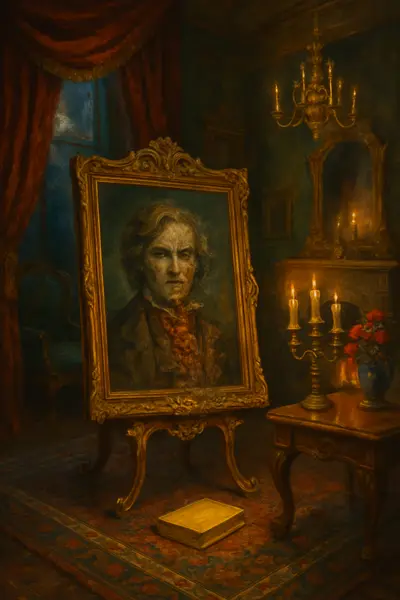
The Picture of Dorian Gray
1890 · Gothic horror
Free to read in your browser. Public-domain edition from Project Gutenberg, illustrated as you read.
About This Book
Oscar Wilde's The Picture of Dorian Gray is a story about beauty, corruption, and the price of staying young forever. Dorian Gray, a young man of extraordinary good looks, sits for a portrait by the artist Basil Hallward, and when it is finished he makes a reckless wish: that the painting would age in his place. The wish comes true. As the years pass Dorian stays young and beautiful while the portrait, locked away in an upstairs room, turns grotesque and records every sin and cruelty of his life. Egged on by the cynical Lord Henry Wotton, Dorian chases pleasure without consequence and ruins one life after another. Wilde's only novel, published in 1890, caused a scandal on release and was later used against him at his trial. It is now read as one of the great works of Gothic fiction and one of the wittiest novels in English, as well as a serious argument about art and morality.
Characters in The Picture of Dorian Gray
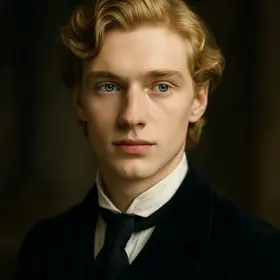 Dorian GrayDorian Gray is the beautiful, impressionable muse of painter Basil Hallward and the protégé of the worldly Lord Henry Wotton. His extraordinary allure and fascination with pleasure place him at the center of the novel’s exploration of aestheticism, influence, and the cost of living for beauty alone, with a mysterious portrait serving as the story’s moral compass.
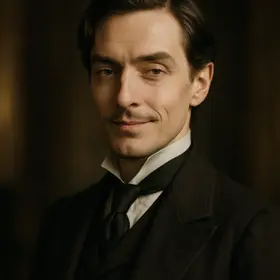 Lord Henry WottonA dazzlingly witty aristocrat and philosopher of pleasure, Lord Henry serves as Dorian Gray’s charismatic mentor, charming salons with epigrams while urging a life devoted to beauty and sensation. His seductive ideas and cool detachment make him a magnetic presence whose influence radiates through the novel’s moral and psychological conflicts, shaping the choices of those around him without lifting a finger.
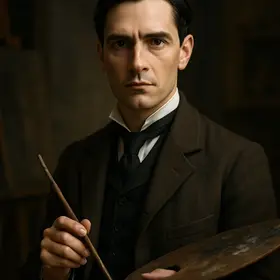 Basil HallwardBasil Hallward is the talented artist who paints Dorian Gray’s portrait and becomes both his admirer and quiet moral anchor. His sincere devotion to beauty and to Dorian’s better nature helps set the story in motion, and his perspective highlights the tension between aesthetic idealism and ethical responsibility without dominating the social whirl that surrounds Dorian.
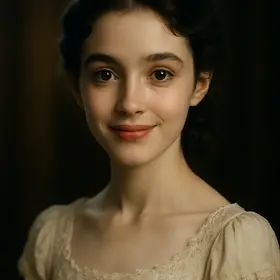 Sibyl VaneSibyl Vane is a teenage actress of extraordinary promise whose beauty and talent captivate Dorian Gray, becoming the living embodiment of his romantic ideals. Through her, the novel explores the tension between art and life, performance and sincerity, and her relationship with Dorian becomes a turning point that reveals and intensifies the moral conflicts at the heart of the story, without detailing specific plot outcomes.
 James VaneJames Vane is Sibyl Vane’s fiercely protective brother, a blunt, working-class sailor who distrusts Dorian from the start. His loyalty to his sister and his rigid sense of justice make him a looming presence in the story, embodying the threat of consequence that shadows Dorian’s glittering world, and heightening the novel’s tension without the refinements of high society.
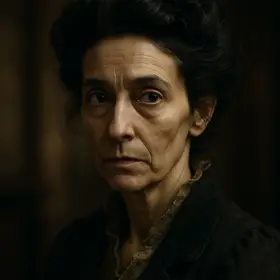 Mrs. VaneMrs. Vane is Sibyl Vane’s mother, a once‑aspiring actress turned practical, managing stage mother who worries about money and social advancement. She oversees Sibyl’s career, negotiates with theatre managers, and measures opportunities against security, serving as a worldly counterpoint to her daughter’s romantic idealism. Through her, the novel explores ambition, respectability, and the harsh economics of the Victorian stage without overshadowing the central figures.
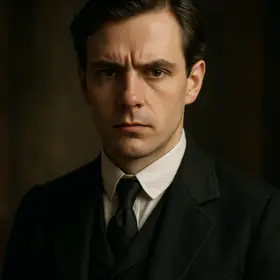 Alan CampbellA brilliant young chemist and former friend of Dorian Gray, Alan is drawn back into Dorian’s life when his scientific expertise becomes crucial to resolving a dire predicament. His interaction with Dorian reveals the extent of Dorian’s influence and moral decay, while Alan’s own conflict underscores the novel’s themes of corruption, coercion, and the costs of secrecy—without dominating the main plot.
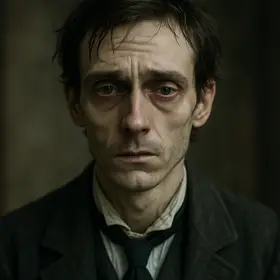 Adrian SingletonAdrian Singleton is a once‑promising young man from good society whom Dorian encounters among London’s underworld. His ruined state, tied to whispers of Dorian’s corrupting influence, serves as a living consequence of the protagonist’s decadent life. Through Adrian, the novel shows how Dorian’s charm masks harm done to others and widens the story’s moral shadow without shifting the focus from Dorian himself.
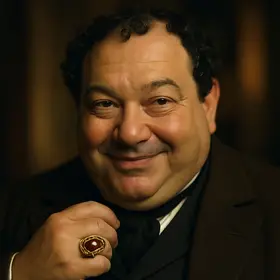 Mr. IsaacsMr. Isaacs is the manager of the shabby theater where Sibyl Vane performs. He employs and financially pressures Sibyl and her family, representing the commercial side of the stage that contrasts with Dorian’s idealistic infatuation. Though a minor figure, his dealings help show the precarious world around Sibyl and set the social context for Dorian’s early encounters with her.
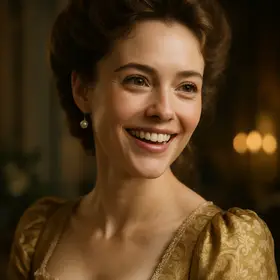 Duchess of MonmouthA witty, flirtatious presence in high society, the Duchess of Monmouth trades clever banter with Dorian at a country-house gathering, showcasing his social magnetism and the decadent charm of his circle. She adds levity and glamour, illuminating themes of beauty and pleasure while subtly contrasting with characters of graver moral weight.
Study guide
Summaries and analysis of all 21 chapters, and profiles of 11 characters, illustrated with scenes from the book.
The Picture of Dorian Gray summary ›The Picture of Dorian Gray characters ›
Themes
- Beauty & Vanity
- Corruption & Moral Decay
- Art & Life
- Influence & Manipulation
- Youth & Mortality
Why Read The Picture of Dorian Gray?
This is Wilde at his sharpest. Every page turns on an epigram or a paradox, and underneath the wit sits a genuinely frightening story about what happens when looks are valued above everything else. In an age of filters and curated selves, Dorian's bargain reads as less of a fantasy than it used to.
As you read, Book2Life illustrates Wilde's London, from the sunlit studio where Basil paints the portrait to the locked attic room where the real Dorian slowly takes shape on the canvas.
Experience The Picture of Dorian Gray on Book2Life
Read with AI-generated visuals, character portraits, audio narration, smart summaries, and more — free in your browser, on iPhone and on Android.