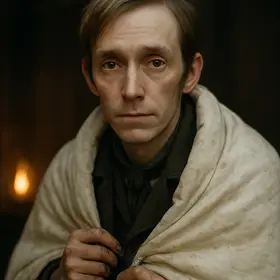
Bob Cratchit in A Christmas Carol
Major character
Scrooge’s gentle, underpaid clerk and devoted family man who keeps hope and gratitude amid hardship.
Who is Bob Cratchit?
Bob Cratchit is Ebenezer Scrooge’s long-suffering clerk who works in a cold, cramped office and returns each evening to a small, loving household. He wants security and the means to provide for his family, yet he accepts scant wages with quiet dignity, making the most of a rare Christmas feast. In the story he supplies the moral contrast to Scrooge’s miserliness: his politeness, patience, and visible affection for his children, especially Tiny Tim, reveal the human consequences of poverty. When the Ghost of Christmas Present shows Scrooge the Cratchit home, Bob’s warmth and gratitude are on full display; later the Ghost of Christmas Yet to Come shows the family mourning what may be Tiny Tim’s death, amplifying the stakes of Scrooge’s selfishness. By the end, Scrooge’s transformation leads him to anonymously send a turkey and then raise Bob’s salary, improving the Cratchits’ prospects and ensuring Tiny Tim’s survival.
In the book: We first meet him as Scrooge’s underpaid clerk, huddled at a meager fire on Christmas Eve and quietly doing his best to stay cheerful. He’s polite, hardworking, and grateful, and his gentle manner throws Scrooge’s sour temper into sharp relief, showing us what everyday kindness looks like under pressure.
Personality
- Patient
- He endures Scrooge’s stinginess and the cold “tank” at his desk, quietly continuing his work on Christmas Eve despite the conditions.
- Grateful
- At the Cratchit dinner the family celebrates a meagre feast with evident thankfulness, with Bob joining in the household’s warm cheer.
- Devoted
- He cares tenderly for Tiny Tim and the family, showing deep concern when Scrooge asks if the child will live during the Spirit’s visit.
- Steadfast
- Even when shown the vision of a grieving family in Stave Four, Bob’s love and memory of Tiny Tim remain quietly steadfast.
Character arc
Bob Cratchit’s situation changes externally rather than internally: he begins the tale as a humble, underpaid clerk who accepts hardship with patience and ends with improved material circumstances because of Scrooge’s conversion. Throughout the visits of the Spirits he remains essentially the same moral centre—warm, grateful, and family-focused—so his personal growth is more a revelation of virtue than a transformation. The Ghost of Christmas Present exposes the value of his household’s joy in the face of poverty, and the Ghost of Christmas Yet to Come forces Scrooge (not Bob) to confront the mortal risk to Tiny Tim. As a result of Scrooge’s awakened generosity in Stave Five, Bob receives a raise and secret benefactions (the turkey and promised help), which lift the family’s prospects and preserve Tiny Tim’s life. Bob ends the story still the same loving father and husband, but relieved and steadied by the kindness he was previously denied.
Relationships
- Ebenezer Scrooge His stingy employer who begrudges him comforts but later becomes generous and raises his pay.
- Tiny Tim His ailing youngest son, the focus of Bob’s tenderness and the family’s concern during the Spirits’ visit.
- Mrs. Cratchit His supportive wife who shares in the family’s cheerful resilience and sorrow.
- Martha Cratchit His industrious daughter, mentioned as part of the household that rallies around Tiny Tim.
- The Portly Gentlemen Representatives of the charitable appeal whom Bob is indirectly affected by when Scrooge refuses to contribute.
- Fred Scrooge’s cheerful nephew whose festive goodwill contrasts with Scrooge’s miserliness and indirectly benefits the Cratchits when Scrooge reforms.
Why Bob Cratchit matters
Bob embodies the novel’s affirmation of family, charity, and humble virtue. His steady goodness and the Cratchit household’s warmth dramatize the human cost of Scrooge’s selfishness and make the Spirit-led revelations morally urgent. Through Bob, Dickens shows that generosity is not merely benevolence but a social necessity: improving one man’s lot (Scrooge’s change) restores health and hope to others. Bob’s presence personalizes poverty, turning abstract arguments about prisons and workhouses into the fate of a named child, Tiny Tim, and thereby anchors the book’s plea for compassion and social responsibility.
Chapters with Bob Cratchit
More A Christmas Carol characters
 Ebenezer ScroogeProtagonist
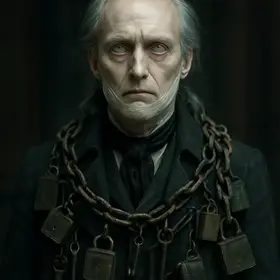 Jacob MarleyMajor character
 FredMajor character
 Ghost of Christmas PastMajor character
 Ghost of Christmas PresentMajor character
 Ghost of Christmas Yet to ComeMajor character
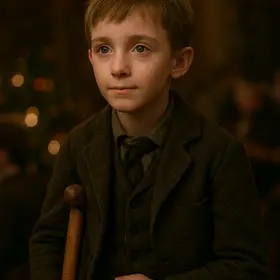 Tiny TimMajor character
 Dick WilkinsMinor character
All chapter summaries ›Characters ›
Read A Christmas Carol illustrated
Every scene in these notes comes from the Book2Life reader, where the full public-domain text is illustrated as you read, with character portraits and narration. Free in your browser and on iPhone.
