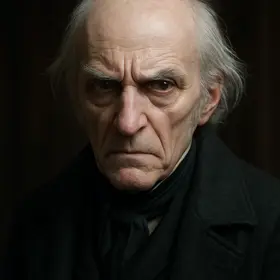
Ebenezer Scrooge in A Christmas Carol
Protagonist
A cold, wealthy London moneylender transformed from miser to generous man over the course of three supernatural nights.
Who is Ebenezer Scrooge?
Ebenezer Scrooge is introduced as a solitary, mean-spirited moneylender who hates Christmas and human warmth. He wants security, profit, and control, and he enforces those priorities by keeping his clerk Bob Cratchit in a freezing office, refusing charity appeals, and rejecting his nephew Fred’s invitation. Supernatural visitations—first Jacob Marley, then three Spirits—force Scrooge to witness his lonely childhood, the kindly example of Fezziwig, his lost engagement to Belle, the present struggles of the Cratchit family (including Tiny Tim), and finally his own neglected grave. These enforced encounters move him from obstinacy to urgent remorse and then to renewed action. By the final stave he seizes the chance to change: he joyfully sends a large turkey to the Cratchits, makes good on charity pledges, surprises Fred with an affectionate visit, raises Bob’s wages, and becomes a protector of Tiny Tim, fulfilling vows he made to honor past, present, and future.
In the book: When we first meet Ebenezer Scrooge, he’s a wealthy London moneylender who hates fuss, warmth, and—especially—Christmas. He keeps his clerk Bob Cratchit shivering at a tiny fire, turns away charity collectors, and waves off his cheerful nephew Fred, convinced that kindness is just bad business.
Personality
- Miserly
- He keeps Bob Cratchit shivering at a tiny fire and argues against giving him Christmas Day off.
- Curmudgeonly
- He greets his nephew Fred’s cheerful Christmas wishes with scorn and calls the season 'humbug.'
- Remorseful
- He weeps while watching the lonely boy at school and other scenes shown by the Ghost of Christmas Past.
- Fearful
- He falls to his knees and begs the Ghost of Christmas Yet to Come to alter the fate shown at the grave.
- Generous (reformed)
- On waking, he buys the largest turkey for the Cratchits and later raises Bob’s wages and helps Tiny Tim.
Character arc
At first Scrooge is a hardened, self-protective man who prizes money above human connection: he refuses charity, denounces Christmas, and treats Bob Cratchit with scant sympathy. Marley’s ghost forces him to confront the consequences of a life closed to others, and the Ghost of Christmas Past softens him by showing lonely schooldays, the warm Fezziwig party, and the love he lost to avarice. These memories awaken regret and vulnerability. The Ghost of Christmas Present then exposes him to current human need—the Cratchit family's modest joy and Tiny Tim’s fragility—and to the social consequences of neglect in the figures of Ignorance and Want, intensifying his moral responsibility. The silent, pointing Ghost of Christmas Yet to Come delivers the crisis: Scrooge sees his own neglected grave and the indifferent reactions of others. Terrified, he pleads to change. On awakening, he embraces immediate, sustained reform: he acts with exuberant generosity, reconciles with Fred, recompenses the charity collectors, feeds the Cratchits anonymously, raises Bob’s salary, and commits to being a benefactor and protector—completing a transformation from miser to benevolent citizen.
Relationships
- Jacob Marley His deceased business partner who returns as a ghost to warn and catalyse Scrooge’s change.
- Bob Cratchit His long-suffering clerk whom Scrooge keeps in poverty but later raises and aids after his conversion.
- Fred His cheerful nephew who invites Scrooge to Christmas dinner and eventually welcomes him after Scrooge reforms.
- Tiny Tim Bob Cratchit’s ill son whose possible death haunts Scrooge and whom Scrooge later helps and protects.
- Belle The woman Scrooge loved in youth who releases him when his pursuit of money replaces their relationship.
- Fezziwig His kindly former employer whose joyful Christmas party shows Scrooge an alternative model of human leadership.
Quotes by Ebenezer Scrooge
“"Bah!" said Scrooge, "Humbug!"”
Stave OneScrooge's curt rejection of his nephew's Christmas cheer, instantly summing up his contempt for the season and human warmth.
“"If they would rather die," said Scrooge, "they had better do it, and decrease the surplus population."”
Stave OneA harsh expression of Scrooge’s social attitude toward the poor, revealing his utilitarian indifference and setting up the novel’s moral opposition to such views.
“There is nothing on which it is so hard as poverty; and there is nothing it professes to condemn with such severity as the pursuit of wealth!”
Stave TwoScrooge blurts this moral observation during the dispute with Belle, revealing his awareness of the harsh social dynamics tied to money.
“Am I that man who lay upon the bed?”
Stave 4Scrooge's first anguished question on recognizing the dead man and confronting the Spirit's implication about his fate.
“I will honour Christmas in my heart, and try to keep it all the year. I will live in the Past, the Present, and the Future.”
Stave 4Scrooge's vow of transformation and his promise to carry the Spirits' lessons forward as he begs for mercy.
Why Ebenezer Scrooge matters
Scrooge embodies the novel’s moral trajectory from selfishness to social responsibility. His early miserliness and dismissal of charity dramatize systemic indifference to the poor; his supernatural confrontations reveal the human costs of that indifference. His ultimate conversion affirms Dickens’s belief that individuals can choose compassion, reconnect with community, and repair social bonds. As protagonist, Scrooge makes the book’s plea for generosity, mercy, and Christmas spirit concrete by transforming private repentance into public, sustained action.
Chapters with Ebenezer Scrooge
More A Christmas Carol characters
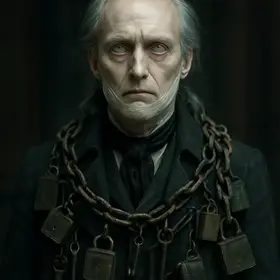 Jacob MarleyMajor character
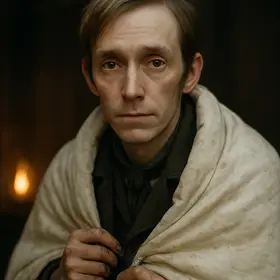 Bob CratchitMajor character
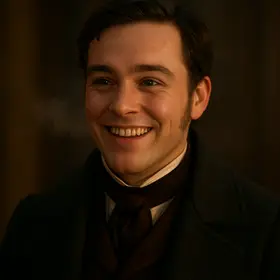 FredMajor character
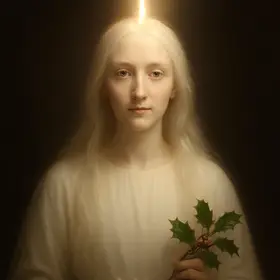 Ghost of Christmas PastMajor character
 Ghost of Christmas PresentMajor character
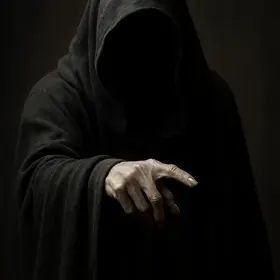 Ghost of Christmas Yet to ComeMajor character
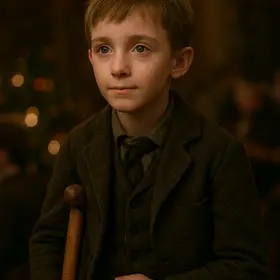 Tiny TimMajor character
 Dick WilkinsMinor character
All chapter summaries ›Characters ›
Read A Christmas Carol illustrated
Every scene in these notes comes from the Book2Life reader, where the full public-domain text is illustrated as you read, with character portraits and narration. Free in your browser and on iPhone.
