
John H. Watson in A Study in Scarlet
Narrator
An army surgeon recently returned from Afghanistan who becomes Holmes’s friend, roommate, and the story’s observant chronicler.
Who is John H. Watson?
John H. Watson is a recently invalided army surgeon who returns from Afghanistan to London with little money, broken health, and no family. Seeking affordable rooms, he meets Sherlock Holmes through Mike Stamford and soon becomes Holmes’s roommate at 221B Baker Street. Watson wants steadiness and purpose after his military wounds; he finds both in Holmes’s work and settles into the role of companion, medical advisor, and chronicler. Across the investigation of the Brixton murders he serves as Holmes’s practical counterpoint: he provides medical expertise when Jefferson Hope is captured, keeps watch during traps (reading Holmes’s advertisement and standing ready with a revolver), and records Holmes’s methods for the reader. Watson alternates between admiration, bafflement, and respectful questioning of Holmes’s methods, and his humanity and loyalty ground the narrative and make the detective’s intellectual feats accessible. Ultimately Watson preserves the true course of events in his journal when public reports misattribute credit.
In the book: An army surgeon newly returned from Afghanistan, John H. Watson serves as the observant narrator and grounded counterpoint to Sherlock Holmes. Through his practical medical insight and steady loyalty, he becomes Holmes’s first roommate, chronicler, and partner, providing the human lens that introduces readers to Holmes’s methods and the world of detective inquiry.
Personality
- Observant
- He notes Holmes’s routines—laboratory sessions, fits of energy and torpor—and records the Baker Street rooms in detail when they move in (Chapter 2).
- Loyal
- He agrees to play a part in Holmes’s trap for the murderer, stays armed with a revolver, and waits anxiously while Holmes tails the woman who answers the ring advertisement (Chapter 5).
- Practical
- When Jefferson Hope is brought in, Watson examines him, identifies aortic aneurism, and advises that Hope’s condition allows immediate questioning (Hope’s Confession).
- Curious
- He follows Holmes into the Lauriston Gardens investigation, presses Holmes for explanations, and avidly reads the papers and Holmes’s reconstruction of the case (Chapters 3–7).
- Respectful
- He openly admires Holmes’s deductions—calling the case ‘a study in scarlet’—and defers to Holmes’s refusal to reveal all his methods while nevertheless recording them (Chapters 3–4, Conclusion).
Character arc
Watson begins as a recently returned, physically weakened army surgeon adrift in London, seeking cheap lodgings and a measure of stability (Chapter 1). Meeting Holmes provides immediate change: he takes rooms at 221B Baker Street, learns Holmes’s habits, and becomes both companion and student of Holmes’s methods (Chapter 2). Over the course of the Brixton investigation Watson shifts from detached curiosity to active participant—standing guard for Holmes’s traps, tailing suspects by Holmes’s direction, and using his medical training to evaluate Jefferson Hope when captured (Chapters 5, 6, Hope’s Confession). His role as narrator grows clearer: he balances admiration with critical distance, pressing Holmes for explanations while refusing to sensationalize the case. By the end he has moved from a man seeking purpose to a responsible chronicler who preserves the true facts after public reports misattribute credit; his final resolution to publish the true story marks his acceptance of the role of Holmes’s biographer and the keeper of the record (Conclusion). Throughout, Watson’s compassion and medical competence remain steady, even as his confidence and engagement with detective work increase.
Relationships
- Sherlock Holmes Roommate, close friend, intellectual foil, and the detective whose methods Watson admires and records.
- Mike Stamford Former Bart’s Hospital colleague who reconnects Watson with Holmes and sets their lodgings in motion.
- G. Lestrade Scotland Yard inspector whom Watson observes collaborating and competing with Holmes during the Brixton investigation.
- Tobias Gregson A proud local detective whose early theory and arrest Watson watches overturned by later events.
- John Rance Constable whose night-beat testimony Watson hears and whose missed opportunity Holmes laments.
- Jefferson Hope The captured murderer whom Watson medically examines, tends, and listens to during his confession and final illness.
Quotes by John H. Watson
“Why," I cried, "you have an aortic aneurism!”
Chapter 6Watson’s medical diagnosis reveals Hope’s life-threatening condition and justifies taking his statement immediately.
Why John H. Watson matters
Watson functions as the humanizing lens through which the novel’s exploration of observation, deduction, and justice is made accessible. His medical pragmatism and moral sympathy balance Holmes’s cool intellectualism, allowing readers to appreciate both scientific method and human motive. As narrator and chronicler he shapes the reader’s perception of events, underscores themes of revenge versus law, and preserves the moral complexity of the case against simplified public accounts. Watson’s loyalty and respect for truth reinforce the book’s emphasis on careful observation combined with ethical responsibility.
Chapters with John H. Watson
More A Study in Scarlet characters
 Joseph StangersonMajor character
 Sherlock HolmesProtagonist
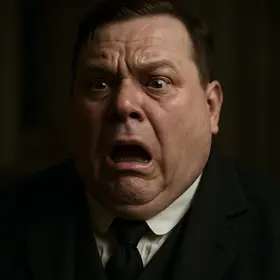 Enoch DrebberAntagonist
 Jefferson HopeAntagonist
 G. LestradeMajor character
 John FerrierMajor character
 Lucy FerrierMajor character
 Brigham YoungMajor character
All chapter summaries ›Characters ›
Read A Study in Scarlet illustrated
Every scene in these notes comes from the Book2Life reader, where the full public-domain text is illustrated as you read, with character portraits and narration. Free in your browser and on iPhone.
