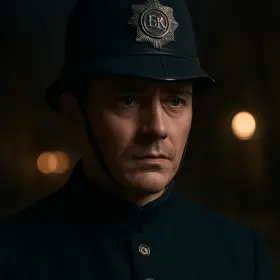
John Rance in A Study in Scarlet
Minor character
The beat constable on duty who discovers the Lauriston Gardens scene and provides the essential eyewitness account.
Who is John Rance?
John Rance is the policemen who lives at Number 46, Audley Court, and whose beat brings him to the gate of 3 Lauriston Gardens on the night a well-dressed man is found dead. Roused from sleep, he describes a quiet round broken by a light in an otherwise empty house, his cautious approach to the gate, and his eventual entry where he finds the corpse and the disturbed surroundings. He sounds his whistle to summon reinforcements—bringing Harry Murcher and others—and identifies a very drunk, tall man leaning against the railings who is supported by bystanders. Rance supplies these concrete observations and timings to Holmes, Lestrade, and Gregson, and answers Holmes’s pointed questions, though he also misses details Holmes believes could have led immediately to the murderer. Rance’s testimony gives the investigators the initial facts they need: the presence of a cab, a drunken man at the scene, and that others responded when he called, setting the case in motion without making him a central actor in the pursuit that follows.
In the book: John Rance is the beat constable who discovers the mysterious body at Lauriston Gardens and provides a crucial eyewitness account to the investigation. His observations and actions on the night in question supply early facts that Sherlock Holmes analyzes, helping to set the case in motion without making Rance a central figure.
Personality
- dutiful
- He is roused from sleep and recounts his night beat and steps he took when he noticed the light at Lauriston Gardens.
- observant (limited)
- He notes the presence of a very drunk, tall man leaning against the railings and the lack of a whip, details he reports to Holmes and the detectives.
- cautious
- He hesitates at the gate before returning to enter the house, a hesitation Holmes later highlights as a missed opportunity.
- procedural
- He sounds his whistle to summon Harry Murcher and others upon finding the body, following police practice for backup.
Character arc
John Rance appears and ends the same officerly figure: roused from sleep, he performs his duty by investigating a strange light, enters the property, finds the corpse, and calls for help. His role is largely static; he does not undergo a moral or psychological transformation. What shifts is how his actions are interpreted by others—Holmes reads Rance’s hesitation and the details he supplies as both useful evidence and a missed tactical chance. Rance begins as the primary witness whose concrete actions put the investigation into motion, and he finishes as a factual source rather than an active pursuer: his testimony supplies the building blocks Holmes uses to form deductions and to plan the effort to catch the suspect, but Rance himself neither pursues the case further nor alters his behavior. The narrative thus moves him from on-scene discoverer to background witness, emphasizing the limits of routine policing when measured against Holmes’s analytic method.
Relationships
- Sherlock Holmes Holmes questions Rance closely and uses Rance’s observations as raw material for his deductions, correcting and pressing detail where needed.
- John H. Watson Watson records Rance’s account in his narration and observes Holmes’s reaction to Rance’s testimony.
- Tobias Gregson Gregson summoned assistance that brought Holmes and Watson to the scene and interacts with Rance as part of the official investigation.
- G. Lestrade Lestrade is on the scene with Gregson and the detective force when Rance provides his statement about the discovery.
- Harry Murcher Murcher is one of the men who responds after Rance sounds his whistle and helps manage the scene and the drunken man.
- Enoch Drebber Drebber is the dead man Rance finds at Lauriston Gardens; Rance’s discovery makes Drebber the subject of the investigation.
Why John Rance matters
John Rance embodies the procedural, on-the-ground police work that contrasts with Holmes’s scientific method. He supplies necessary concrete facts—time, presence of a drunken man, the call for reinforcements—that set the investigation in motion, yet his hesitation and limited inference highlight the theme that raw observation needs critical analysis to yield truth. Rance’s role underscores the novel’s exploration of different forms of detection: respectable, routine police procedure versus Holmes’s deductive reasoning. His presence advances the plot by providing the material Holmes refines into insight, showing how small, factual acts can catalyze a deeper inquiry.
Chapters with John Rance
More A Study in Scarlet characters
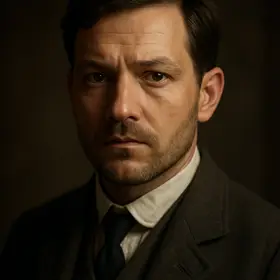 Joseph StangersonMajor character
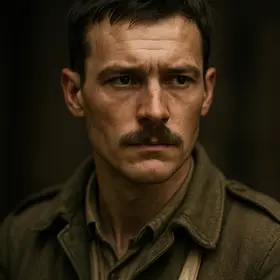 John H. WatsonNarrator
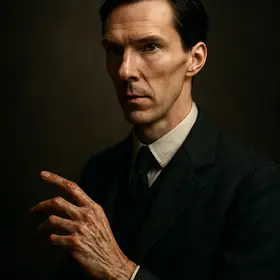 Sherlock HolmesProtagonist
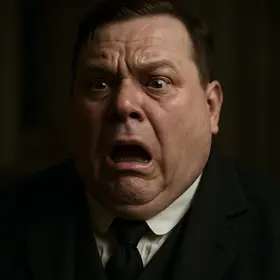 Enoch DrebberAntagonist
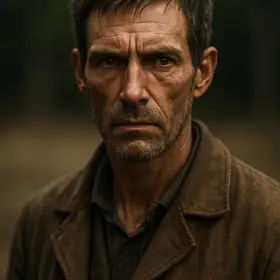 Jefferson HopeAntagonist
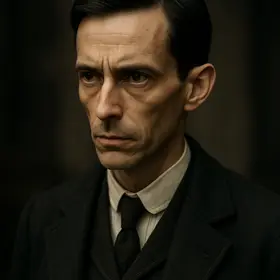 G. LestradeMajor character
 John FerrierMajor character
 Lucy FerrierMajor character
All chapter summaries ›Characters ›
Read A Study in Scarlet illustrated
Every scene in these notes comes from the Book2Life reader, where the full public-domain text is illustrated as you read, with character portraits and narration. Free in your browser and on iPhone.
