A Tale of Two Cities Chapter 1 Summary
The Period
A narrator contrasts extremes in 1775 England and France, outlining social disorder, spiritual oddities, and the unseen forces of death and fate.
Summary
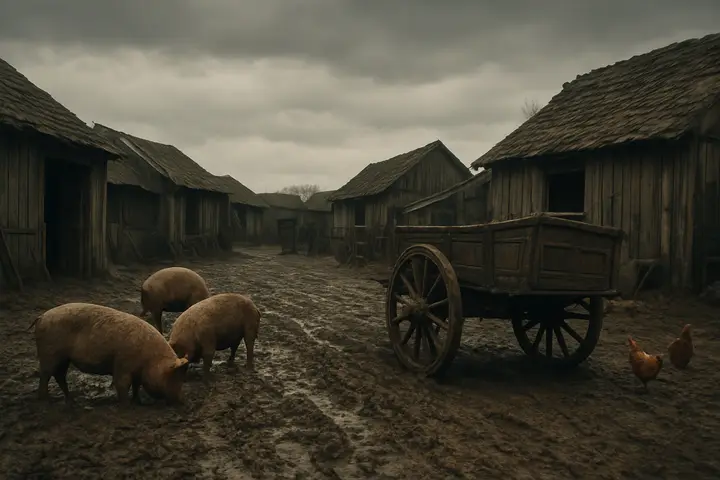
The narrator opens with a famous paradoxical meditation on extremes: the best and worst of times coexist, and public opinion insists on judging events in superlatives. The scene is set in the year 1775, with parallel monarchies in England and France and a social atmosphere that seems at once prosperous and precarious. The text lists odd spiritual happenings in England—Mrs. Southcott’s prophetic fame and the Cock-lane ghost—and notes that colonial messages from America have unexpectedly large consequences.
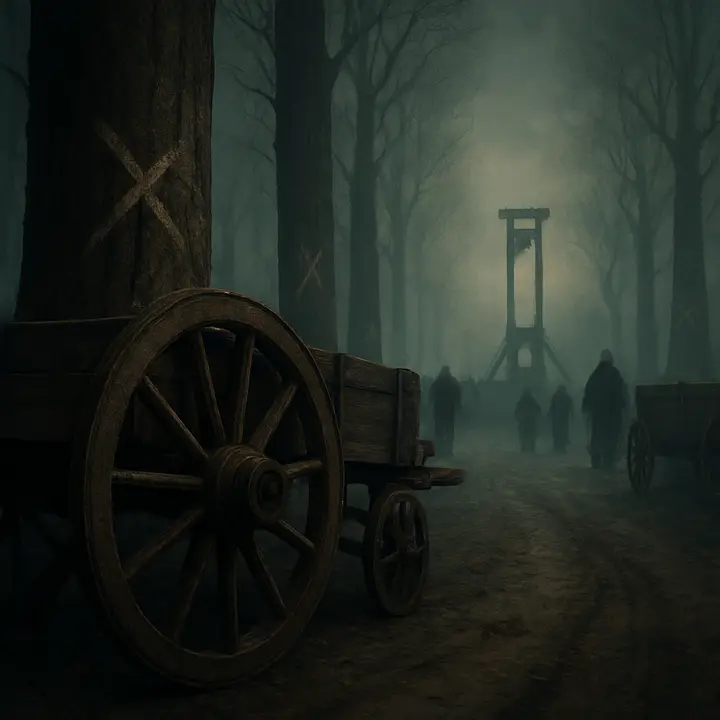
The narrative then turns to France, where money is plentiful but misused, and the clergy preside over brutal punishments for small offenses. Dickens introduces two personified figures—“the Woodman, Fate” and “the Farmer, Death”—and suggests that they have already set aside the tools that will be used in terrible change, though their work is silent and unacknowledged. Back in England, order is thin: highway robberies, burglaries, corrupt or theatrical violence, and a busy hangman create a landscape of disorder and hypocrisy. The chapter closes by reminding the reader that these conditions carry the novel’s characters—“myriads of small creatures”—along the roads that will shape their fates.
Key events
- Opening paradox contrasts extremes of the era (wisdom/foolishness, light/darkness).
- Year and political setting given: 1775, parallel English and French monarchies.
- Noted spiritual curiosities in England (Mrs. Southcott, Cock-lane ghost) and news from America.
- France described as decaying under clergy, with brutal punishments and financial mismanagement.
- Personification of Fate and Death as the Woodman and the Farmer preparing tools for future events.
- Description of English social disorder: robberies, violent law enforcement, and a perpetually busy hangman.
- Declaration that these conditions direct the lives of the novel’s ordinary people forward.
Chapter 1 in pictures
Analysis
This opening chapter functions as a thematic overture rather than a plot episode: it establishes the novel’s central contrasts and ironic voice. The rapid succession of opposites (best/worst, light/dark) primes the reader to expect moral and social dualities—personal sacrifice versus selfishness, public spectacle versus private suffering—that will recur. Dickens uses satire and hyperbole to depict both national arrogance and social rot: England’s comic supernatural curiosities and France’s gruesome punishments both expose institutions that delude themselves about order and justice. The Woodman (Fate) and the Farmer (Death) are symbolic figures introduced early to foreshadow large-scale, impersonal forces—that change and violence loom beyond human notice. Narrative technique is notable for its rhetorical cadence and rhetorical listing, which both amuse and unsettle; the voice oscillates between mock-grand and ominous, preparing readers for a story that mixes dark seriousness with ironic critique. Structurally, the chapter orients time (1775) and mood and signals that the forthcoming plot will be shaped by historical currents rather than isolated individual choice.
Important quotes
“It was the best of times, it was the worst of times, it was the age of wisdom, it was the age of foolishness, it was the epoch of belief, it was the epoch of incredulity, it was the season of Light, it was the season of Darkness, it was the spring of hope, it was the winter of despair, we had everything before us, we had nothing before us, we were all going direct to Heaven, we were all going dire”
NarratorFamous opening that establishes the novel’s theme of striking opposites and ironic tone.
“It is likely enough that, rooted in the woods of France and Norway, there were growing trees, when that sufferer was put to death, already marked by the Woodman, Fate, to come down and be sawn into boards, to make a certain movable framework with a sack and a knife in it, terrible in history.”
NarratorIntroduces symbolic figures (Woodman/Fate) and foreshadows instruments of future violence.
Characters in Chapter 1
- Mrs. Southcott
- Cock-lane ghost
- the Woodman, Fate
- the Farmer, Death
- the Lord Mayor of London
- the hangman
- a king with a large jaw
- a queen with a plain face
- a queen with a fair face
- British subjects in America
- the Life Guards
All chapter summaries ›Characters ›
Read A Tale of Two Cities illustrated
Every scene in these notes comes from the Book2Life reader, where the full public-domain text is illustrated as you read, with character portraits and narration. Free in your browser and on iPhone.
Read A Tale of Two Cities free
