Alice's Adventures in Wonderland Chapter 2 Summary
The Pool of Tears
Alice grows and shrinks, cries a pool of tears, falls in when she becomes small, meets a talking Mouse, and swims ashore with other animals.
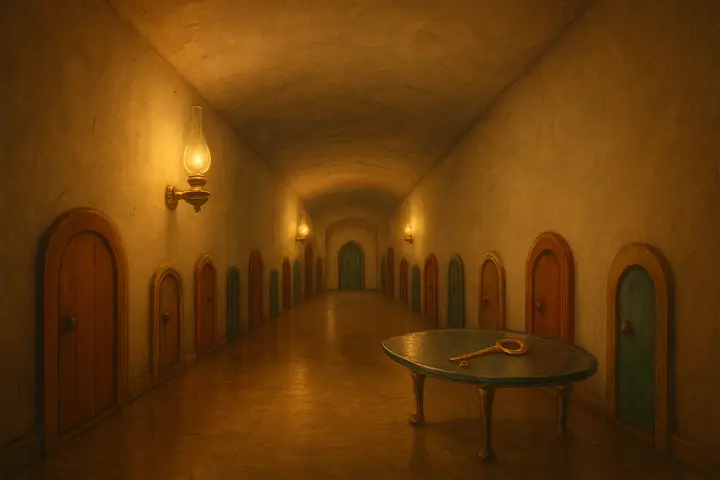
Summary
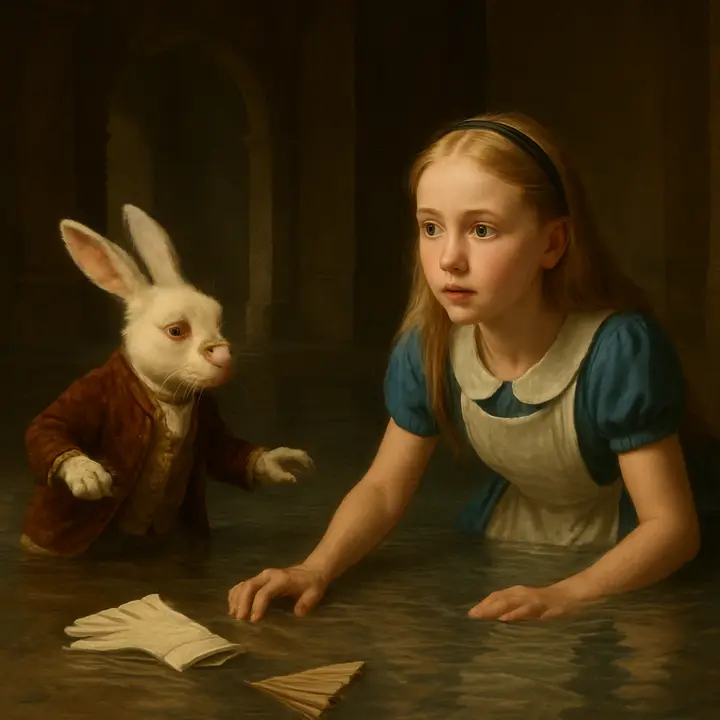
Alice, having grown enormously and then shrunk again, finds herself trapped behind the tiny garden door. While distraught and arguing with herself about identity and memory, she weeps so much that she creates a large pool of tears in the hall. The White Rabbit returns in a hurry; Alice timidly addresses him, but he flees, dropping a fan and gloves which Alice picks up. Holding the fan causes another size change, and she shrinks to about two feet, then smaller still until she nearly disappears; she drops the fan and narrowly avoids vanishing.
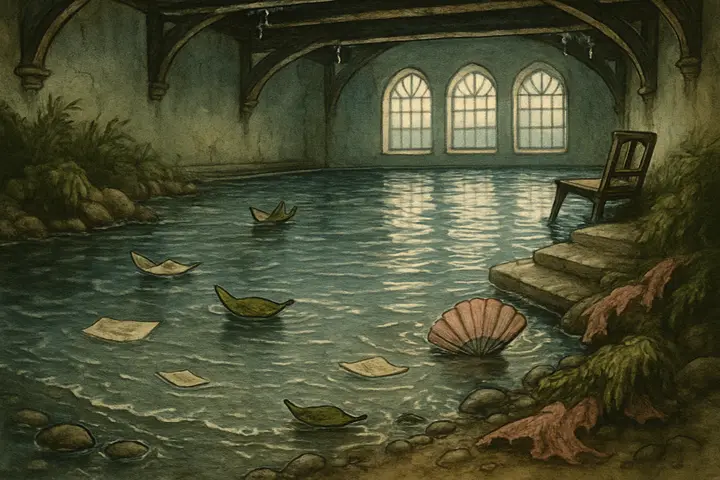
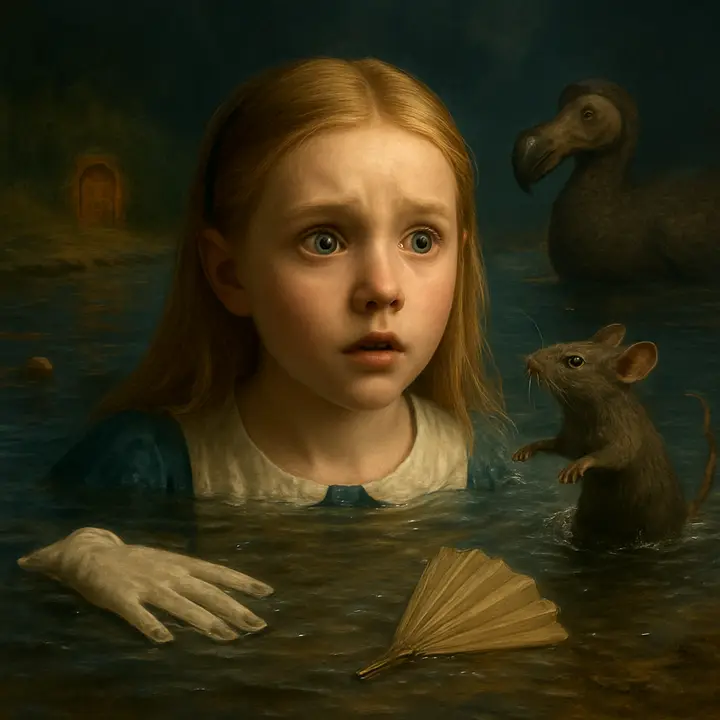
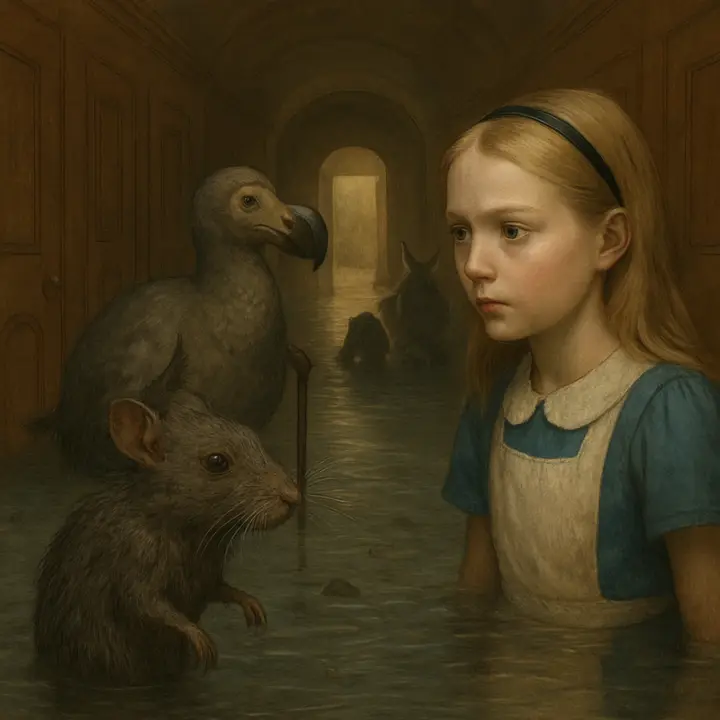
Slipping, Alice falls into the salt water and realizes it is the pool formed by her own tears. Swimming, she notices another splashing creature—at first she mistakes it for some large animal, then sees it is a mouse. Believing animals here can talk, she attempts to converse, switching awkwardly between English and a remembered French phrase, which alarms the Mouse. Her attempts to befriend the Mouse by talking about her cat Dinah and a terrier instead offend it, but she placates it by promising not to speak of cats or dogs. As more creatures who have fallen into the pool appear, including a Duck, a Dodo, a Lory, and an Eaglet, Alice leads the assembling group toward the shore. The Mouse offers to tell its “history” once they reach land, promising to explain its hostility toward cats and dogs, and the group swims for the bank.
Key events
- Alice grows to nine feet, takes key but cannot reach garden
- She cries until the hall fills with a pool of tears
- White Rabbit returns; Alice takes his fan and gloves and shrinks
- Alice falls into the pool—now her own tears—and swims
- She meets a talking Mouse, accidentally offends it, then reconciles
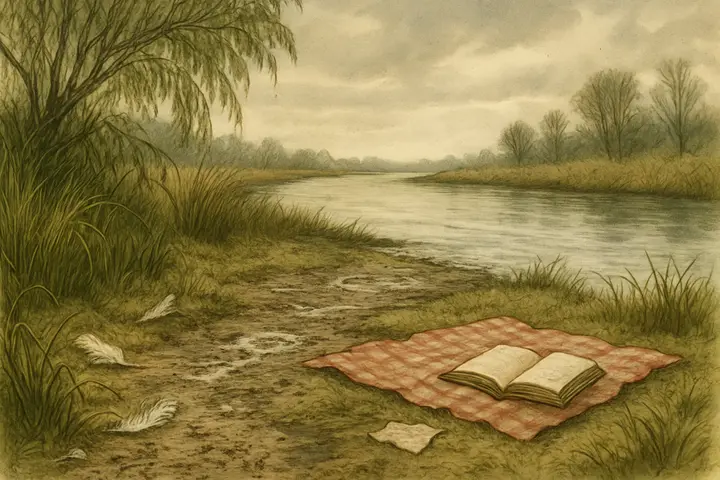
- Birds and animals appear in the pool; they swim ashore together
Chapter 2 in pictures
Analysis
Chapter II develops the novel’s playful logic about size, identity, and language while shifting the setting from the house to a communal, watery space. Alice’s alternating growth and shrinkage literalizes adolescent anxieties about selfhood—her musings on being ‘‘Mabel’’ and scrambled schoolroom recollections emphasize unstable identity. The pool of tears operates as both a comic consequence of cartoonish transformation and a metaphor for emotional overwhelm: Alice’s own feelings physically isolate and submerge her, creating a social situation where other displaced creatures converge.
Conversation here foregrounds miscommunication and cultural misrecognition: Alice’s attempts at Latinized or French phrases and her casual references to Dinah highlight the limits of human-centered assumptions when addressing animals; the Mouse’s offended reaction inverts the expected human-animal hierarchy. Structurally, the chapter transitions from a private, interior crisis to a social scene that sets up episodic encounters with personified animals—preparing the episodic, allegorical encounters to follow. Symbolically, the fan and gloves trigger size changes, suggesting small objects mediate personal power; the pool itself foreshadows future gatherings and debates about narrative authority as animals insist on telling their ‘‘histories.’’ Carroll’s narrative voice remains gently ironic, letting Alice’s earnestness and confusion anchor the surreal logic while introducing other speaking animals whose differing perspectives will complicate her assumptions.
Important quotes
““Curiouser and curiouser!” cried Alice (she was so much surprised, that for the moment she quite forgot how to speak good English);”
AliceAlice responds to her sudden growth with bewilderment that introduces the chapter’s theme of distorted perception and language.
““I shall be punished for it now, I suppose, by being drowned in my own tears! That will be a queer thing, to be sure! However, everything is queer to-day.””
AliceAlice reflects wryly on the absurd consequence of her emotions, emphasizing the chapter’s blend of whimsy and anxiety.
““Let us get to the shore, and then I’ll tell you my history, and you’ll understand why it is I hate cats and dogs.””
MouseThe Mouse promises narrative explanation, signaling the chapter’s move toward collective storytelling and revealing interspecies grievances.
Characters in Chapter 2
- Alice
- White Rabbit
- Mouse
- Duck
- Dodo
- Lory
- Eaglet
- Dinah
All chapter summaries ›Characters ›
Read Alice's Adventures in Wonderland illustrated
Every scene in these notes comes from the Book2Life reader, where the full public-domain text is illustrated as you read, with character portraits and narration. Free in your browser and on iPhone.
Read Alice's Adventures in Wonderland free
