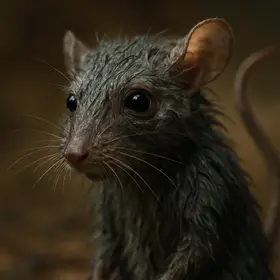
Mouse in Alice's Adventures in Wonderland
Minor character
A prim, easily offended little mouse who leads the drenched animals and delivers a dry, didactic 'history' in the caucus scene.
Who is Mouse?
The Mouse appears early after Alice shrinks and falls into the pool of tears. It is one of the other creatures who has been swept into the pool and swims with Alice to the riverbank. The Mouse presents itself as prim and serious: it promises to tell its "history" to explain its hostility toward cats and dogs and then begins a long, pedantic lecture that quickly bores and confuses the assembled animals. In the Caucus-race episode the Mouse organizes the group into a formal ring and then reacts with hauteur and offence when Alice misunderstands its phrase "long and sad tale" (Alice hears "tail") and when she mentions her cat Dinah. The Mouse functions chiefly as a comic foil and a vehicle for wordplay and social satire, steering the animals toward a ludicrously formal attempt to get dry and exposing the literal-mindedness and social awkwardness that characterize much of Wonderland's interactions.
In the book: The Mouse is one of the first creatures Alice meets after shrinking, serving as a prim yet easily offended interlocutor who tries to organize the sodden animals and “dry” them out with a history lecture. It functions as a comic foil for Alice’s naïveté, sparking wordplay (notably the “tale/tail”) and setting the tone for the book’s logic-twisting conversations and social satire, especially in the caucus of creatures.
Personality
- Prim
- It offers to tell its 'history' in a formal, lecture-like way and positions itself as a leader of the drenched assembly.
- Easily offended
- It takes offence when Alice mentions cats and later leaves the group in a huff after her misunderstanding of 'tale/tail.'
- Didactic
- It launches into a long, dry historical lecture intended to 'explain' its feelings toward cats and dogs.
- Literal-minded
- It reacts to Alice's literal mishearing of 'tale' as 'tail' and to her casual remarks about Dinah with visible displeasure.
Character arc
The Mouse's arc runs through the pool-and-caucus episodes without deep internal change but with shifting social position. On first appearance it is an alarmed but proper presence in the water: Alice's attempts at conversation offend it, so it asserts boundaries by refusing to hear talk of cats and dogs. On the bank it briefly assumes leadership, intending to impart a serious account of its 'history'—an attempt to impose order and explanation on the chaotic scene. The Mouse's authoritative pose leads directly into the Caucus-race: it organizes the animals into a ring and begins its lecture, but the group's absurd responses and interruptions undermine its control. Alice's innocent misinterpretation (tale/tail) and her bragging about Dinah provoke the Mouse's sensitivity, and it withdraws in a huff. Rather than learning from the episode, the Mouse mostly reasserts its prim sensibility and departs offended, showing that its role is to expose social rigidity rather than to undergo transformation.
Mouse in pictures


Relationships
- Alice A conversational foil: Alice's naïve remarks offend the Mouse and prompt its prim reactions.
- Dodo Works alongside the Dodo in the caucus scene where the Dodo stages the race and the Mouse is one of the speakers.
- Duck One of the other drenched animals who accompanies the Mouse to the shore and listens to its history.
- Lory A fellow participant in the drying council whose quarrel with Alice interrupts the Mouse's intended order.
- Eaglet Another member of the assembled creatures who is present for the Mouse's lecture and the caucus-race.
Quotes by Mouse
““Let us get to the shore, and then I’ll tell you my history, and you’ll understand why it is I hate cats and dogs.””
Chapter 2The Mouse promises narrative explanation, signaling the chapter’s move toward collective storytelling and revealing interspecies grievances.
Why Mouse matters
The Mouse embodies the book's satire of formal social rituals and pedantry: its solemn lecture and quick offence mock self-importance and literalism. As a small, serious creature in a world of nonsense, it highlights how language and social codes can create misunderstanding. The Mouse's interactions with Alice foreground themes of miscommunication, the instability of meaning (tale/tail), and the clash between adult decorum and childish curiosity, helping set the tone for Wonderland's playful undermining of conventional authority.
Chapters with Mouse
More Alice's Adventures in Wonderland characters
 AliceProtagonist
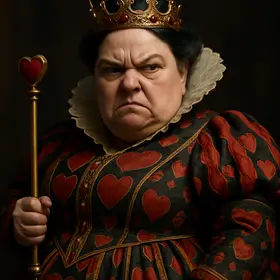 Queen of HeartsAntagonist
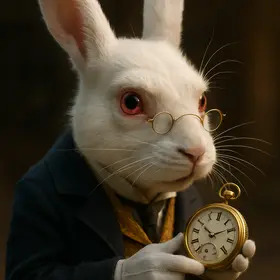 White RabbitMajor character
- DDinahMinor character
 King of HeartsMajor character
 Bill the LizardMinor character
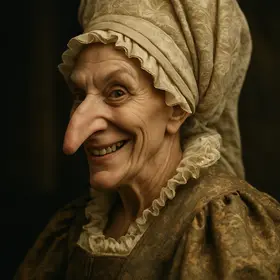 DuchessMinor character
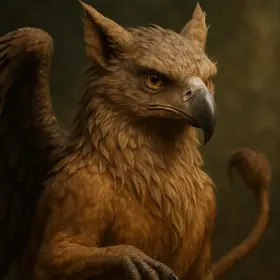 GryphonMinor character
All chapter summaries ›Characters ›
Read Alice's Adventures in Wonderland illustrated
Every scene in these notes comes from the Book2Life reader, where the full public-domain text is illustrated as you read, with character portraits and narration. Free in your browser and on iPhone.
Read Alice's Adventures in Wonderland free
