Great Expectations Chapter 1 Summary
A Graveyard Encounter
Young Pip meets a terrifying, leg-ironed convict in the churchyard who forces him to bring food and a file by morning.
Summary
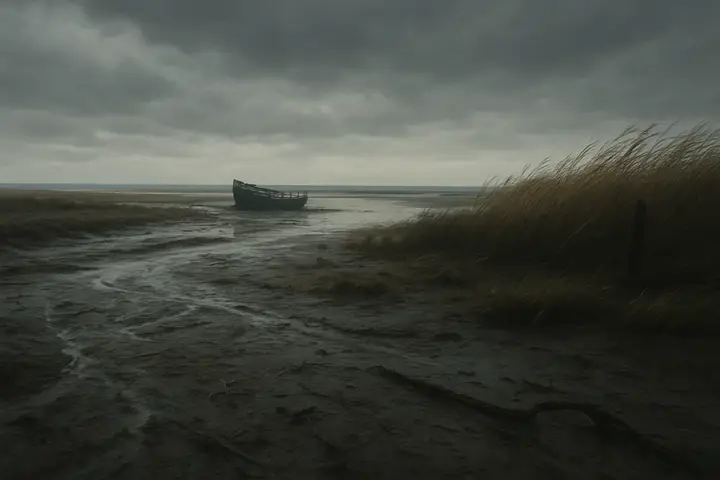
Pip, the narrator, introduces himself by his childhood nickname and explains that his family name, Pirrip, is known from the tombstone in the village churchyard. He describes his imaginative, childlike conclusions about his dead parents and five little brothers from the inscriptions on the stones. The setting is the bleak marsh country by the river and sea; on a raw afternoon Pip becomes vividly aware of the landscape and of his smallness within it.
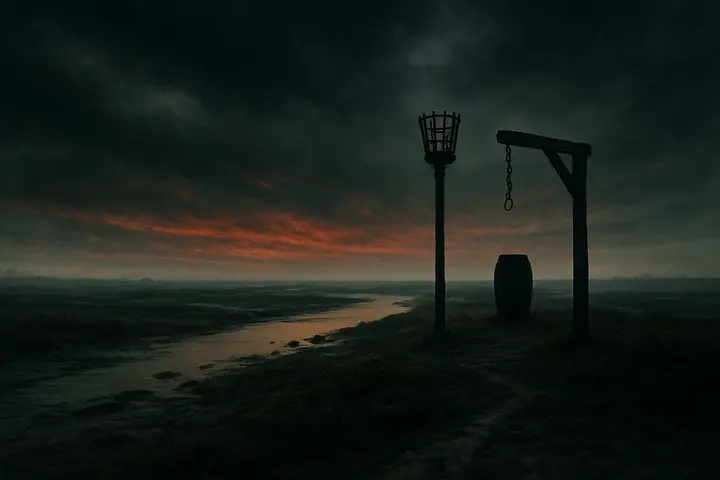
While standing among the graves, Pip is suddenly confronted by a terrifying, dishevelled man in coarse grey with an iron on his leg. The man seizes Pip, threatens to cut his throat, and forces the frightened boy to say his name and show where he lives. After overturning Pip and searching his pockets, the man ravenously eats the piece of bread Pip had. He then browbeats Pip into agreeing to bring, early the next morning, a file and some food ("wittles") to an old battery on the marshes, threatening that if Pip fails or tells anyone, both his heart and liver will be torn out and eaten. The convict claims he is restraining another, more dangerous young man hidden with him. After limping away toward the river and a distant gibbet, the man looks back, giving Pip a final terrifying impression; Pip runs home in a panic, glancing back to see the convict going toward the sea-line.
Key events
- Pip explains his family name and imagines his parents from their tombstones.
- He situates himself in the marshy churchyard landscape.
- A convulsive, leg-ironed man leaps up from among the graves and threatens Pip.
- The man forces Pip to give his name and point out his home.
- The convict searches Pip and eats his bread, then demands a file and food by morning.
- The man limps off toward the river and gibbet; Pip runs home terrified.
Chapter 1 in pictures
Analysis
This opening chapter establishes voice, setting, and an atmosphere of menace through Pip's child narrator and his blunt, vivid perceptions. Dickens uses Pip's smallness and imaginative misreadings of tombstone inscriptions to introduce innocence and comic naivety, then abruptly breaks that tone with the violent intrusion of the convict. The marshes and the churchyard function as a liminal landscape—between life and death, land and sea—where lawlessness and social disorder surface. The iron on the man's leg, his ragged state, and the gibbet on the horizon introduce motifs of punishment, criminality, and the penal system that will shape Pip's experience.
Narratively, Dickens immediately creates sympathy for Pip and positions him as vulnerable and morally compelled to obey a coercive adult. The convict's mix of crude brutality and occasional tenderness (eating ravenously, yet protecting Pip from an unnamed "young man") complicates a simple villain label and foreshadows moral ambiguity. The scene also establishes the novel's reliance on first-person memory: Pip's recollection balances precise sensory detail with childlike misunderstanding, making readers aware that we are receiving a retrospective, self-conscious account rather than an omniscient report. The threats, the demanded secret, and the setting foreshadow conflict that will drive Pip's decisions and anxieties.
Important quotes
“My father’s family name being Pirrip, and my Christian name Philip, my infant tongue could make of both names nothing longer or more explicit than Pip.”
NarratorPip gives his name and explains how his childhood nickname comes from the family tombstone inscription.
“"Hold your noise!" cried a terrible voice, as a man started up from among the graves at the side of the church porch.”
NarratorThe sudden, violent appearance of the convict breaks the quiet of the churchyard and begins Pip's terror.
“"You bring me, to-morrow morning early, that file and them wittles."”
NarratorThe convict forces Pip to agree to fetch a file and food by morning under threat of gruesome violence.
Characters in Chapter 1
- Pip
- Mrs. Joe Gargery
- Joe Gargery
- Philip Pirrip
- Georgiana
- Alexander
- Bartholomew
- Abraham
- Tobias
- Roger
All chapter summaries ›Characters ›
Read Great Expectations illustrated
Every scene in these notes comes from the Book2Life reader, where the full public-domain text is illustrated as you read, with character portraits and narration. Free in your browser and on iPhone.
