
The River in Siddhartha
Major character
A living, listening presence in the water that teaches Siddhartha by example and voice.
Who is The River?
The River is a constant natural presence near which much of Siddhartha’s late journey unfolds. More than a setting, it functions as an active teacher that ‘speaks’ to Siddhartha and Vasudeva, offering lessons about continuity, unity, and the simultaneity of life. Siddhartha first encounters the river when he contemplates leaving or ending his life; its voice and the remembered syllable Om interrupt his despair and draw him back to awareness. Later, after a life of excess, failure, and longing, Siddhartha returns to settle by the river with the ferryman Vasudeva. There he learns to listen: the river’s sound and shifting surfaces help him perceive time as a living present and to unify apparently separate lives into one whole. The river’s lessons culminate when it ‘sings’ the merging of father, son, lover, and friend into a single pattern that allows Siddhartha to move from longing and fragmentation to acceptance and joy.
In the book: Early on, Siddhartha reaches a river that doesn’t just run—it listens and speaks in its own way. He senses a living companion in the water’s voice, a quiet teacher that mirrors his restlessness and hints there’s more to learn than any doctrine. The river becomes a place he can’t quite shake from his thoughts.
Personality
- Patient
- When Siddhartha sits by the river exhausted and suicidal, the river’s steady presence allows the Om to arise and prevents his self-destruction.
- Teacher-like
- Vasudeva tells Siddhartha that he learned to listen from the river and that the river teaches those who pay attention, a lesson Siddhartha begins to receive.
- Reflective
- The river mirrors lives and faces—Siddhartha sees his own face, his father’s and his son’s reflected together, prompting the insight into recurring patterns.
- Transformative
- At the river Siddhartha moves from despair and attempted annihilation to rebirth and, later, to the acceptance that produces his healing.
- Inclusive
- The river ‘sings’ many lives as one, folding Kamala, Govinda, Vasudeva, father and son into a single sound that yields the Om.
Character arc
The River’s role is consistent but dynamic in effect: it first appears as a place of ritual and upbringing in Siddhartha’s childhood, then returns as the audible, living presence that interrupts his plan to drown himself, initiating his rebirth. When Siddhartha comes back later as a broken, worldly man, the river and its ferryman become his refuge; the river functions as the practicing ground where Siddhartha learns the discipline of listening and the perception of time as a living present. During Siddhartha’s grief over Kamala’s death and the pain of separation from his son, the river provides the image and sound that dissolve his isolated suffering into a larger pattern. By the time Vasudeva announces that his work is done and leaves, the river has completed its teaching: Siddhartha no longer seeks annihilation or achievement but rests in simultaneous acceptance. The river itself does not change in character; instead, its constant, speaking presence effects Siddhartha’s inner change from restlessness and fragmentation to unity and peace.
Relationships
- Siddhartha The river is Siddhartha’s silent, persistent teacher and mirror, guiding him from despair to spiritual awakening through its voice and reflections.
- Vasudeva Vasudeva serves as the river’s human apprentice and interpreter; he learned listening from the river and helps Siddhartha to hear it.
- Kamala Kamala dies near the ferry and is buried by the river; her death there becomes part of the river’s teaching about the simultaneity of life and death.
- Govinda Govinda appears sleeping beside the river when Siddhartha awakens from despair, linking the river to Siddhartha’s past and to shared spiritual history.
- Siddhartha's Son The river reflects the familial pattern that binds father and son, and its sight and sound help Siddhartha perceive and eventually accept that pattern.
Why The River matters
The River embodies the book’s central lessons about unity, time, and experiential knowing. As a living teacher it contrasts with learned doctrine and ascetic practice: rather than preaching, the river demonstrates continuity and the simultaneity of all lives. Its repetitive flow shows time as an ever-present whole, enabling Siddhartha to transcend linear suffering and intellectual striving. By teaching listening and reflection, the river makes plain that true wisdom is lived and perceived rather than argued—a core theme of the novel.
Chapters with The River
More Siddhartha characters
 SiddharthaProtagonist
 GovindaMajor character
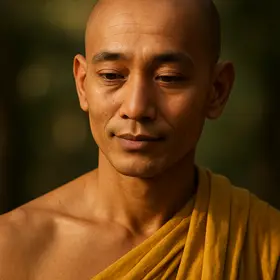 GotamaMajor character
 KamalaMajor character
 KamaswamiMinor character
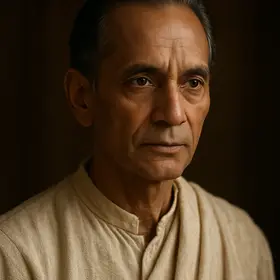 Siddhartha's FatherMinor character
 VasudevaMajor character
 Siddhartha's SonMinor character
All chapter summaries ›Characters ›
Read Siddhartha illustrated
Every scene in these notes comes from the Book2Life reader, where the full public-domain text is illustrated as you read, with character portraits and narration. Free in your browser and on iPhone.
