The Count of Monte Cristo Chapter 15 Summary
Numbers 34 and 27
Imprisoned Edmond Dantès falls into despair, attempts suicide, then discovers a fellow prisoner digging through the adjoining wall and meets No. 27.
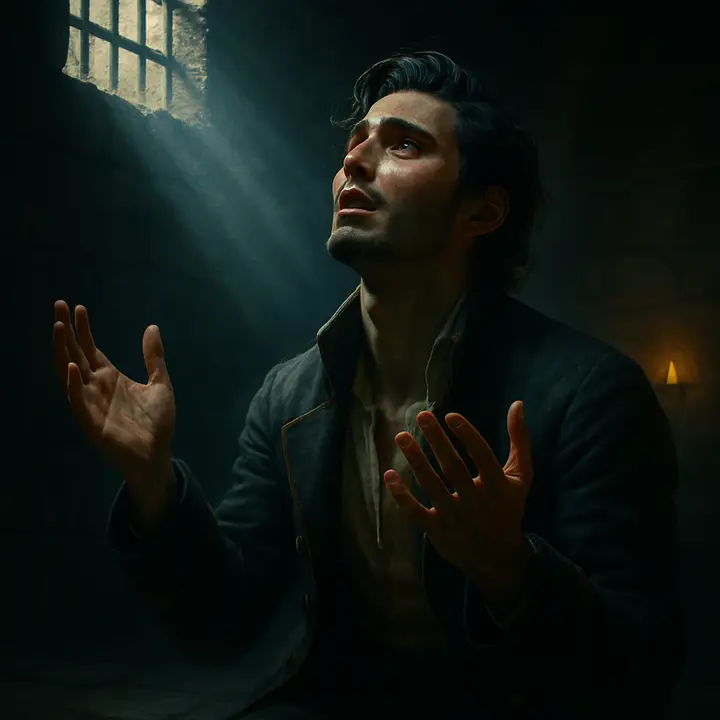
Summary
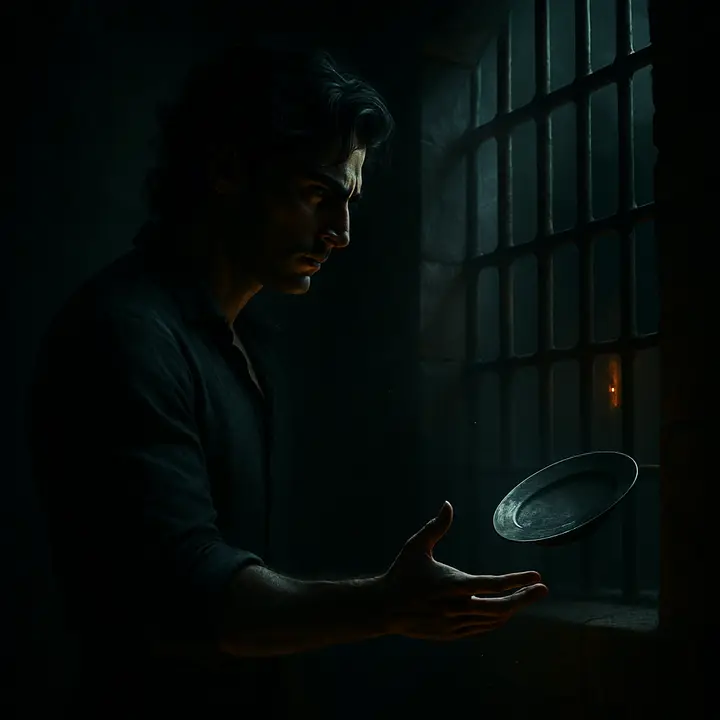
Edmond Dantès endures the psychological torments of indefinite confinement in his cell, moving from proud confidence in his innocence to doubt, supplication, religious fervor, rage, and finally a deliberate attempt at self-destruction by starvation. He asks the jailer for change, air, books, or another companion but is refused by the governor; after exhausting appeals to man he turns to God, prays with renewed feeling, then descends into blasphemy and fury. Believing death may be preferable to endless misery, Dantès vows to starve himself to death, throwing away his meals through the window as proof of his resolve until weakness nearly kills him. In the brink-of-death stupor he senses a scratching in the wall that might signal escape or a fellow prisoner; this rekindles his will to live and to test whether the sound is made by workmen or a captive.
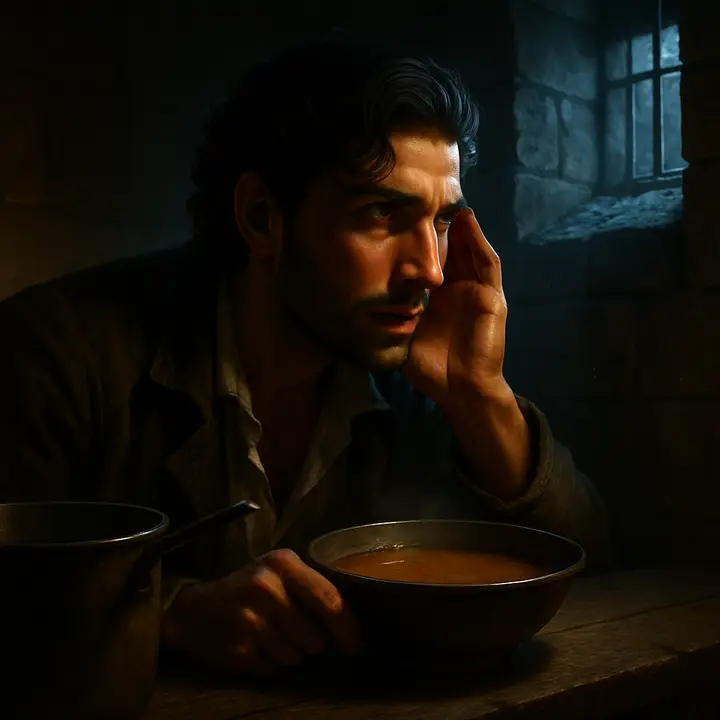
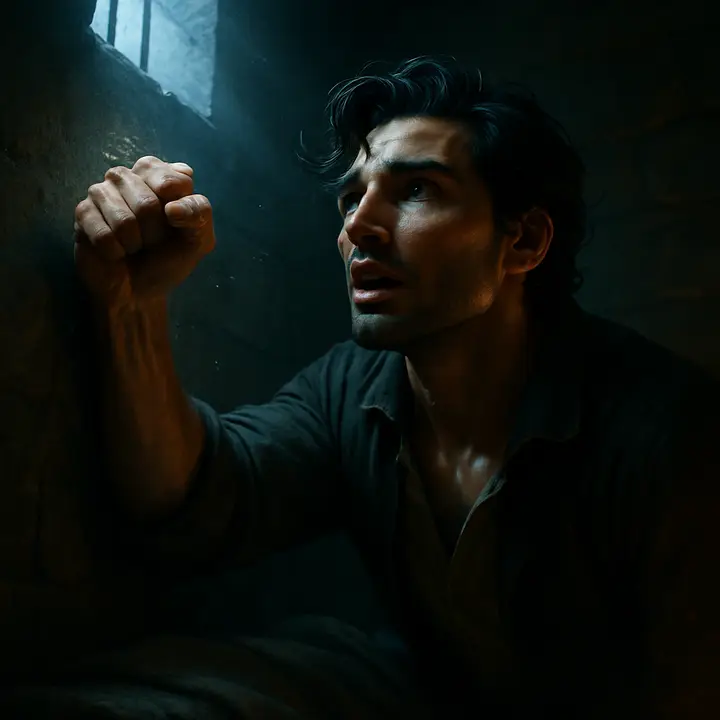
Recovered enough to act, Dantès breaks a jug to obtain sharp fragments and begins to dig, then secures the iron handle of the jailer’s saucepan as a lever to remove a hewn stone and enlarge his opening. After several days of careful, secret labor he reaches a beam blocking the passage and despairs, but a sepulchral voice answers his prayers from the darkness: the man on the other side identifies himself only as "No. 27." They exchange questions and reassurances—No. 27 reveals he has been imprisoned longer and, after doubting at first, promises to help when he learns Dantès’ youth and innocence. The two arrange to coordinate their efforts; after a pause and renewed digging, No. 27 finally forces through and drops into Dantès’ cell, bringing the hope of companionship and possible escape.
Key events
- Dantès cycles through hope, doubt, prayer, rage, and despair in solitary confinement.
- He decides to starve himself to death and carries out the plan until near collapse.
- A scratching from the adjoining wall awakens hope that another prisoner or workmen are at work.
- Dantès tests the noise, begins to dig, and breaks his jug to obtain sharp fragments.
- He uses the jailer’s iron saucepan handle as a lever to remove a hewn stone.
- A voice from the other side identifies himself as No. 27 and they converse cautiously.
- No. 27 completes the tunnel and drops into Dantès’ cell, ending his solitude.
Chapter 15 in pictures


Analysis
This chapter intensifies the novel's exploration of psychological imprisonment and the corrosive effects of uncertainty. By tracing Dantès’ mental trajectory—from proud innocence to suicidal resignation—Dumas shows how external injustice corrodes interior stability and moral certainties. The shift from appeals to man, then to God, then to rage, and finally to a calculated acceptance of death dramatizes the bankruptcy of institutional recourse and the fragile ethics of a man crushed by suspended judgment. The digging episode functions on both literal and symbolic levels: physical labor is a reclaiming of agency, a methodical confrontation with stone (the prison, fate) that contrasts with earlier passive suffering. The saucepan handle as improvised lever emphasizes resourcefulness and the significance of small, prosaic objects in escape narratives.
Narratively, the sudden appearance of No. 27 introduces companionship and a new narrative agent, moving the plot from introspective pain toward cooperative action; structurally it opens a door (literally) to external developments. The voice of No. 27 is sepulchral and initially ambiguous, creating suspense and testing Dantès' trust—this cautious exchange foregrounds themes of suspicion and solidarity among the oppressed. Literary allusions (Ugolino, Dante, Belshazzar) deepen the sense of cosmic judgment and moral torment without changing the immediacy of Dantès’ situation. The chapter uses interior monologue and concentrated physical detail to explore the interplay of hope, despair, and human connection under duress.
Important quotes
“God is always the last resource.”
NarratorSummarizes how Dantès exhausts human avenues before turning to prayer, highlighting his declining options.
“I am innocent.”
Edmond DantèsDantès' simple, repeated claim to innocence underlines his moral certainty even in the face of despair.
“I am —I am No. 27.”
No. 27The terse revelation of the neighboring prisoner's identity immediately changes Dantès' prospects by introducing companionship.
Characters in Chapter 15
- Edmond Dantès
- The governor
- The jailer
- No. 27
- Mercédès
All chapter summaries ›Characters ›
Read The Count of Monte Cristo illustrated
Every scene in these notes comes from the Book2Life reader, where the full public-domain text is illustrated as you read, with character portraits and narration. Free in your browser and on iPhone.
Read The Count of Monte Cristo free
