The Count of Monte Cristo
1844 · Adventure novel
Free to read in your browser. Public-domain edition from Project Gutenberg, illustrated as you read.
About This Book
The Count of Monte Cristo is a sweeping 19th-century adventure and revenge novel that follows Edmond Dantès, a young, honest sailor whose bright future is destroyed by a web of jealousy and political intrigue. Betrayed on the day of his marriage, Dantès is secretly arrested, condemned without trial, and thrown into the grim Château d’If, where he endures years of imprisonment and despair. In prison he meets the learned Abbé Faria, who becomes his mentor and reveals the location of a vast hidden treasure. After a daring escape and the discovery of Cardinal Spada’s hoard on the Isle of Monte Cristo, Dantès re-emerges in the world as the fabulously wealthy and enigmatic Count of Monte Cristo. In Parisian and provincial society he cultivates identities and allies—Bertuccio, Haydée, and others—as he quietly observes those who wronged him: Danglars the envious clerk, Fernand the rival, Caderousse the slacker, and Gérard de Villefort the ambitious magistrate. Alongside this machinery of revenge are secondary lives—Pierre Morrel’s loyalty, Maximilien and Valentine’s secret love, and the tangled fortunes of the nobility—which the Count manipulates while wrestling with his own conscience. The book is equal parts prison narrative, treasure hunt, courtroom drama, and social satire, built on intricate plotting and a large cast whose fates the new Count begins to engineer.
Characters in The Count of Monte Cristo
 Edmond DantesEdmond Dantès is a gifted young sailor whose abrupt fall from promise forces him into a long ordeal, after which he reemerges remade—brilliant, wealthy, and strategically minded. Moving among all levels of society under various personas, he orchestrates an intricate quest shaped by themes of justice, fate, and the moral cost of retribution, serving as the engine of the novel’s suspense and ethical debate.
 MercédèsMercédès is a poor Catalan fisher-girl of Spanish origin in Marseille and the devoted fiancée of Edmond Dantès at the story’s outset. Separated from him by fate, she later becomes a woman of rank and serves as a touchstone of compassion and moral clarity. Her presence anchors the novel’s emotional core, challenging and humanizing the Count’s pursuit of justice.
 Fernand MondegoFernand Mondego begins as a poor Catalan fisherman and rival suitor to Mercédès, driven by fierce ambition and jealousy. His rise from obscurity to high society positions him as a powerful figure whose choices and ambitions help set the novel’s central conflicts in motion, making him one of the story’s key antagonistic forces.
 Fernand MondegoA Catalan fisherman who becomes Edmond Dantès’s jealous rival for Mercédès, Fernand’s envy and ambition help trigger the chain of events that drives the novel. As years pass, he reinvents himself with rank and wealth, embodying themes of betrayal, social climbing, and the corrosive cost of unchecked desire—standing as a foil to the protagonist’s sense of honor and justice.
 Gerard de VillefortGérard de Villefort is a fiercely ambitious magistrate whose devotion to career and public image drives pivotal legal decisions that set the novel’s central tragedy in motion. As a powerful representative of the justice system, he embodies the era’s political opportunism and moral hypocrisy, becoming a key figure against whom the story tests themes of guilt, responsibility, and retribution—without revealing the ultimate outcomes.
 Fernand MondegoFernand Mondego is an ambitious Catalan fisherman who becomes a prominent aristocrat; driven by envy and desire, his choices help set the novel’s central conflicts in motion and later place him in the path of the Count’s elaborate designs. He embodies themes of ambition, betrayal, and the corrosive cost of social climbing without honor.
 DanglarsDanglars begins as the envious purser aboard the Pharaon and, through ambition and cunning, rises to become one of Paris’s most powerful bankers. He is a key antagonist whose greed, social climbing, and financial machinations help set the hero’s fate in motion and later make him a central target of the novel’s exploration of justice, retribution, and moral consequence—especially in the spheres of money and reputation.
 CaderousseA neighbor of Edmond Dantès, Caderousse is a petty, weak-willed tailor-turned-innkeeper whose envy and greed make him an easy accomplice to darker schemes. He embodies moral cowardice—more follower than mastermind—and later reappears as a grasping figure whose choices illuminate the novel’s themes of temptation, guilt, and the corrosive effects of avarice, serving as a cautionary counterpoint to nobler characters without requiring knowledge of later plot turns.
 Gérard de VillefortGérard de Villefort is an ambitious royalist prosecutor whose fateful early decision propels the story and entwines his career with the novel’s central quest for justice. As a celebrated magistrate in Paris, he embodies public rectitude while guarding private secrets, making him a pivotal figure in the web of political maneuvering, social prestige, and moral compromise that the Count navigates.
 Gaspard CaderousseGaspard Caderousse is an early acquaintance of Edmond Dantès—first a Marseille tailor and later an innkeeper—whose cowardice and greed place him on the fringes of the events that upend Dantès’s life. He serves as a moral barometer of petty envy and weakness, and his path repeatedly intersects with the Count’s, illuminating the consequences of small sins and the corrosive pull of avarice.
 Abbe FariaAbbé Faria is the brilliant, resourceful priest Edmond Dantès meets in prison, serving as his mentor in languages, science, and strategy. Through his friendship and teachings, he transforms Dantès’s mind and gives him the knowledge and purpose that drive the story forward, acting as the tale’s catalyst for intellect, ingenuity, and hope.
 Maximilien MorrelMaximilien Morrel is the principled and devoted son of a respected Marseille shipowner and a rising army officer. His integrity, courage, and deep capacity for loyalty draw the attention of the Count and make him a trusted confidant. Through his unwavering moral compass and heartfelt devotion, he becomes both a catalyst and a measure of the Count’s grand designs, embodying the novel’s themes of honor, fidelity, and hope without relying on vengeance.
 HaydeeA young Greek noblewoman and the daughter of a fallen ruler, Haydée is rescued from slavery by the Count of Monte Cristo and becomes his devoted ward and companion. Poised and perceptive, she embodies dignity and loyalty, offers the Count emotional ballast and cultural refinement, and—through her heritage—quietly connects to threads of his larger quest for justice without revealing major plot turns.
 Pierre MorrelPierre Morrel is the honorable owner of the merchant ship Pharaon and the benevolent employer and protector of Edmond Dantès. His integrity, generosity, and devotion to his family make him a moral touchstone in the story, and the hardships he faces become pivotal to the protagonist’s motivations and the unfolding themes of loyalty, gratitude, and justice—without requiring knowledge of later plot revelations.
 Maximilien MorrelMaximilien Morrel is the honorable and steadfast son of the Marseilles shipowner Monsieur Morrel, serving as a decorated army officer. He embodies loyalty, bravery, and filial devotion, becoming a trusted friend and moral touchstone for key characters—most notably the enigmatic Count—whose designs intersect with Maximilien’s fate. Through him, the story explores themes of virtue, gratitude, and the limits of justice without relying on revelation of the novel’s major turns.
 Valentine de VillefortValentine de Villefort, the dutiful daughter of the ambitious prosecutor Gérard de Villefort and beloved granddaughter of the paralyzed Noirtier, embodies innocence and moral clarity amid a web of ambition and intrigue. In love with Maximilien Morrel yet constrained by family expectations, she becomes a focal point of the novel’s domestic tensions, inheritance pressures, and schemes. Her steadfast compassion and filial devotion provide a humane counterpoint to the darker currents the Count of Monte Cristo navigates, and her fate becomes a crucial thread in his far-reaching designs.
 Valentine de VillefortValentine de Villefort is the virtuous, soft‑spoken daughter of the ambitious prosecutor Gérard de Villefort. Cherished by her grandfather and in love with the honorable Maximilien Morrel, she becomes ensnared in her family’s schemes and social expectations, which place duty and inheritance above her happiness. Her storyline highlights themes of innocence, filial piety, and moral courage, and it serves as a counterpoint to the Count’s intricate designs while revealing the human cost of ambition and revenge.
 Valentine de VillefortValentine de Villefort is the dutiful daughter of the ambitious prosecutor Gérard de Villefort and the beloved granddaughter of the paralyzed Noirtier. Kind, principled, and quietly brave, she becomes a focal point for conflicts of family interest, inheritance, and social expectation, while her steadfast love for Maximilien Morrel draws sympathetic allies and brings out the novel’s themes of loyalty, justice, and compassion—without centering the broader schemes of the Count himself.
 Noirtier de VillefortNoirtier de Villefort is the paralyzed, sharp-minded father of the ambitious prosecutor Gérard de Villefort. A former revolutionary with a formidable will, he communicates through blinks and eye movements, guiding those around him with silent authority. His steadfast affection for his granddaughter and his knowledge of the past make him a quiet but pivotal figure whose choices and revelations shape key relationships and moral reckonings throughout the story.
 Noirtier de VillefortNoirtier de Villefort is the formidable, paralyzed father of the ambitious prosecutor Gérard de Villefort. A former revolutionary with an unbroken will, he rules his household through intelligence and the expressiveness of his eyes, fiercely protecting those he loves—especially his granddaughter Valentine. His silent authority and hidden past shape crucial decisions in the legal and social world surrounding the Count, influencing several key turns of the story without grand public gestures.
 Noirtier de VillefortNoirtier de Villefort is the uncompromising, sharp‑minded father of public prosecutor Gérard de Villefort and a former revolutionary whose past and principles quietly shape key turns of the story. Though immobilized by a stroke, he exerts powerful moral and practical influence through his intelligence and will, protecting his beloved granddaughter and counterbalancing the ambitions and hypocrisies around him—often with consequences that ripple through the central intrigues.
 Héloïse de VillefortThe second wife of the influential prosecutor Gérard de Villefort, Héloïse moves with polished grace through Parisian high society while fiercely championing her young son’s prospects. Her keen intelligence, ambition, and controlled demeanor make her a subtle but powerful presence in the Villefort household, and her choices become a quiet catalyst for tensions that the Count of Monte Cristo ultimately exploits.
 Madame DanglarsMadame Danglars is the wealthy banker’s wife and a prominent Parisian hostess whose social ambitions and love of gambling entangle her in intrigues that ripple through high society. Through her household, connections, and influence over her husband and daughter, she becomes a key conduit for alliances, secrets, and motivations that shape several major characters’ paths without directly standing at the story’s center.
 Albert de MorcerfThe son of a prominent Parisian noble family, Albert moves with ease through high society and serves as a bridge between the Count and the glittering world of Paris. His charm, naivety, and strong sense of honor make him a sympathetic figure whose friendships and loyalties help drive key encounters, illuminate themes of lineage and reputation, and humanize the story’s grand schemes—without his fully grasping their depths at first.
 Eugénie DanglarsThe independent, musically gifted daughter of the banker Baron Danglars, Eugénie serves as a sharp counterpoint to the era’s expectations of women. Refusing to be a passive pawn in society or finance, she challenges the arranged‑marriage politics surrounding her family, and her storyline intersects with key intrigues in ways that underscore themes of autonomy, wealth, and reputation without directly driving the Count’s central revenge.
 Hermine DanglarsHermine Danglars, the Baroness, is a prominent hostess in Parisian high society and the wife of the powerful banker Danglars. She embodies luxury, status, and influence, deftly navigating salons, gossip, and financial currents while advancing her family’s position. Her choices and connections intertwine with those of the Count and other elites, shaping key social and monetary turns in the story without being its central mover.
 Heloise de VillefortHeloise de Villefort is the ambitious second wife of the prosecutor Gérard de Villefort and the devoted mother of young Édouard. Fiercely protective of her son’s future, she moves through Parisian society with calculated poise and exerts quiet but potent influence within the Villefort household. Her fraught dynamic with her stepdaughter Valentine and her relentless social aspirations make her a pivotal figure in the novel’s domestic intrigue and moral tensions.
 Eugénie DanglarsThe only daughter of the wealthy banker Danglars, Eugénie is a gifted pianist whose independence and sharp intelligence make her a pivotal figure in the web of Parisian society. Courted for her fortune and position, she pushes against the expectations placed on her, revealing the tensions between money, marriage, and personal freedom that run through the story—often intersecting with the Count’s wider designs without being their direct target.
 HaydéeA Greek princess sold into slavery and later freed by the Count, Haydée becomes his devoted companion and moral touchstone. Her past is intricately tied to the injustices that shaped the Count’s quest, and her presence in Paris society quietly advances key revelations while illuminating the story’s themes of loyalty, identity, and the cost of vengeance—without overtly drawing attention to herself.
 BertuccioBertuccio is the Count of Monte Cristo’s resourceful Corsican steward, trusted to arrange houses, servants, and covert errands with absolute discretion. His past—marked by a fiercely held vendetta—unexpectedly entwines with influential figures in Paris, and the knowledge he carries becomes a crucial thread the Count uses to weave his intricate designs, all while Bertuccio remains loyal and pragmatic.
 Hermine DanglarsHermine (Baroness) Danglars is the banker Danglars’s wife and a prominent Parisian hostess whose social ambitions, financial speculations, and discreet affairs entangle her with the city’s political and aristocratic circles. Through her connections and past secrets, she becomes an important link in several of the Count’s maneuvers, illustrating the novel’s themes of reputation, money, and the fragile veneer of high society—without being the central target of vengeance herself.
 Andrea CavalcantiAndrea Cavalcanti arrives in Paris as an affable Italian “nobleman,” quickly winning favor in fashionable circles with polished manners and apparent wealth. Beneath the cultivated veneer, he is an opportunist whose deceptions entwine with the Count’s designs, helping expose the vanity and moral rot of high society while advancing key turns of the plot—especially around identity, reputation, and justice—without being the central hero.
 Luigi VampaA charismatic chief of the Roman banditti, Luigi Vampa rules the roads around Rome with courtesy, precision, and a strict personal code. Once a shepherd, he becomes an outlaw whose discreet power and calculated interventions entangle him with prominent travelers. His measured ruthlessness and unexpected chivalry help advance key turns in the story while illuminating the novel’s themes of justice, loyalty, and influence.
 Luigi VampaLuigi Vampa is the celebrated chief of bandits in the Roman Campagna, a charismatic and disciplined outlaw whose reputation makes nobles and travelers alike tread carefully. His path intersects with key characters during the Roman episodes, and a past act of debt and respect binds him to the Count, making him a discreet instrument of the Count’s designs without overshadowing the larger drama.
 Luigi VampaLuigi Vampa is the fearsome yet disciplined chief of the bandits who rule the Roman Campagna. Once a clever shepherd, he rises to command through cunning, courage, and strict control of his men. His paths cross with the Count in Rome, and his influence over the roads and hills becomes a quiet instrument that broadens the Count’s reach, illustrating the novel’s themes of power, loyalty, and calculated reciprocity without centering him as a main protagonist.
 Beauchamp
 Lucien Debray
 Chateau-RenaudChâteau-Renaud is a minor but recurring viscount in Parisian high society and part of Albert de Morcerf’s circle, moving among journalists and courtiers who frame the novel’s social world. His anecdotes and presence at salons and duels help convey the manners and gossip of the elite, and his wartime rescue by Maximilien Morrel underscores Morrel’s valor and links different strands of the plot without driving the central revenge narrative himself.
 Franz d’Épinay
 Franz d'EpinayFranz d’Epinay is a young nobleman and close friend of Albert de Morcerf. He joins Albert for the Roman Carnival, where he encounters the enigmatic Count and is drawn into the Count’s orbit. Through Franz, the story explores Parisian high society and introduces threads that later connect to hidden histories and moral reckonings, making him a courteous observer who unwittingly bridges key characters and events without driving the central vendetta himself.
 Héloïse de Villefort
 Franz d’ÉpinayFranz is Albert de Morcerf’s close friend and traveling companion, through whom the reader first encounters the mysterious Count during the Roman Carnival; as the son of a celebrated officer, his family name links him to powerful Parisian circles, and his honorable, cautious nature provides a counterpoint to Albert’s impulsiveness. His connections and courtship prospects draw him into the web of old political enmities and social obligations that underlie the novel’s intrigues, making him an important lens on the Parisian elite without being the engine of the central revenge plot.
 Pierre Morrel
 Baptistin
 Édouard de Villefort
 Julie Herbaut
 JacopoJacopo is the loyal sailor who befriends and aids the protagonist after a desperate escape at sea, becoming a dependable companion and go-between in the Mediterranean. Resourceful and discreet, he helps with travel, errands, and practical arrangements, offering steady human warmth that contrasts with the hero’s increasingly solitary path.
 Julie MorrelJulie Morrel is the devoted daughter of the Marseille shipowner Monsieur Morrel and the sister of Maximilien Morrel. Warm-hearted and dutiful, she anchors the Morrel family through hardship and represents domestic virtue and filial loyalty. Her storyline intersects with the Count’s designs in ways that highlight his capacity for benevolence without requiring knowledge of the novel’s central revelations.
 Emmanuel Herbault
 Emmanuel Herbaut
 Pierre Morrel
 Ali
Ali Julie HerbaultJulie is the devoted daughter of the Marseille shipowner Monsieur Morrel and the sister of Maximilien; she later becomes Julie Herbault through marriage to Emmanuel, a loyal employee. She serves as a moral anchor and embodiment of filial piety, playing a quiet but pivotal role in the Morrel family’s darkest financial crisis and becoming one of the earliest recipients of an anonymous benefactor’s compassion, which helps set key plotlines in motion without placing her at the story’s center.
 Emmanuel HerbaultEmmanuel Herbault is a loyal and good-natured clerk at Morrel & Son whose steady devotion to Julie Morrel and unwavering honesty make him a symbol of humble virtue. As a supportive presence during the Morrel family’s hardships, he embodies everyday goodness and domestic happiness, offering a gentle counterpoint to the novel’s grand schemes and darker passions.
 Jacopo
 Jacopo
 Major Cavalcanti
Study guide
Summaries and analysis of all 117 chapters, and profiles of 42 characters, illustrated with scenes from the book.
The Count of Monte Cristo summary ›The Count of Monte Cristo characters ›
Key Scenes & Storyboard
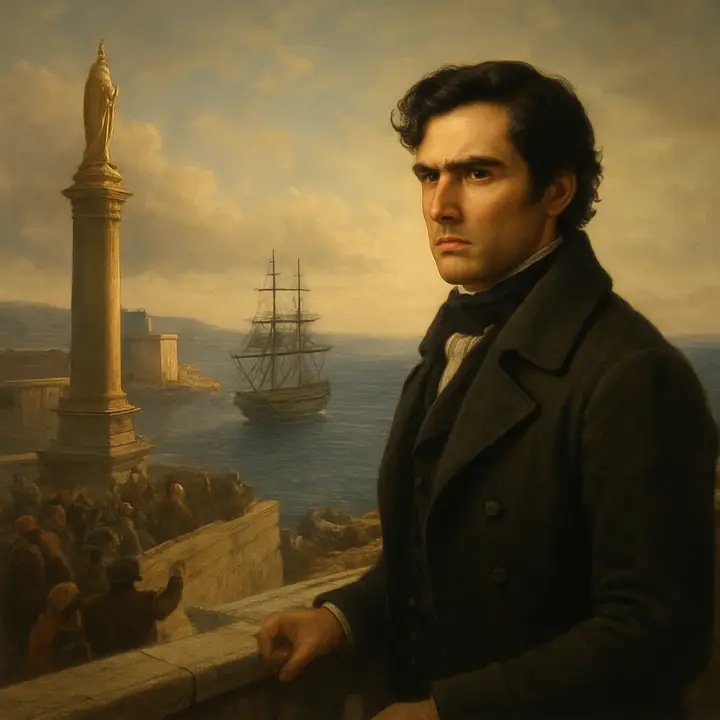
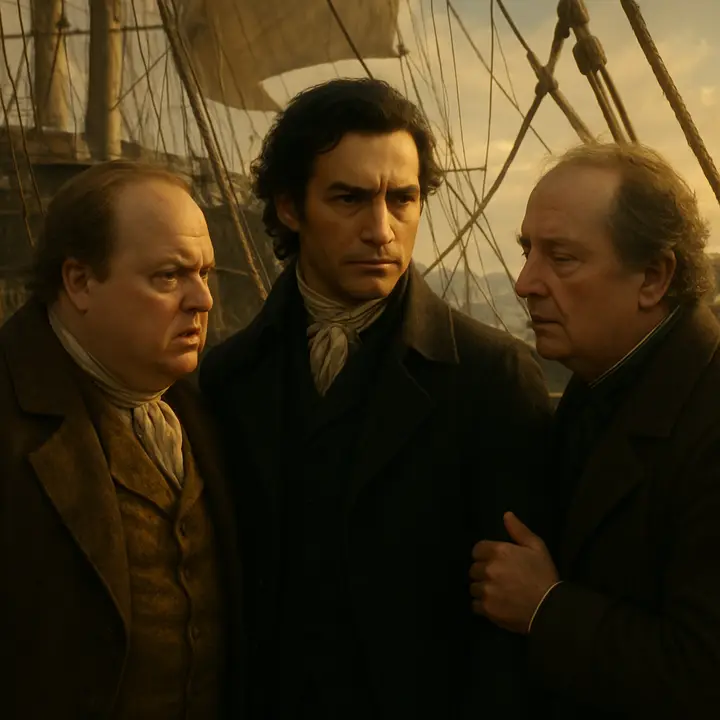
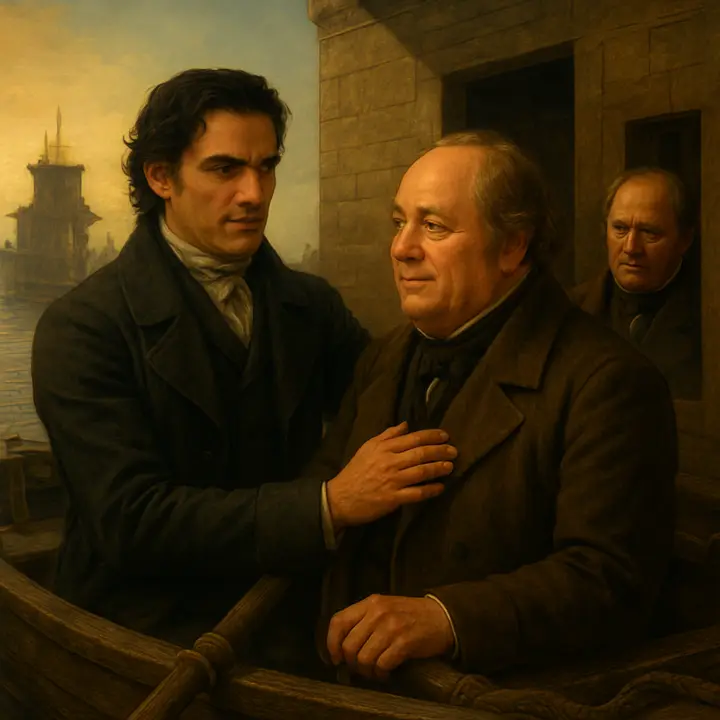
81 illustrated scenes. These appear beside the passage they depict as you read.





Themes
- Revenge
- Justice vs law
- Identity
- Betrayal
- Redemption
Why Read The Count of Monte Cristo?
Read The Count of Monte Cristo for its relentless, propulsive plot: an innocent man’s fall, his education in suffering, a brilliant escape, and a meticulously staged return that reads like a sequence of gripping set-pieces. Dumas mixes courtroom and prison scenes, sea voyages, masked social intrigues and high-stakes duels with vivid, memorable characters whose ambitions and flaws drive the drama.
Beyond the adventure, the novel probes moral complexity. It asks whether vengeance can be righteous, how wealth and secrecy shape identity, and what price is paid by those who attempt to rewrite others’ destinies. The book’s panoramic view of Restoration-era France, its moral puzzles, and its theatrical storytelling continue to entertain and provoke readers who enjoy character-rich plots that test ideas of justice, mercy and consequence.
Experience The Count of Monte Cristo on Book2Life
Read with AI-generated visuals, character portraits, audio narration, smart summaries, and more — free in your browser and on iPhone.