The Count of Monte Cristo Chapter 20 Summary
The Cemetery of the Château d’If
After Faria’s death, Dantès swaps himself for the corpse and is thrown into the sea, carried as a dead man from the prison.
Summary
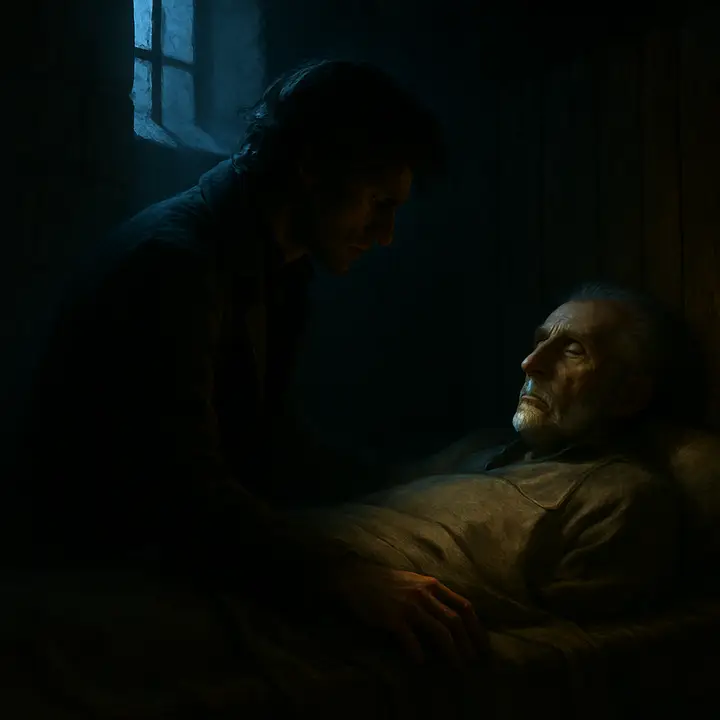
In the dungeon of the Château d’If, Edmond Dantès mourns the death of Abbe Faria, the companion who had illuminated his bleak imprisonment and taught him knowledge and hope. He sits beside Faria’s body, alternately tempted by suicide and driven to cling to life by the thought of revenge and restitution. Dantès quickly moves from despair to a desperate plan: to use Faria’s corpse as a substitute so he can escape the island prison.
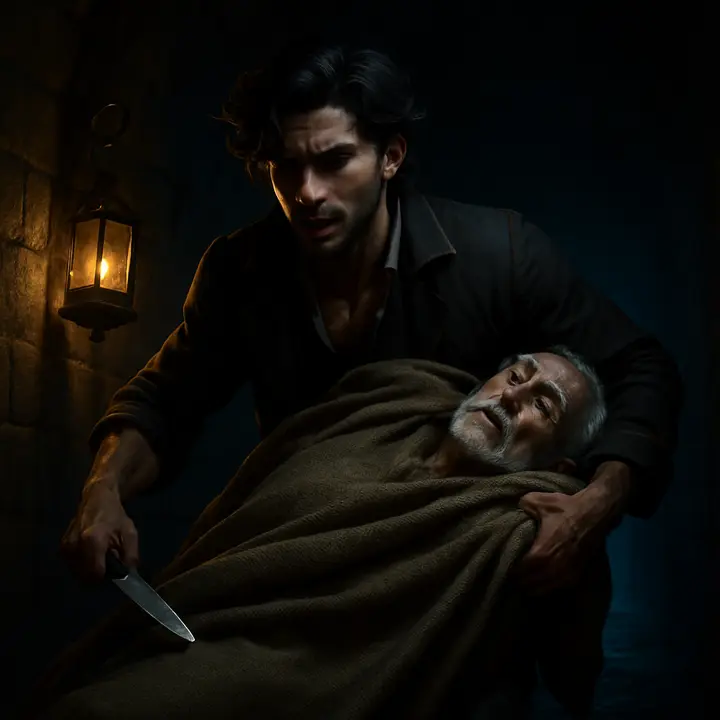
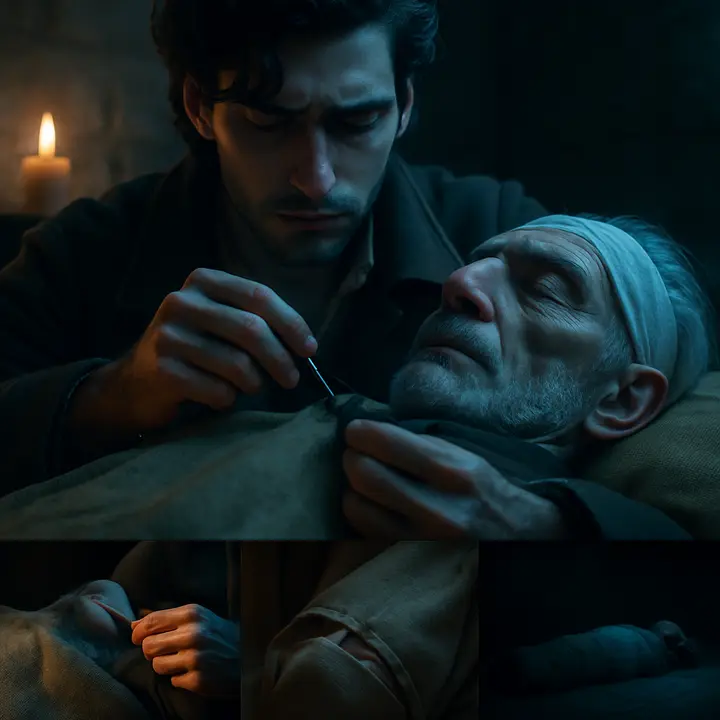
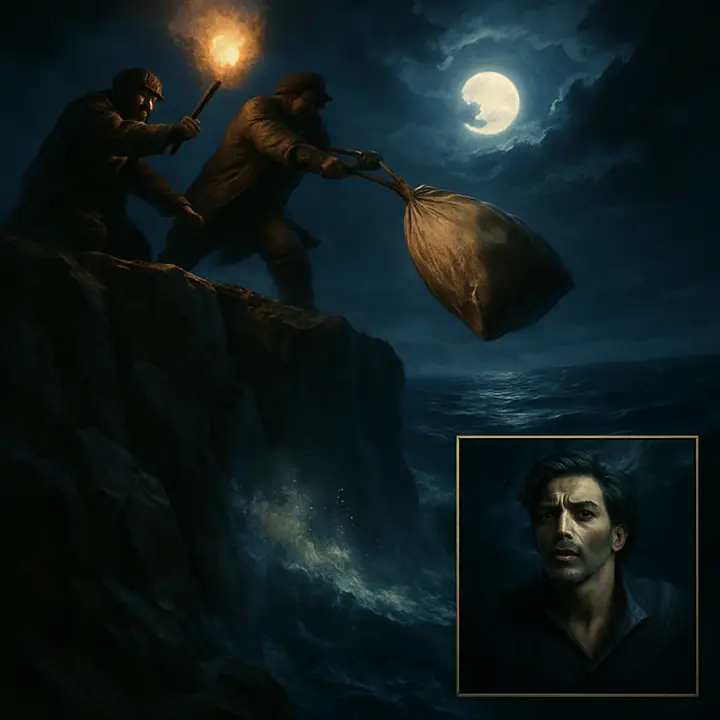
Dantès carries out the grim preparations with methodical care. He dresses Faria’s body in his own night rag, arranges it to appear asleep, and then hides in the canvas sack that will carry the corpse. He plans contingencies for discovery — slashing the sack or digging his way out of a burial — and endures hours of agonized waiting before the gravediggers arrive. When they bear the bier through the castle and throw the bundle into the sea, Dantès finds himself plunged into icy water with a heavy shot tied to his feet. The chapter closes with the terrifying image of him dragged beneath the waves — the sea becoming the château’s cemetery.
The chapter is tightly focused: it moves from grief to resolution, to meticulous action, and finally to the violent, ambiguous climax of being cast into the sea. The sequence is largely confined to the prison and the short march to the cliff, maintaining a claustrophobic intensity that culminates in the sudden, vast exposure of the open ocean. The tone balances Dantès’s inward psychology with concrete, physical details of the escape plan and the brutal mechanics of his being disposed like a corpse, underlining both his resourcefulness and the inhumanity of his captivity.
Key events
- Dantès mourns Abbe Faria and contemplates suicide and vengeance.
- He decides to take Faria’s place among the dead and escape the prison.
- Dantès prepares the corpse and sews himself into the canvas sack.
- He endures the waiting and nerves as the gravediggers arrive.
- The bearers carry the bier out to the cliff and throw the sack into the sea.
- Dantès is plunged into the water with a thirty-six-pound shot tied to his feet.
Chapter 20 in pictures
Analysis
This chapter functions as a turning point that shifts Dantès from passive suffering to active agency: grief catalyzes a daring and grisly plan. Thematically, the episode intensifies motifs of death, rebirth, and transformation — Dantès literally assumes the role of the dead to attempt a return to life. The sea, described as the château’s cemetery, becomes a liminal symbol: both a grave and a potential route to freedom. Stylistically, the narrative compresses time, alternating intimate interior monologue with stark physical actions; Dumas uses concrete, sensory detail (the sack, the rope, the cold splash) to sustain suspense and realism.
Foreshadowing appears in Dantès’ oscillation between suicide and survival, highlighting his moral resourcefulness and stubborn will; his readiness to stab his way out or let himself suffocate shows pragmatic ruthlessness. The chapter tightens the novel’s structure by resolving one human bond (Faria’s death) while propelling the protagonist into a perilous threshold moment that promises change. The anonymous brutality of the gravediggers and the indifferent routines of the prison administration underscore institutional cruelty and isolation, amplifying sympathy for Dantès even as he employs deceptive means. Overall, the chapter recasts death as both obstacle and instrument in the protagonist’s quest.
Important quotes
“If I could die," he said, "I should go where he goes, and should assuredly find him again.”
Edmond DantesDantès considers suicide in his grief, imagining death as a reunion with Faria but then rejects it in favor of living to seek justice.
“Just God!" he muttered, "whence comes this thought? Is it from thee? Since none but the dead pass freely from this dungeon, let me take the place of the dead!”
Edmond DantesThis moment marks the decisive flash that leads Dantès to the plan of exchanging himself for Faria’s corpse to escape the prison.
“The sea is the cemetery of the Château d’If.”
NarratorThe closing line frames the château’s external world — the sea — as a mass grave, underscoring the deadly fate of those cast from its walls.
Characters in Chapter 20
All chapter summaries ›Characters ›
Read The Count of Monte Cristo illustrated
Every scene in these notes comes from the Book2Life reader, where the full public-domain text is illustrated as you read, with character portraits and narration. Free in your browser and on iPhone.
Read The Count of Monte Cristo free
