Treasure Island III Summary
The Black Spot
Blind Pew delivers the pirate 'black spot' to the dying Billy Bones; he dies suddenly of apoplexy at Jim's inn.
Summary
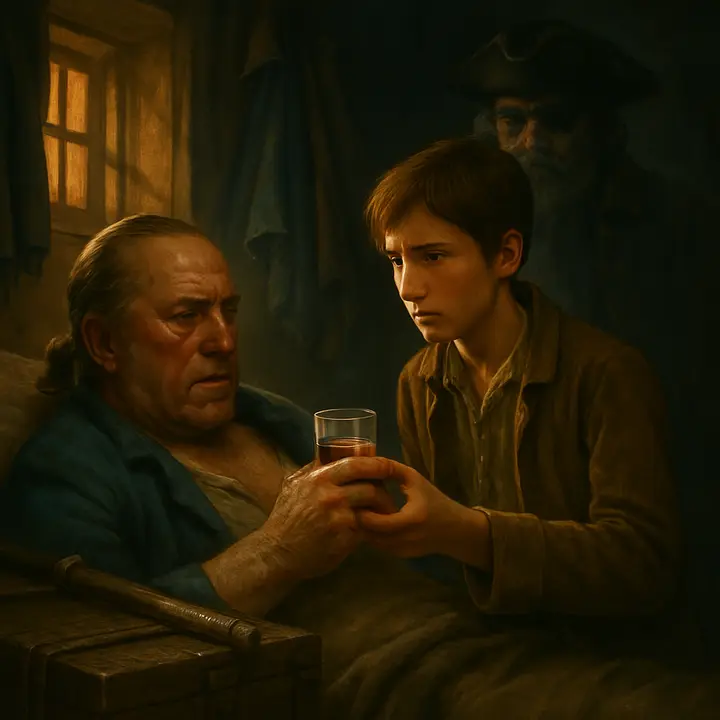
Jim Hawkins visits the bedridden captain at the Admiral Benbow to bring drinks and medicine; the captain (Billy Bones) is weak, excitable, and obsessed with rum and fear of the mysterious 'black spot.' He cajoles and curses the doctor (Dr. Livesey), promises Jim rewards, and confides about a seafaring past, warning Jim to alert the doctor if he sees Black Dog or a one-legged man. The captain alternates between boasting of his old service under Flint and sinking into rum-addled delirium.
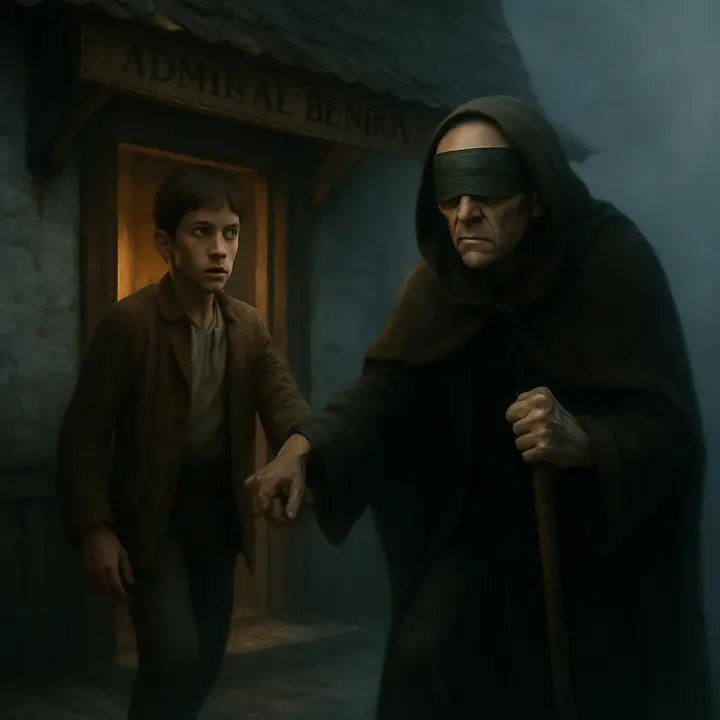
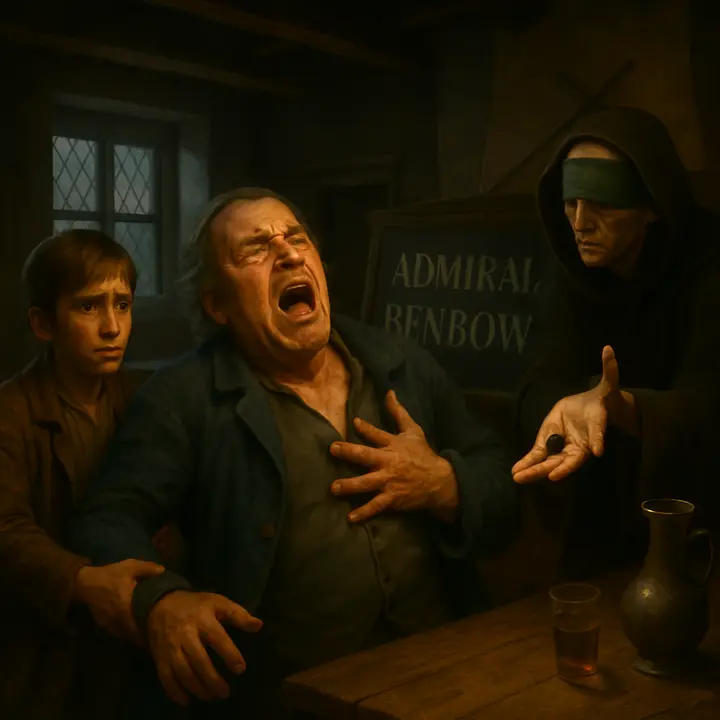
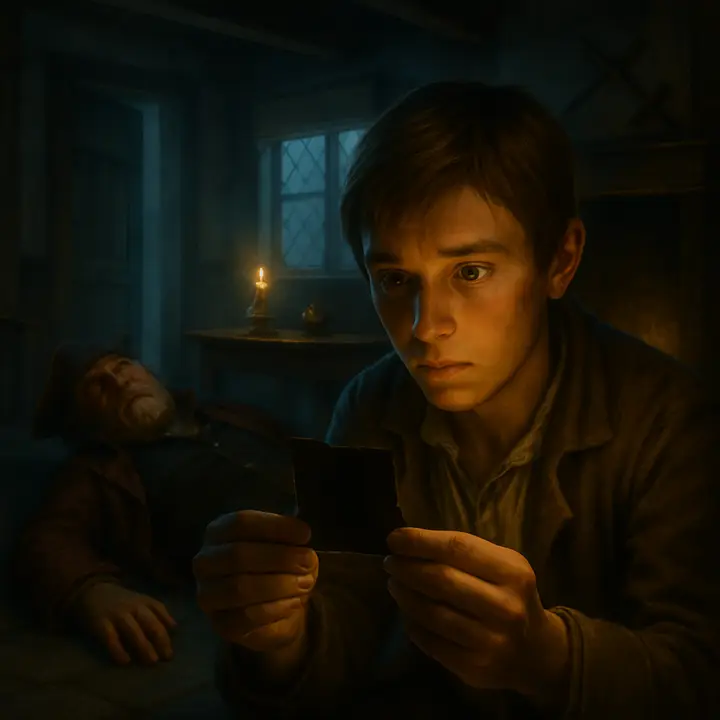
Jim's father dies suddenly that same day, distracting Jim and the household with funeral preparations; during this period the captain grows weaker but remains volatile, sometimes brandishing his cutlass and singing old songs. On a foggy afternoon after the funeral, a terrifying blind beggar (Blind Pew) arrives, tapping his stick and wearing a dark shade. He forces Jim to lead him to the captain, threatens him, and compels Jim to hand the captain's left wrist to Pew, who silently places something in the captain's palm. The captain reads the message, exclaims "Ten o'clock! Six hours. We'll do them yet," springs up only to fall dead immediately from apoplexy. Jim is struck with immediate grief despite the captain's previous menace; the chapter closes with Jim's tears and the shock of a second death in his life.
Key events
- Jim brings rum and medicine to the cabin; Billy Bones rants about doctors and the horrors.
- The captain warns Jim about the black spot and names Black Dog and the one-legged man as danger.
- Jim's father dies, drawing household attention away from the captain.
- Blind Pew arrives blind, threatening Jim and forces entry to deliver something into the captain's hand.
- Billy Bones reads the message, shouts the time and intent, then collapses dead from apoplexy.
III in pictures
Analysis
This chapter crystallizes escalating menace into sudden catastrophe and advances several central dynamics: fear of the pirate past, the contagiousness of lawlessness, and Jim's premature facing of mortality and moral danger. Narratively, Stevenson shifts from conversation and rumor to direct confrontation: the captain's drunken monologues build background about the black spot and the pirate network, while Blind Pew's arrival converts abstract threat into concrete violence. The black spot functions here as both a literal summons (delivered secretly to the captain) and a symbolic mark of outlaw judgment — a motif that heightens dread without yet revealing its full mechanics. The captain's hallucination of Flint and his obsession with rum expose vulnerabilities in the romanticized seaman figure: his swagger is hollowed by addiction and fear. Jim's role as both servant and witness deepens; he is compelled by physical intimidation to participate in his tormentor's doom, and the captain's sudden death forces Jim to confront grief and responsibility at an emotional cost. Stylistically, Stevenson uses close first-person witnessing to keep moral ambiguities immediate: the narrator admits mixed feelings toward the captain, which makes his grief believable and gives psychological depth. The lesson in this chapter is about the chain reaction of past crimes invading peaceful life and about youth being thrust into adult duties by violent history.
Important quotes
“If I don’t have a dram o’ rum, Jim, I’ll have the horrors;”
Billy BonesBilly Bones begs Jim for rum, explaining his fear of the 'horrors' and showing his dependence and instability.
“I seen old Flint in the corner there, behind you; as plain as print, I seen him;”
Billy BonesBilly Bones hallucinates Captain Flint, revealing his terror and the lingering power of Flint's legacy over him.
Characters in III
All chapter summaries ›Characters ›
Read Treasure Island illustrated
Every scene in these notes comes from the Book2Life reader, where the full public-domain text is illustrated as you read, with character portraits and narration. Free in your browser and on iPhone.
