Carmilla 1. An Early Fright Summary
An Early Fright
Laura (the narrator) describes her secluded Styrian home and recounts a terrifying childhood night when a strange woman appears at her bedside and she wakes with needle-like pains.
Summary
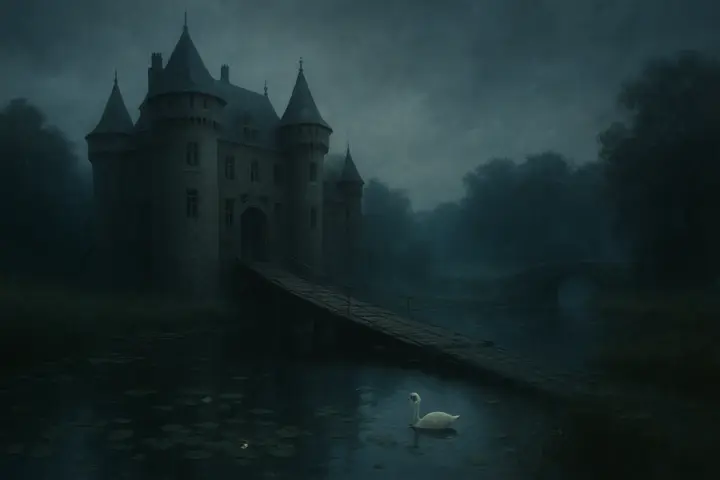
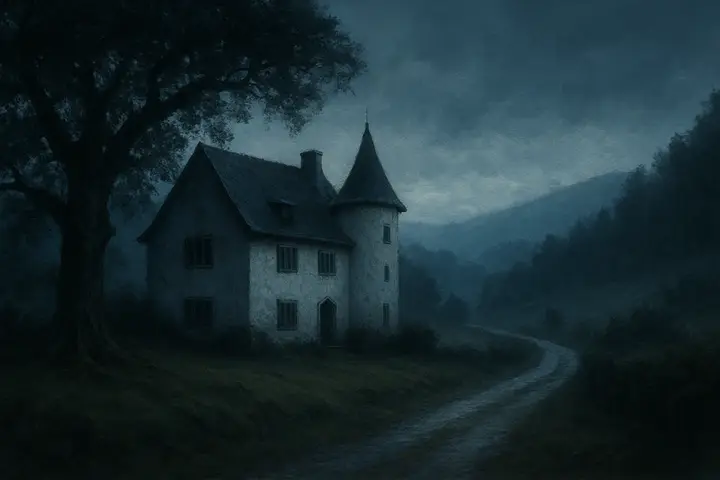
The narrator (Laura) introduces the schloss in Styria where she and her father live—a small, picturesque, solitary castle set deep in a broad forest, near the ruins of a deserted village once owned by the Karnstein family. She outlines the household: her kindly, aging English father (formerly in Austrian service), Madame Perrodon (her long-serving governess), Mademoiselle De Lafontaine (a finishing governess), occasional young lady visitors, and a few neighboring schlosses like General Spielsdorf’s far away. The narrator emphasizes the isolation and the multilingual, domestic atmosphere at the schloss.
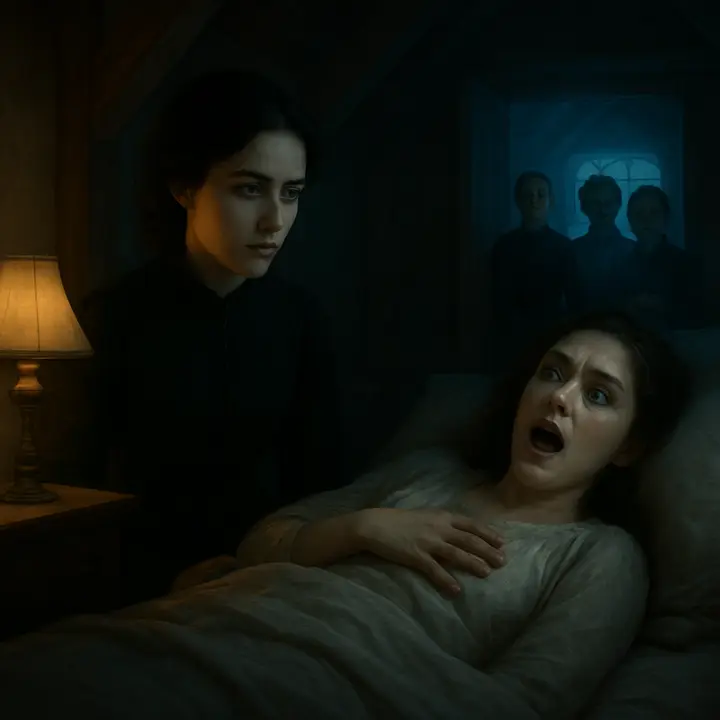
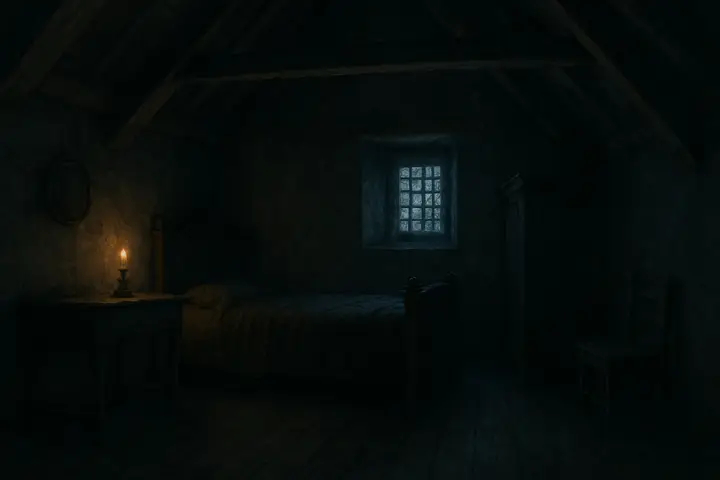
She then recounts the earliest vivid memory that left a lasting impression: at about six years old she awakens in the nursery and finds herself apparently alone, then sees a solemn and pretty young woman kneeling by the bed who soothes and lies down beside her. Laura falls asleep, then suddenly wakes feeling as if “two needles ran into my breast,” and the woman vanishes beneath the bed. Her cries bring the household, who investigate and are disturbed: the servants sense someone has been in the bed and keep watch all night thereafter. A pallid, elderly doctor visits repeatedly afterward; a white-haired clergyman prays with them; and the memory of these strange, isolated scenes stands out while much of her infancy is otherwise obscure.
Key events
- Narrator describes the secluded Styrian schloss and surrounding ruins of Karnstein village.
- Household is introduced: Laura, her father, Madame Perrodon, Mademoiselle De Lafontaine, and occasional visitors.
- Young Laura wakes alone in the nursery and sees a strange young woman kneeling beside the bed.
- The woman soothes Laura, lies with her, then vanishes after Laura feels two needle-like pains.
- Servants search the room, note the bed was recently occupied, and keep watch in the nursery thereafter.
- A pale, elderly doctor visits and prescribes medicine; a white-haired clergyman prays with the household.
1. An Early Fright in pictures
Analysis
This opening section sets the novel’s tone by combining picturesque, antiquated setting detail with an early, uncanny incident that frames the narrator’s later anxieties. The castle’s isolation—detailed measurements of the forest and distances—creates a sense of vulnerability and removes rational, urban recourse; the ruined Karnstein village hints at local history and a buried past that the narrator promises to explain later, foreshadowing that the locale itself holds secrets. The intimate, domestic cast (father, governesses, occasional visitors) establishes a constrained social world in which unusual events are observed and contained by servants and clergy rather than public institutions, reinforcing an atmosphere of private, half-hidden dread.
Narrative technique is important: the mature narrator looks back and privileges certain sensory images (the needle-like pain, the warm place in the bed) as vivid tableaux against general obscurity, creating an impressionistic memory rather than a chronological report. The apparition’s gentle initial behavior followed by a sharp physical injury introduces ambiguity—comfort intertwined with harm—that will complicate later relationships and suspicions. The presence of religious ritual (the clergyman’s prayer) and medical attention (the doctor) show competing attempts to explain or cure the experience, marking the tension between superstition, faith, and empirical care that the novella will explore. Symbolically, the empty, ruined Karnstein church and the marshaled watchfulness of servants suggest themes of decay, inherited legacies, and surveillance of female vulnerability.
Important quotes
“In Styria, we, though by no means magnificent people, inhabit a castle, or schloss.”
NarratorOpens the story by situating the narrator and establishing the isolated, picturesque setting of the schloss.
“I saw a solemn, but very pretty face looking at me from the side of the bed.”
NarratorDescribes the apparition that appears beside young Laura’s bed and begins the central frightening incident.
“I was wakened by a sensation as if two needles ran into my breast very deep at the same moment, and I cried loudly.”
NarratorReports the sudden, painful awakening that turns the comforting visit into a traumatic event and alarms the household.
Characters in 1. An Early Fright
- Laura
- Laura's father
- Madame Perrodon
- Mademoiselle De Lafontaine
- General Spielsdorf
- Karnstein family
- nursery maid
- nurse
- housekeeper
- doctor
- white-haired old man
All chapter summaries ›Characters ›
Read Carmilla illustrated
Every scene in these notes comes from the Book2Life reader, where the full public-domain text is illustrated as you read, with character portraits and narration. Free in your browser and on iPhone.
