Carmilla III Summary
We Compare Notes
A mysterious young stranger is received into the Schloss, and she and Laura recognize each other from matching childhood visions and quickly form an intense friendship.
Summary
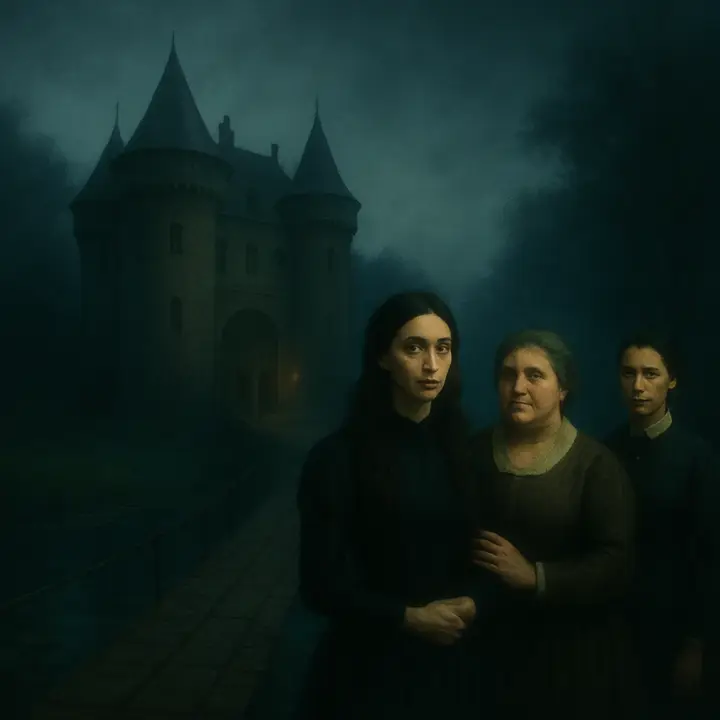
A carriage is followed into the misty wood and then disappears; the young lady who arrived in it awakens in the castle and asks after her mother and her maid Matska. Madame Perrodon and Mademoiselle De Lafontaine tend to her and the household prepares a bedroom and fetches the physician. The narrator’s father recounts his brief interview with the woman in black velvet, who insisted her journey is 'rapid and secret' and left her child for about three months. The doctor later endorses the girl's health, and the narrator seeks permission to visit her.
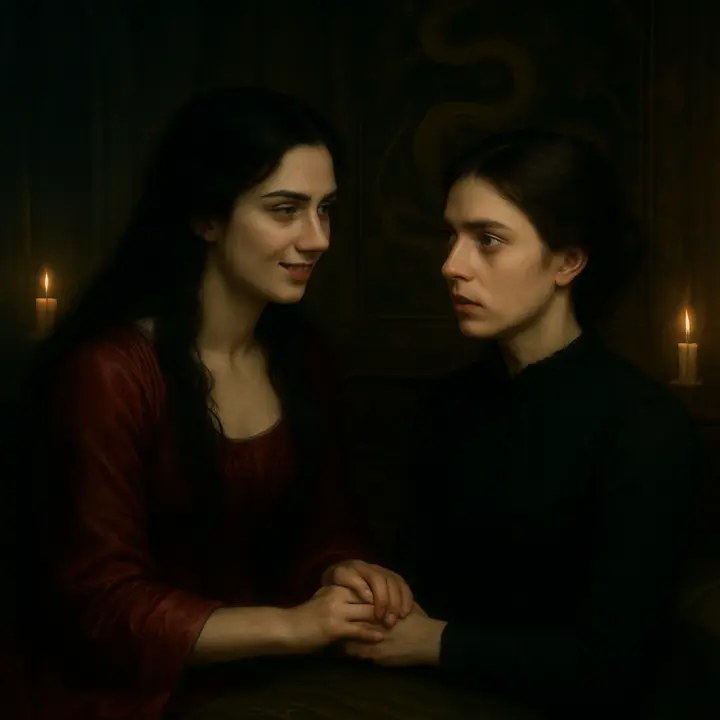
In the stranger’s richly furnished room the narrator is stunned to see the very face that haunted a childhood dream of hers; the stranger, in turn, declares she has dreamed of the narrator for twelve years. Each relates a corresponding vision from early childhood in which the other appeared. Despite a momentary, instinctive repulsion, the narrator feels a powerful attraction and they quickly exchange confidences and promises of friendship. The stranger refuses a night attendant, expresses a habit of locking her door from fear of robbers, and bids the narrator a fond good night. By morning the two meet again and laugh over their shared initial horror, while their intimacy and mutual fascination deepen.
Key events
- The carriage departs and the young lady awakens asking for her mother and Matska.
- Madame Perrodon and Mademoiselle De Lafontaine care for the stranger; a bedroom and physician are arranged.
- Narrator’s father describes his interview with the woman in black velvet who demands secrecy.
- The doctor finds the stranger well and permits a visit from the narrator.
- At bedside the narrator recognizes the stranger from a childhood vision; the stranger reciprocates.
- They recount matching dreams from twelve years earlier and quickly form a close, intense bond.
- The stranger refuses a night attendant and promises to see the narrator again the next day.
III in pictures
Analysis
This chapter shifts the narrative from the dramatic arrival to intimate domestic revelation, establishing the emotional and uncanny core of the story: a powerful, reciprocal recognition between two girls rooted in childhood dreams. Structurally it moves the plot inward—away from the external mystery of the carriage and its attendants—into the private space of rooms and confidences, where character relations and psychic ties develop. The matching visions function as a symbolic bond that implies fate or destiny, and they heighten the story’s atmosphere of preternatural connection. The woman in black velvet and her insistence on secrecy provide lingering tension and foreshadow unresolved mysteries outside the castle, while the doctor’s reassuring report temporarily domesticates danger. Narration relies on Laura’s intimate, first-person perspective: her astonishment, attraction, and faint repulsion guide readers’ judgments and preserve ambiguity about the stranger’s nature. The richly detailed domestic setting—tapestry of Cleopatra, carved oak, and the locked door—contrasts comfort and menace, suggesting themes of confinement and concealed violence (the stranger’s fear of robbers, the murdered servants story). The chapter both deepens characterization—revealing the stranger’s charm, strategic reticence, and habit patterns—and sets the emotional stakes by enacting a rapid, intense friendship that will drive subsequent events.
Important quotes
“I saw the very face which had visited me in my childhood at night, which remained so fixed in my memory, and on which I had for so many years so often ruminated with horror, when no one suspected of what I was thinking.”
NarratorLaura describes the shock of recognizing the stranger as the face from her childhood dream, a key uncanny moment that binds them.
“I am making a long journey of vital importance—she emphasized the word—rapid and secret; I shall return for my child in three months; in the meantime, she will be silent as to who we are, whence we come, and whither we are traveling.”
Laura's father (reporting the woman in black velvet)The woman in black velvet insists on secrecy and a temporary guardianship, introducing mystery and tension around the stranger's arrival.
Characters in III
- Mademoiselle De Lafontaine
- Madame Perrodon
- Laura
- Laura's father
- Matska
- physician
- servant
All chapter summaries ›Characters ›
Read Carmilla illustrated
Every scene in these notes comes from the Book2Life reader, where the full public-domain text is illustrated as you read, with character portraits and narration. Free in your browser and on iPhone.
