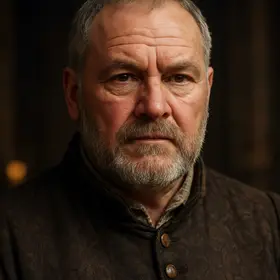
Gloucester in King Lear
Major character
An old earl and loyal courtier to Lear whose misplaced trust in Edmund leads to brutal punishment and late, painful insight.
Who is Gloucester?
Gloucester is a powerful, plainspoken nobleman close to King Lear who appears as a respected retainer and family patriarch. He wants to preserve order and protect his household and the king, and he acts as a connector between the royal drama and the provincial forces. Early on he proudly presents his sons and takes court business in hand; he is easily manipulated by Edmund’s forged letter and by appearances that suggest Edgar’s betrayal. Gloucester counsels and shelters Lear when the king is driven from his daughters’ houses, even risking his own safety by helping Lear escape to Dover. That loyalty provokes Cornwall and Regan to interrogate and then brutally blind him. Blinded and betrayed, Gloucester moves from anguished despair to a deeper moral awareness; he attempts suicide but survives and becomes a pitiable, penitent figure guided by Edgar. His suffering both catalyzes plot developments (Cornwall’s death, military reprisals) and illuminates the human cost of power struggles.
In the book: We meet Gloucester at King Lear’s court, a plainspoken earl who proudly presents his sons and talks with the easy confidence of an old retainer. He matters because he’s a powerful lord close to Lear, and his family—especially the contrast between his legitimate and illegitimate sons—quickly draws attention and stirs conversation.
Personality
- Loyal
- Act 3, Scene 4 — Gloucester offers shelter and warmth to the storm‑driven Lear despite orders from Goneril and Regan.
- Trusting
- Act 1, Scene 2 — Gloucester immediately believes Edmund’s forged letter and cries for Edgar as a traitor.
- Compassionate
- Act 4, Scene 1 — Gloucester shows charity to the disguised Edgar and asks to be led to Dover, revealing care for others even in misery.
- Proud (but fallible)
- Act 2, Scene 1 — Gloucester presumes to advise visiting dukes and confidently offers counsel, then is duped by surface appearances.
- Despairing
- Act 4, Scene 6 — After his blinding he prepares to throw himself from a cliff, convinced that life has become unbearable.
Character arc
Gloucester begins as a respected, authoritative earl who confidently manages household and court affairs and presents his sons to the court. That confidence makes him vulnerable: Edmund’s cunning fabrications exploit Gloucester’s trust and pride, convincing him that Edgar is a traitor. Gloucester then becomes an active helper of Lear, secretly aiding the king’s escape to Dover — an act of conscience that brings him into conflict with Cornwall and Regan. The punishment is catastrophic: Gloucester is brutally blinded (Act 3, Scene 7), and the physical loss of sight precipitates both collapse and conversion. In the aftermath he oscillates between despair and moral questioning, even attempting suicide from a cliff (Act 4, Scene 6), only to survive. Surviving brings a new humility; led by the disguised Edgar, Gloucester develops clearer moral perception despite literal blindness. By the end he is shorn of power and dignity but gains inward sight and penitence, becoming a tragic emblem of suffering that exposes cruelty and the reversal of fortunes.
Relationships
- Edmund Illegitimate son whom Gloucester trusts and who betrays him by forging evidence against Edgar and manipulating his father for personal gain.
- Edgar Legitimate son whom Gloucester wrongly believes to be a traitor; Edgar later disguises himself as Poor Tom, guides and protects his blinded father.
- King Lear A fellow sufferer and lord for whom Gloucester shelters and secretly aids, escorting Lear toward Dover to preserve his safety.
- Regan One of the daughters-in-law whose cruelty and alliance with Cornwall lead to Gloucester’s interrogation and brutal blinding.
- Cornwall Duke who presides over Gloucester’s humiliation and literally rips out his eyes, precipitating Gloucester’s fall into despair.
- Kent Loyal servant of Lear whom Gloucester defends and whose fate (imprisonment briefly) intersects with Gloucester’s hospitality to Lear.
Quotes by Gloucester
“‘This policy and reverence of age makes the world bitter to the best of our times; keeps our fortunes from us till our oldness cannot relish them.'”
Act 1, Scene 2Gloucester reads a passage from the letter that makes him suspect Edgar of coveting his revenue and thus sparks his fury.
“Hark, the Duke’s trumpets! I know not why he comes.”
Act 2, Scene 1Trumpets announce Cornwall's arrival, shifting the scene from private conflict to political intervention and heightening drama.
“Alack, alack, Edmund, I like not this unnatural dealing.”
Act 3, Scene 3Gloucester opens the scene by expressing alarm at how the King is being treated and his own prohibition from aiding him.
“I have received a letter this night;—’tis dangerous to be spoken;—I have locked the letter in my closet:”
Act 3, Scene 3Gloucester reveals a perilous secret he has chosen to hide, signaling both risk and the power of concealed information.
“I have o'erheard a plot of death upon him; There is a litter ready; lay him in't And drive towards Dover, friend, where thou shalt meet Both welcome and protection.”
Act 3, Scene 6Gloucester reveals he has learned of a plan to kill Lear and urgently orders that the King be taken to safety in Dover.
“I am tied to the stake, and I must stand the course.”
Act 3, Scene 7Gloucester accepts he must endure questioning and punishment after being seized in his own house.
Why Gloucester matters
Gloucester embodies the play’s moral and thematic contrasts between sight and insight, appearance and reality, and filial fidelity versus betrayal. His literal blinding dramatizes the failure of perception based on surface evidence and social custom; only through suffering does he gain moral clarity. Gloucester’s fall and subsequent penitence underline the cost of political scheming and the vulnerability of the old order, while his compassion for Lear demonstrates human solidarity amid collapse. His trajectory reinforces the tragedy’s interrogation of justice, power, and the way cruelty deform humanity.
Chapters with Gloucester
More King Lear characters
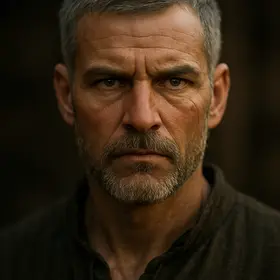 Kent
Kent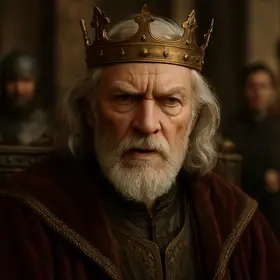 King Lear
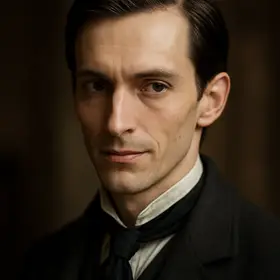 Edmund
 Goneril
 Regan
Regan Cordelia
 Edgar
Edgar Albany
All chapter summaries ›Characters ›
Read King Lear illustrated
Every scene in these notes comes from the Book2Life reader, where the full public-domain text is illustrated as you read, with character portraits and narration. Free in your browser and on iPhone.
