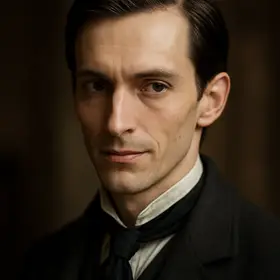
Edmund in King Lear
Antagonist
Gloucester’s illegitimate son who schemes to overturn inheritance and rise by deceit and violence.
Who is Edmund?
Edmund is Gloucester’s cunning illegitimate son, newly returned and acutely resentful of the social slight of bastardy. He wants status, land, and power that birth denies him, and he resolves to seize them through calculation rather than honor. From the first soliloquy he rejects customary rules and decides to make his fortune by craft: forging a letter to implicate his brother Edgar, manipulating his father’s trust, and presenting himself as loyal to powerful patrons (Cornwall and Regan). He engineers confrontations that drive Edgar into flight and Gloucester into misplaced trust, wins praise and office from Cornwall, and steadily inserts himself into the dukes’ plans. He courts both sisters, accepts tokens from Goneril, and flatters Regan while plotting to eliminate rivals. By the final act he arrives at the British camp in command of forces, captures Lear and Cordelia, and issues the secret order that leads to Cordelia’s hanging; after being unmasked in combat with Edgar, he dies admitting his crimes.
In the book: When we first meet him, Edmund is the Earl of Gloucester’s illegitimate son, newly back from abroad and standing quietly while his father jokes a bit too freely about his birth. He’s smooth, bright, and hungry to prove himself—chafing at the slight of being the “bastard” while reading the room with razor focus.
Personality
- Calculating
- He forges a letter and times a staged attack on Edgar to make his brother look guilty (Act 1.2; Act 2.1).
- Ambitious
- He openly vows to overturn the advantages of legitimate birth and to seize land and status by wit (Act 1.2 soliloquy).
- Deceptive
- He convinces Gloucester that Edgar plotted against him, then hides Edgar and gives false witness to his father (Act 1.2; Act 2.1).
- Opportunistic
- He immediately offers his services to Cornwall and Regan and uses their visit to advance himself (Act 2.1).
- Ruthless
- He gives the secret order that results in Lear and Cordelia’s imprisonment and, ultimately, Cordelia’s hanging (Act 5.3).
Character arc
Edmund begins as a resentful newcomer who derides social custom and declares he will win by craft rather than birth. Early scenes establish his program: he forges a letter to frame Edgar, manipulates Gloucester’s trust, and stages incidents to appear loyal while pushing Edgar into exile. His successes win him the favor of Cornwall and Regan, and he learns to play competing patrons against one another; he accepts Goneril’s token and flatters Regan to keep options open. Midway through, he escalates from local deception to military and political ambition, joining the campaign at Dover and taking command of forces. By Act 5 he is openly in control, arrests Lear and Cordelia, and issues a covert death sentence intended to remove obstacles to his advancement. His final turning point comes in the duel with Edgar: exposed by the reading of a letter and defeated in battle, Edmund confesses his treacheries and claims to attempt some last mitigation, but he dies, having achieved power through betrayal and leaving ruin in his wake. His arc is thus a rise by duplicity and a fall when those deceptions are revealed.
Relationships
- Gloucester His father, whom Edmund betrays by forging evidence against Edgar and by scheming to discredit him.
- Edgar His legitimate half-brother and primary victim, whom Edmund frames and forces into flight and disguise.
- Regan A patron and lover of convenience whom Edmund flatters and serves to gain power and command.
- Goneril Another sister with whom he accepts a favour and kiss, using her as part of his political and sexual maneuvering.
- Cornwall A powerful duke who praises Edmund’s apparent loyalty and gives him office and military opportunity.
- Lear A national figure whose capture Edmund arranges and whose daughter Cordelia he orders to be executed to secure his position.
Quotes by Edmund
“Thou, Nature, art my goddess; to thy law My services are bound.”
Act 1, Scene 2Edmund’s opening line declares his allegiance to Nature over social conventions and frames his rationale for scheming.
“A credulous father! and a brother noble, Whose nature is so far from doing harms That he suspects none; on whose foolish honesty My practices ride easy!”
Act 1, Scene 2Alone after sending Edgar away, Edmund gloats at how easily he manipulates his trusting family to advance his aims.
“Some blood drawn on me would beget opinion Of my more fierce endeavour:”
Act 2, Scene 1Edmund wounds his own arm and explains his plan: visible injury will create the appearance that Edgar attacked him.
“When I dissuaded him from his intent, And found him pight to do it, with curst speech I threaten'd to discover him:”
Act 2, Scene 1Edmund fabricates a moralizing account to Gloucester, portraying himself as the loyal son who tried to prevent Edgar's treason.
“The younger rises when the old doth fall.”
Act 3, Scene 3Edmund sums up his opportunistic worldview and signals his plan to profit from his father's misfortune.
“To both these sisters have I sworn my love; Each jealous of the other, as the stung Are of the adder.”
Act 5, Scene 1Edmund’s soliloquy exposes his duplicitous vows and his plan to manipulate the sisters and remove obstacles to his advancement.
Why Edmund matters
Edmund embodies the play’s exploration of nature versus custom, legitimacy, and the corrosive effects of ambition. He challenges established social hierarchies by invoking Nature to justify his theft of status, showing how resentment at exclusion can produce moral lawlessness. His manipulations expose the fragility of trust in families and courts, and his willingness to exploit filial bonds and political chaos underscores the play’s themes of betrayal and the breakdown of order. Edmund’s rise and fall dramatize how appetite for power, when divorced from responsibility and compassion, brings violence and ruin to individuals and the commonwealth.
Chapters with Edmund
More King Lear characters
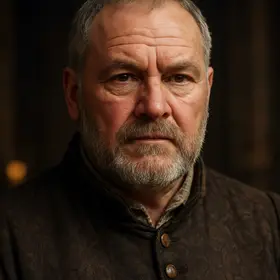 Gloucester
 Kent
Kent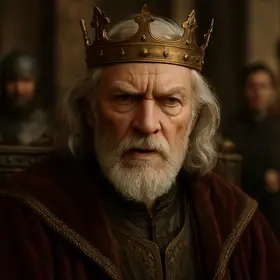 King Lear
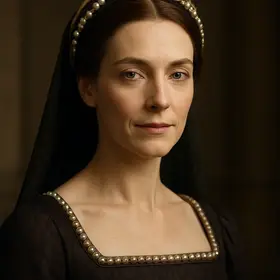 Goneril
 Regan
Regan Cordelia
 Edgar
Edgar Albany
All chapter summaries ›Characters ›
Read King Lear illustrated
Every scene in these notes comes from the Book2Life reader, where the full public-domain text is illustrated as you read, with character portraits and narration. Free in your browser and on iPhone.
