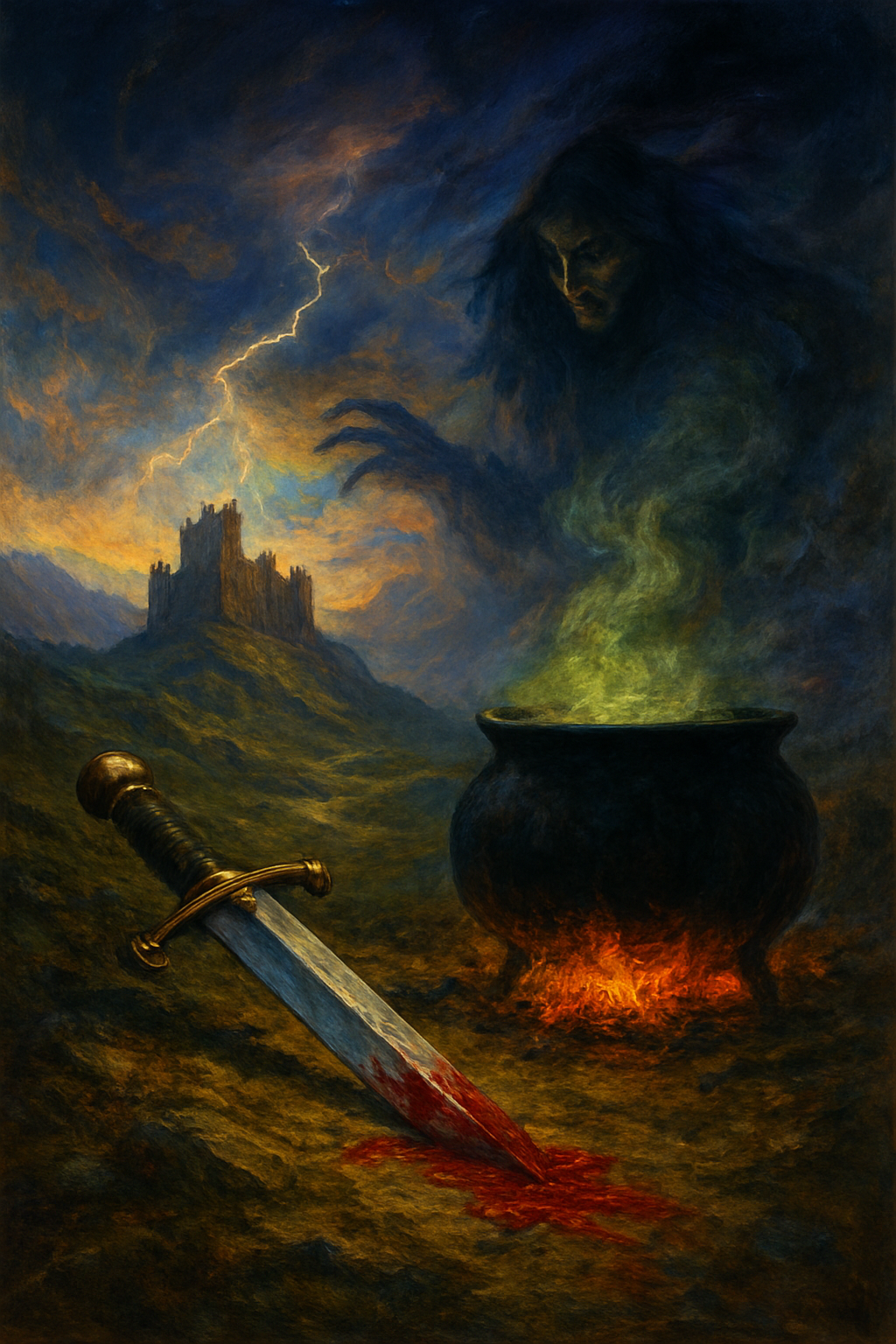
King Lear
1608 · Tragedy
Free to read in your browser. Public-domain edition from Project Gutenberg, illustrated as you read.
About This Book
King Lear is one of Shakespeare’s great tragedies: an aging monarch decides to divide his kingdom among his three daughters and retire, asking each to declare her love. When his youngest, Cordelia, refuses flattery and is disowned, Lear’s decision sets off a chain of betrayals and political scheming that rip the realm and his family apart. The play follows parallel plots. Lear wanders from royal comfort into storm and madness as his two eldest daughters, Goneril and Regan, turn on him and each other, while his loyal courtier Kent remains disguised to serve him. Alongside this, the nobleman Gloucester is betrayed by his illegitimate son Edmund, who deceives him and drives a wedge between Gloucester and his legitimate son, Edgar. The Fool and a small circle of faithful allies try to anchor Lear as his grasp on reason slips; Cordelia returns with the French court to seek reconciliation. Themes of loyalty, ambition, filial ingratitude, and power play out against increasingly violent political conflict. King Lear endures because it stages an intimate human collapse within a wider breakdown of authority. The play’s stark emotional arcs — parental vanity, filial response, deceit and devotion — remain compelling, and its blend of raw tragedy and moral complexity continues to challenge and move readers and audiences.
Characters in King Lear
 King LearWe first meet King Lear on his throne, commanding the room as he announces a grand plan to divide his realm among his three daughters. He’s proud, used to obedience, and impatient for declarations of love, surrounded by courtiers and knights who jump when he speaks.
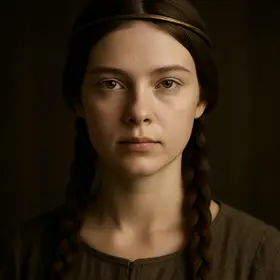 CordeliaWe first meet Cordelia as King Lear’s youngest daughter, the quiet one who won’t dress up her love in fancy words when her sisters are pouring on flattery. She matters because her plain, truthful voice in that opening scene sets off the family tension that everyone else reacts to.
 EdmundWhen we first meet him, Edmund is the Earl of Gloucester’s illegitimate son, newly back from abroad and standing quietly while his father jokes a bit too freely about his birth. He’s smooth, bright, and hungry to prove himself—chafing at the slight of being the “bastard” while reading the room with razor focus.
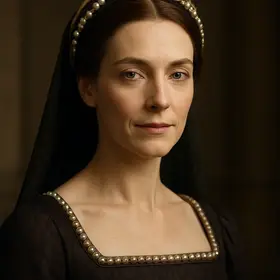 GonerilWe first meet Goneril as King Lear’s eldest daughter, perfectly turned out and very sure of her place in court. She speaks smoothly during her father’s public “love test,” offering polished compliments while her husband, the Duke of Albany, stands by, and her words help steer how the court receives Lear’s plans.
 ReganWe first meet Regan in Lear’s court, standing beside her husband, the powerful Duke of Cornwall, ready to answer her father in the grand “love test.” She speaks smoothly and confidently, the practiced courtier, and her presence matters because she’s a princess whose words help steer how Lear divides favor and power, stirring the family’s rivalries from the start.
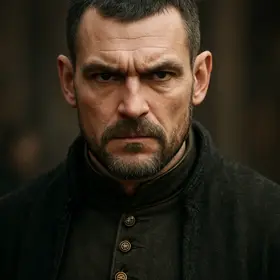 CornwallCornwall is the Duke of Cornwall, married to Regan, and he walks into the story already used to power and getting his way. He’s brisk, proud, and quick to take offense, the kind of lord who expects instant obedience and backs his wife without blinking. Early on, he throws his weight around at court and on the road, making it clear he’s not a man to cross.
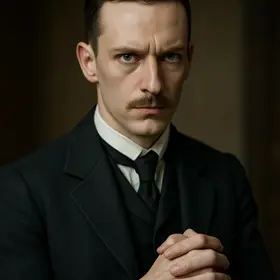 OswaldWhen we first meet him, Oswald is Goneril’s steward—the household’s chief attendant—running messages and enforcing her wishes. He’s brisk, snippy with Lear’s followers, and quick to flatter power, the kind of servant who remembers slights and loves a tidy order.
 GloucesterWe meet Gloucester at King Lear’s court, a plainspoken earl who proudly presents his sons and talks with the easy confidence of an old retainer. He matters because he’s a powerful lord close to Lear, and his family—especially the contrast between his legitimate and illegitimate sons—quickly draws attention and stirs conversation.
 EdgarWhen we first meet him, Edgar is the Earl of Gloucester’s legitimate son—polite, trusting, and a little sheltered by his rank. He matters because he’s the heir everyone expects to succeed, and his easy nature makes him a target in a household suddenly buzzing with ambition.
 KentWe meet Kent as a blunt, loyal lord at Lear’s side, the kind of man who would rather risk offense than let a bad decision slide. He speaks plainly, challenges flattery, and tries to steady Lear when the court begins to buzz with showy words.
 The FoolWe meet the Fool at Lear’s court just after the king has split his realm, and he immediately needles Lear with sharp jokes and riddles. He’s the one person who can speak hard truths to the old king without getting his head taken off, and he stays close, needling and nudging him back toward sense.
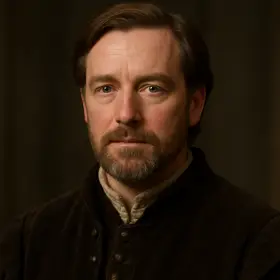 AlbanyWhen we first meet Albany, he’s the Duke married to Goneril, standing quietly in Lear’s court while the family drama begins. He’s courteous and mild, the sort who tries to smooth ruffled tempers and keep the peace rather than charge into an argument.
Study guide
Summaries and analysis of all 23 chapters, and profiles of 16 characters, illustrated with scenes from the book.
Themes
- family and loyalty
- madness
- power and authority
- betrayal
- identity
Why Read King Lear?
Read King Lear for its concentrated study of human relationships under pressure: a ruler’s vanity, the corrosive effects of flattery, and the moral choices that reveal character. The play moves from domestic conflict into political violence, showing how personal decisions cascade into public catastrophe. Shakespeare’s language gives voice to rage, grief and moments of bleak humor, and characters like Lear, Cordelia, Edmund and Edgar remain psychologically vivid and paradoxical.
Beyond its historical setting, King Lear speaks to contemporary concerns—age and dignity, the vulnerability of leaders, and the costs of ambition. Its scenes of storm and shelter, blindness and insight, create striking theatrical moments and invite reflection on responsibility and compassion. For readers today, it’s an intense moral and emotional experience that rewards close reading and re-reading, whether you encounter it on the page, on stage, or in adaptation.
Experience King Lear on Book2Life
Read with AI-generated visuals, character portraits, audio narration, smart summaries, and more — free in your browser and on iPhone.