The Brothers Karamazov Chapter 2 Summary
The Old Buffoon
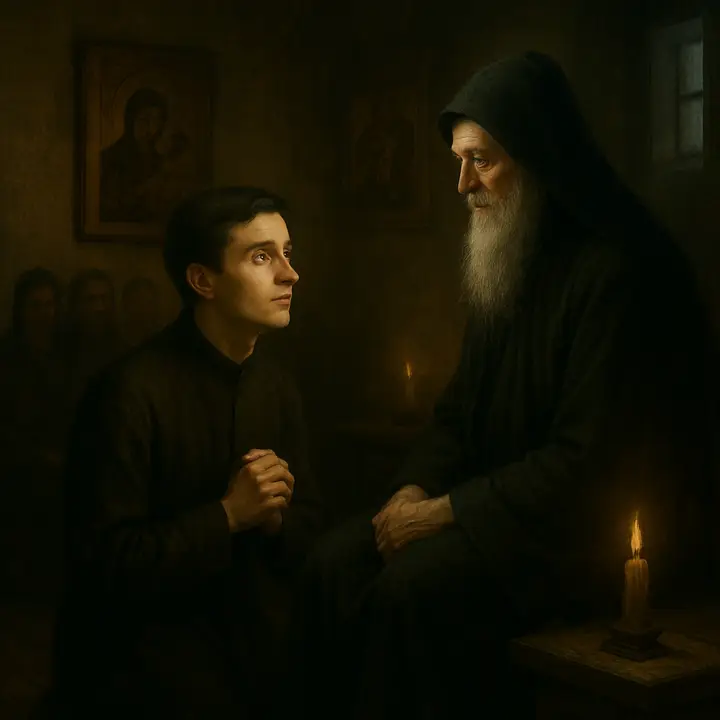
Visitors, including Fyodor Pavlovitch and Pyotr Miusov, meet the elder Father Zosima in his cell where Fyodor performs a mock‑buffoonry that embarrasses his son Alyosha.
Summary
Alyosha and several visitors enter Father Zosima’s modest cell where monks and guests are waiting for the elder. Present are Father Paissy and the Father Librarian, a divinity student (Rakitin), a novice, Alexei (Alyosha) himself, Pyotr Alexandrovich Miusov, Fyodor Pavlovitch Karamazov, Ivan, and others. The visitors perform the customary reverence; the monks prostrate and kiss the elder’s hand, while some laymen offer more conventional bows.
Fyodor Pavlovitch immediately takes up his old role as a comic buffoon, telling garrulous stories and mock‑confessions designed to provoke and amuse. Miusov is embarrassed and annoyed by Fyodor’s behaviour; Alyosha is ashamed and distressed. Father Zosima listens patiently and replies with calm admonitions and wise remarks, insisting above all on honesty with oneself. When Fyodor asks whether a certain legendary saint who carried his own severed head exists, Zosima denies it and gently reproves the habit of lying to oneself. The scene ends with Zosima rising to attend to other visitors while Fyodor continues to fawn and test the elder, asking for yet another blessing and prompting Miusov to speak next.
Key events
- Guests and monks assemble in Father Zosima’s cell; customary reverences are performed.
- Fyodor Pavlovitch adopts his buffoon persona, telling anecdotes and provoking the group.
- Miusov is embarrassed and objects to Fyodor’s mockery of the sacred setting.
- Father Zosima responds with calm admonitions, especially warning against lying to oneself.
- Fyodor asks about a legendary saint carrying his severed head; Zosima denies the story.
- Zosima rises to greet other visitors; Alyosha escorts him, relieved but shaken.
Analysis
This chapter establishes Father Zosima’s moral stance and contrasts genuine humility with theatrical self‑exposure. The elder’s quiet authority is shown not through dramatic pronouncements but through measured, ethical guidance — most notably his central thesis about self‑deception: the man who lies to himself loses the ability to know truth, respect, and love. Fyodor Pavlovitch’s clowning functions both as comic relief and as a revealing character study: his buffoonery masks shame, self‑lying, and a desire to provoke; it also destabilizes the sanctity of the cell, testing the elder’s patience and exposing the vulnerabilities of other characters, especially Alyosha and Miusov.
Narratively, the scene intensifies interpersonal tensions and foreshadows conflicts around truth, pride, and hypocrisy. The setting—the sparse, art‑filled cell with icons and foreign engravings—serves as a microcosm of Russian spiritual life mixing genuine piety with social performance. The elder’s technique of quiet moral diagnosis contrasts with the chaotic, performative energy of Fyodor, setting up an ethical axis that will recur: authentic repentance and inner truth versus theatricality and self‑deception. The chapter also uses close third‑person observation (focused mainly through Alyosha’s sensibilities) to register shame, hope, and familial disappointment.
Important quotes
“Don’t lie to yourself. The man who lies to himself and listens to his own lie comes to such a pass that he cannot distinguish the truth within him, or around him, and so loses all respect for himself and for others.”
Father ZosimaZosima gives a key moral warning about self‑deception that frames the chapter’s ethical conflict.
“I am an inveterate buffoon, and have been from birth up, your reverence, it’s as though it were a craze in me. I dare say it’s a devil within me.”
Fyodor Pavlovitch KaramazovFyodor explains (or pretends to explain) his compulsive clowning, revealing shame and testing the elder.
Characters in Chapter 2
All chapter summaries ›Characters ›
Read The Brothers Karamazov illustrated
Every scene in these notes comes from the Book2Life reader, where the full public-domain text is illustrated as you read, with character portraits and narration. Free in your browser and on iPhone.
Read The Brothers Karamazov free
