The Count of Monte Cristo Chapter 17 Summary
The Abbé’s Chamber
Dantès explores Faria’s secret hoard, they investigate who betrayed Edmond, and the two plan — then prepare for — an escape while Faria falls ill.
Summary
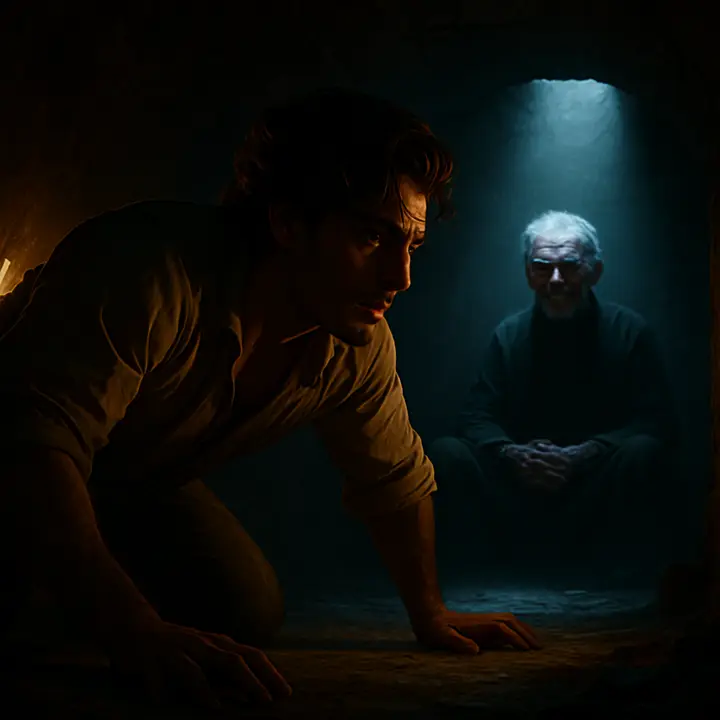
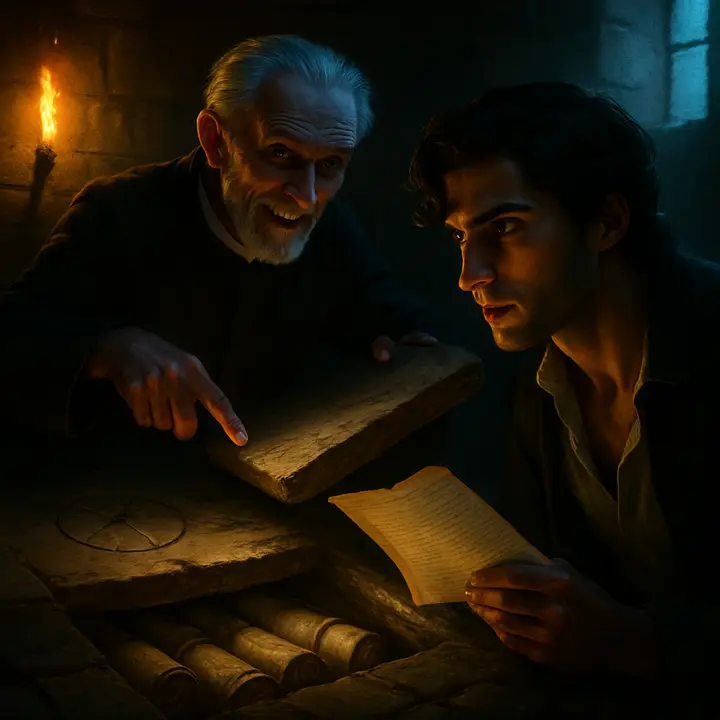
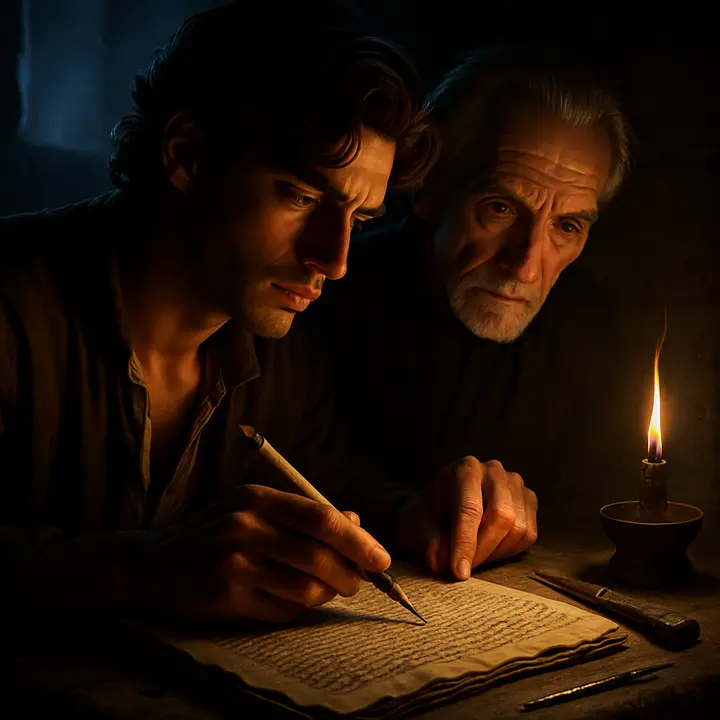
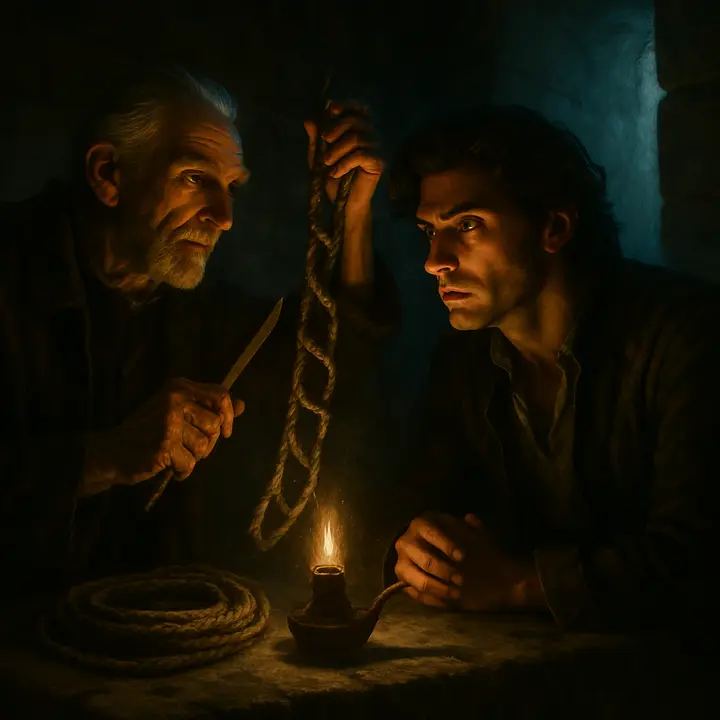
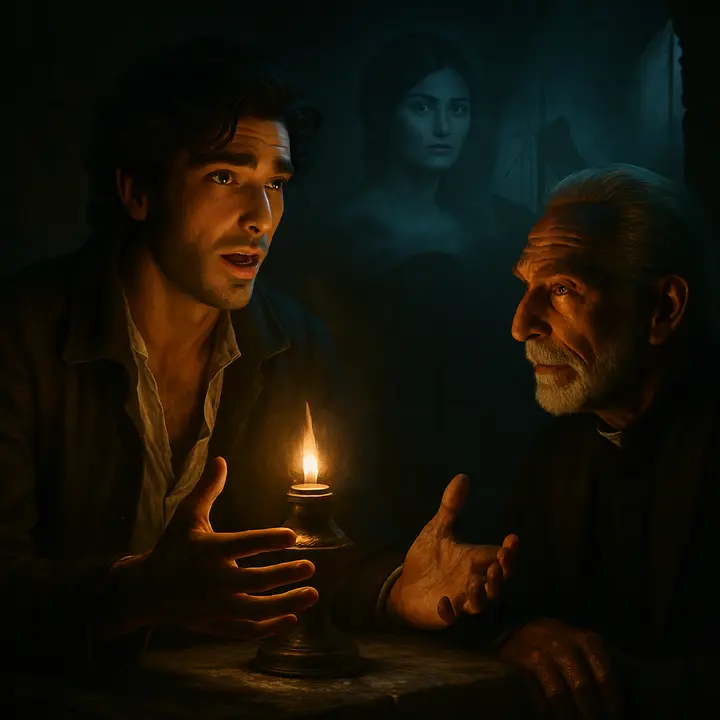
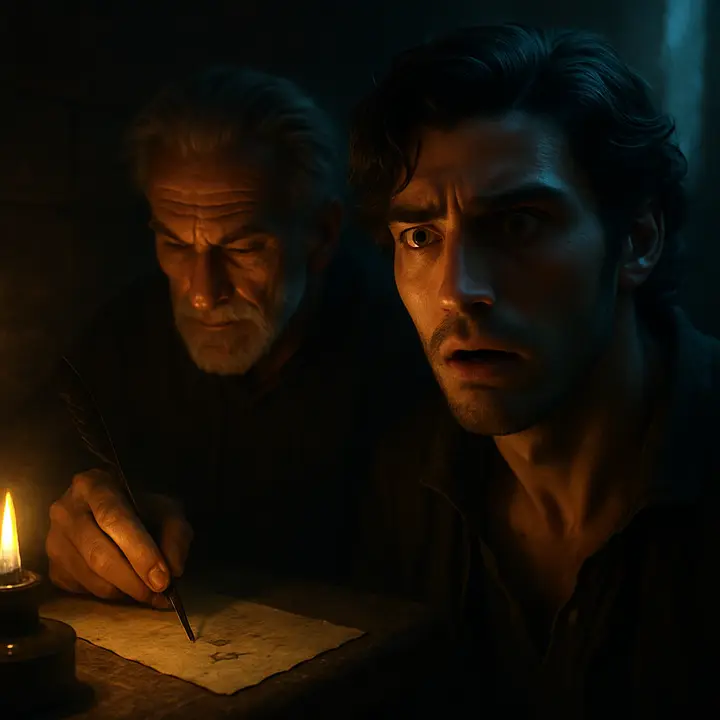
Edmond Dantès visits Abbé Faria’s cell through a low subterranean passage and discovers the clever devices, writings, and hidden stores the abbé has assembled during his long confinement. Faria produces a long manuscript written on strips in Italian, his homemade pens and knives, a lamp made from rendered fat, and a cord ladder concealed behind a stone in his bedhead. As Dantès inspects these treasures he grows increasingly impressed by Faria’s ingenuity and learning.
Faria then interrogates Dantès closely about the events leading to his arrest. Using Dantès’s recollections—who handled the suspicious packet, who was present at certain moments, the style of handwriting, and the behavior of the examining magistrate—Faria reconstructs the likely conspiracy: Danglars and others had motive, and the magistrate De Villefort’s dramatic destruction of the incriminating letter makes sense once Faria recognizes the name Noirtier as De Villefort’s father. Overwhelmed, Dantès returns to his cell to think and swears a solemn oath. Back together, Faria and Dantès agree to exchange instruction for silence: Faria will teach Edmond languages, mathematics, and history, and Edmond vows not to speak of escape. They nevertheless begin planning a patient, painstaking escape by tunneling under the sentry gallery and loosening a flagstone so the sentinel will fall; a cord ladder will let them descend the outer wall. Their work proceeds for more than a year using only a chisel, a knife, and a wooden lever. Just as the final preparations near completion, Faria is stricken with a violent, possibly fatal epilepsy-like attack; Dantès saves him with the abbé’s prepared remedy. Faria, now partially paralyzed and resigned that he may never leave the prison, nevertheless insists they fill the excavation beneath the gallery to avoid discovery and promises to reveal something of great importance when Dantès next visits.
Key events
- Dantès inspects Faria’s hidden manuscripts, tools, lamp, and cord ladder.
- Faria questions Dantès and reconstructs the likely betrayal, implicating Danglars and connecting De Villefort to Noirtier.
- Dantès resolves, swears an oath, and agrees to silence; Faria plans to teach him.
- They begin a long, secret excavation beneath the sentry gallery to stage an escape.
- After over a year of work the plan nears completion but Faria suffers a violent seizure.
- Dantès revives Faria with the phial; Faria is left partially paralyzed and advises precautions to avoid discovery.
Chapter 17 in pictures
Analysis
This chapter shifts the novel from immediate injustice to investigation, education, and enterprise. It functions as a turning point: the abbé’s chamber supplies both practical means (tools, ladder, plan) and intellectual means (knowledge, methodical reasoning) that transform Dantès from a bewildered victim into an active, schooled agent. The interrogation scene showcases Faria’s analytic method—assembling motive, opportunity, and handwriting evidence—and introduces a crucial personal revelation (Noirtier’s identity) that reframes the nature of Dantès’s betrayal. Thematically, the chapter contrasts brute imprisonment with liberating knowledge: captivity triggers invention and learning, while friendship becomes the engine of moral and practical renewal. Faria’s manuscript and makeshift instruments symbolize human resourcefulness under constraint, and the long education sequence foreshadows Edmond’s future transformation into someone broader than a sailor. The planned escape—patient, methodical tunneling—echoes the novel’s larger architecture of long-term plots and delayed justice. Narratively, Dumas slows time, stretching months into deliberate apprenticeship that both deepens character bonds and builds suspense about whether the escape will succeed; Faria’s sudden illness introduces a new obstacle and injects urgency and poignancy, underscoring mortality amid schemes of revenge and liberation. The chapter also uses close, forensic attention to small details (handwriting, torn sheets, the sunray clock) to dramatize reasoning as a form of revelation.
Important quotes
““It is well,” said the abbé; “we have some hours before us —it is now just a quarter past twelve o’clock.””
Abbe FariaFaria explains how he tells time by a sunbeam and wall markings, showing his scientific ingenuity.
““This Noirtier was his father!””
Abbe FariaFaria reveals the crucial identification that explains De Villefort’s suspicious behavior during Dantès’s examination.
“By the blood of Christ I swear never to leave you while you live.”
Edmond DantesDantès makes a solemn vow to stay with the dying, partially paralyzed abbé rather than attempt escape without him.
Characters in Chapter 17
- Edmond Dantes
- Abbe Faria
- Danglars
- Gaspard Caderousse
- Fernand Mondego
- Mercédès
- Noirtier de Villefort
- Gérard de Villefort
- Captain Leclère
- the grand marshal
- the turnkey / jailer
All chapter summaries ›Characters ›
Read The Count of Monte Cristo illustrated
Every scene in these notes comes from the Book2Life reader, where the full public-domain text is illustrated as you read, with character portraits and narration. Free in your browser and on iPhone.
Read The Count of Monte Cristo free
