The Count of Monte Cristo Chapter 18 Summary
The Treasure Revealed
Faria reveals a partially burned will that—when pieced together—names a vast hidden treasure on the Island of Monte Cristo and bequeaths it to Guido/Spada's heir.
Summary
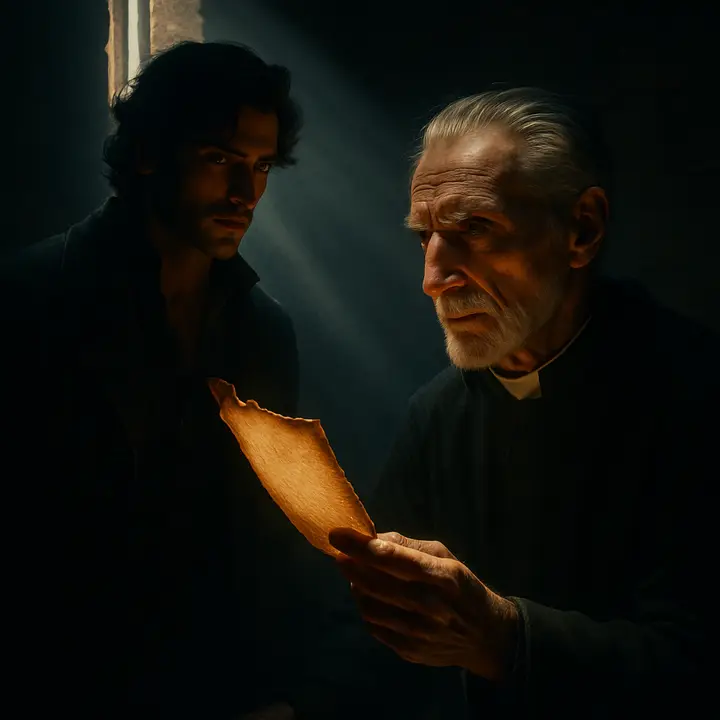
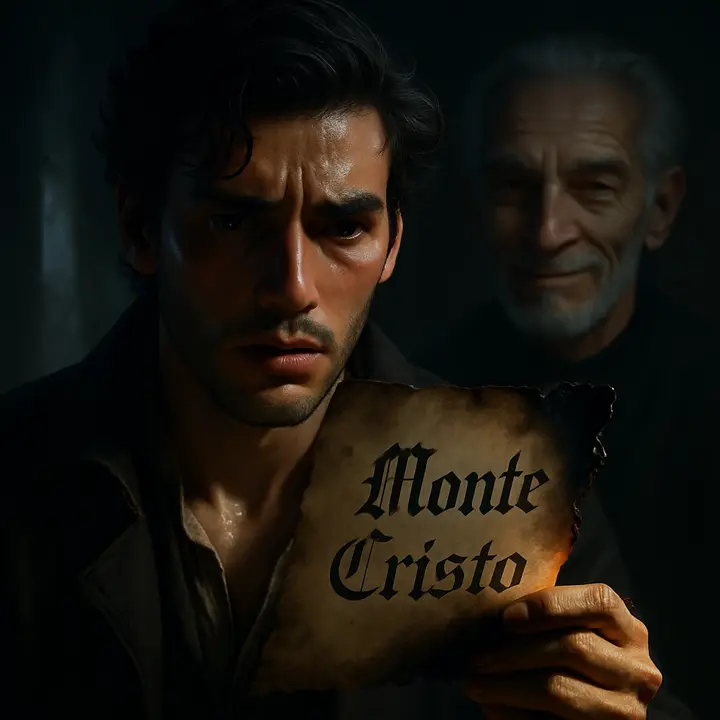
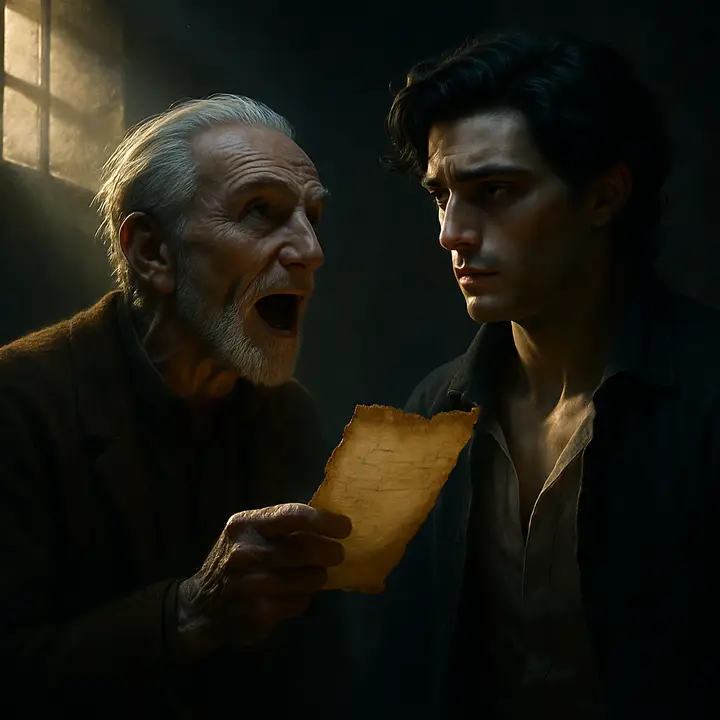
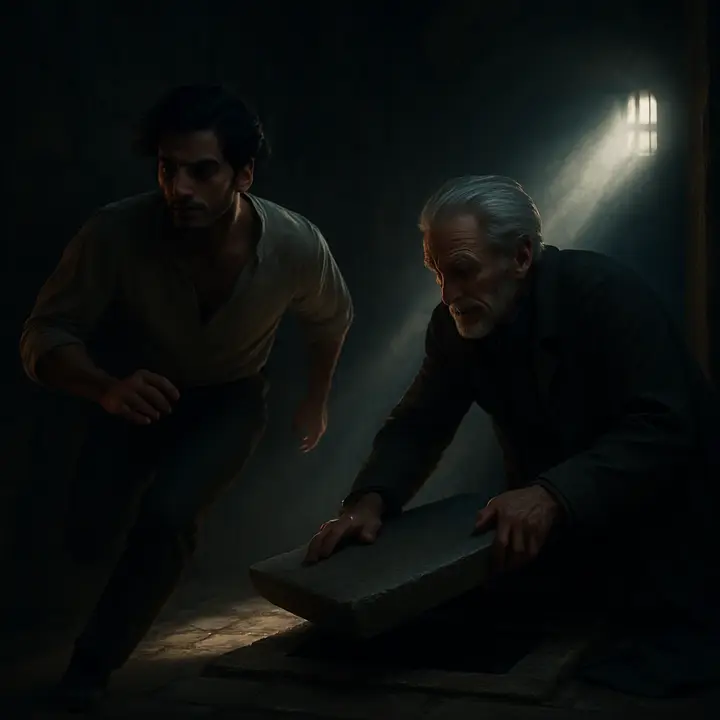
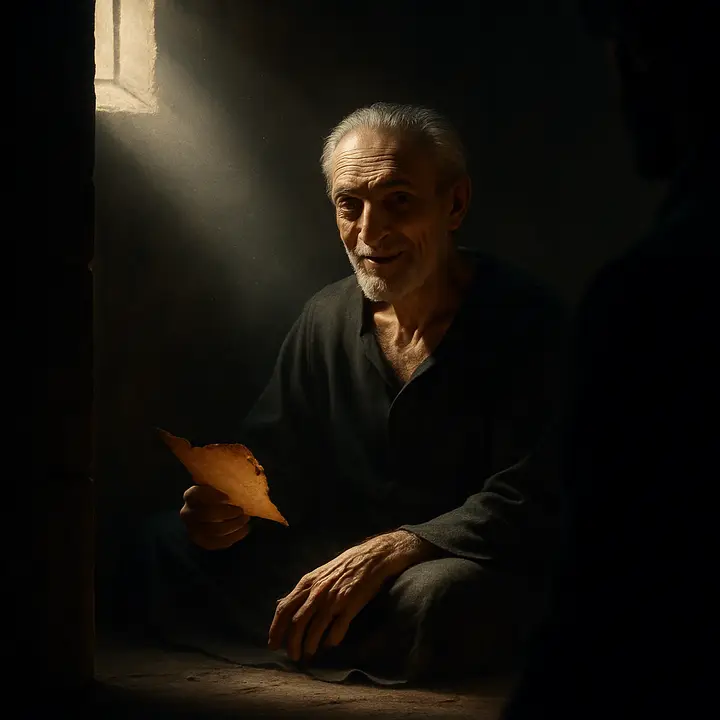
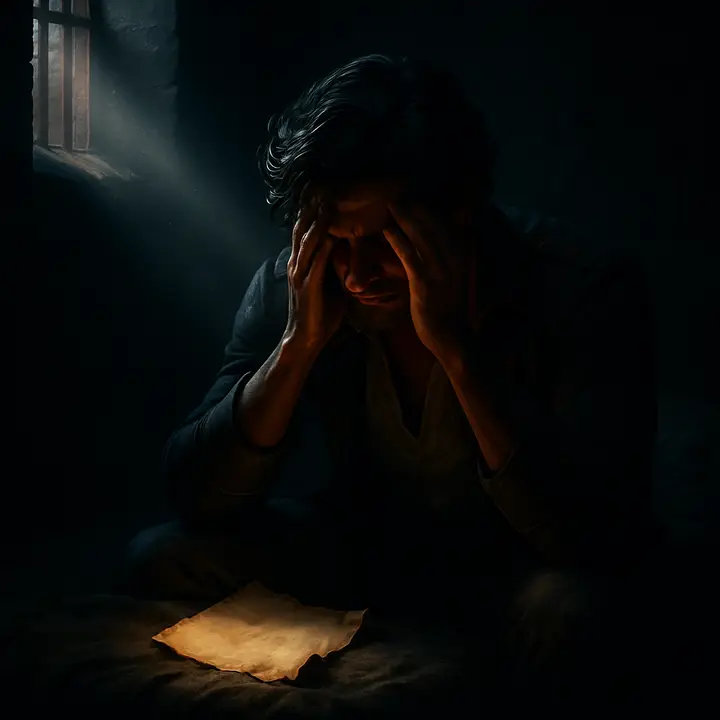
Edmond Dantès finds Abbé Faria composed and holding a burnt sheet of paper; Faria announces that the paper is the key to a treasure and that half of it will belong to Dantès. At first Edmond resists, fearing the old man has relapsed into madness, and delays reading the fragment, but Faria presses him, explaining that the treasure's disclosure cannot be postponed. When the governor visits, Faria hides the opening between the cells to avoid separation from Edmond. After the governor leaves, Faria drags himself to Edmond's cell and begins the long story behind the paper.
Faria recounts his service to the Spada family, the poisoning and suspicious deaths surrounding Cardinal Spada, and the mysterious will that seems to point to a hidden fortune. He explains how, while handling the celebrated breviary and its old marker, the invisible sympathetic ink is revealed by flame: the burned fragment Dantès read earlier. Faria pieces together the fragments, reconstructs the will, and declares that Cardinal Spada bequeathed his treasure—ingots, jewels, and gold—buried in caves on the Island of Monte Cristo, a hoard possibly worth two million Roman crowns. He insists the Spada line is effectively extinct and that the fortune belongs to him, and if they escape together to Monte Cristo they will share it equally; if Faria dies, Edmond will inherit all. The chapter closes with the emotional bond between prisoner and tutor, Faria calling Edmond his son and Edmond weeping on the old man's neck.
Key events
- Dantès finds Faria holding a half-burnt paper and is told it is a treasure document.
- Faria urges Dantès to read the fragment revealing traces of a will written in sympathetic ink.
- The governor visits; Faria hides the access between the cells to avoid separation.
- Faria narrates the Spada family history and the poisoning of Cardinal Spada and others.
- Faria explains how the secret ink appeared when the paper was singed and presents a second fragment.
- The two fragments are joined and reconstructed, revealing directions to a treasure on Monte Cristo.
- Faria declares the treasure legally and morally available to them and calls Edmond his son.
Chapter 18 in pictures
Analysis
This chapter functions as a pivotal turning point: it converts Faria from a mysterious mentor into the source of concrete hope and action. The discovery of the buried will transforms the narrative from psychological confinement and intellectual companionship into a tangible scheme for escape and future riches. Thematically, the chapter juxtaposes imprisonment and liberation—intellectual freedom (Faria’s knowledge and reasoning) yields the map to material freedom (the treasure). It also deepens the bond between Faria and Edmond: Faria as teacher/parent confers a moral and legal claim to the treasure, shaping Edmond’s future identity and obligations.
Narratively, Dumas employs a framed tale technique—Faria’s long historical account within the prison setting—moving the plot outward in time and space without leaving the cell. Symbolically, the breviary, the burned paper, and sympathetic ink represent concealed truth revealed by risky action (the flame) and careful interpretation; fire both destroys and discloses. Foreshadowing is explicit here: the treasure provides motive for future plans and tests of character, while Faria’s deteriorating health and repeated warnings about attacks hint at urgency and the possibility that Edmond will have to act alone. The chapter also showcases Dumas’s use of dialogue and exposition to combine romantic intrigue (poisoning, papal machinations) with a pragmatic roadmap for future adventure.
Important quotes
“I saw yellowish characters appear on the paper. I grasped it in my hand, put out the flame as quickly as I could, lighted my taper in the fire itself, and opened the crumpled paper with inexpressible emotion, recognizing, when I had done so, that these characters had been traced in mysterious and sympathetic ink, only appearing when exposed to the fire;”
Abbe FariaFaria explains how he discovered the invisible writing: the sympathetic ink becomes legible only when the paper is singed.
“You are my son, Dantès," exclaimed the old man. "You are the child of my captivity.”
Abbe FariaFaria emotionally claims Edmond as a son, sealing their bond after offering him the secret of the treasure.
Characters in Chapter 18
- Edmond Dantes
- Abbe Faria
- Governor
- Cardinal Spada
- Caesar Borgia
- Alexander VI
- Giovanni Rospigliosi
- Guido Spada
- Count of Spada
- Caprara
- Bentivoglio
All chapter summaries ›Characters ›
Read The Count of Monte Cristo illustrated
Every scene in these notes comes from the Book2Life reader, where the full public-domain text is illustrated as you read, with character portraits and narration. Free in your browser and on iPhone.
Read The Count of Monte Cristo free
