
Telemachus in The Odyssey
Major character
Telemachus, son of Odysseus and Penelope, a young prince who seeks news of his father and asserts authority in his household.
Who is Telemachus?
Telemachus is the only son of Odysseus and Penelope, introduced as a polite but frustrated youth trying to manage his father’s ruined household while the suitors consume his estate. He wants news of his missing father and the power to protect his mother and home. Prompted and counselled by Athena (who disguises herself as Mentes and Mentor), he calls an assembly to confront the suitors, then secretly outfits a ship and sails to Pylos and Sparta to question Nestor and Menelaus about Odysseus’ fate. His voyage proves formative: he gains confidence, receives hospitality and information, and returns hastened by Athena’s urging when the suitors plot ambush. Back in Ithaca he reunites with his disguised father at Eumaeus’ hut, helps execute Odysseus’ plan—removing arms, organizing the bow contest, and taking up arms in the slaughter of the suitors—and then accompanies his father to restore order in the household and the island. Across these actions he moves from hesitant youth to active participant in reclaiming his family’s honor.
In the book: When we first meet him in Ithaca, he’s Odysseus’s son trying to hold his father’s hall together while bold suitors eat his food and pressure his mother. He’s polite but simmering with frustration, and—after a visit from a wise “guest”—he finally gathers himself to speak up and look for news of his missing father.
Personality
- Resolute
- He commands the assembly in Book 2 and later sails secretly to Pylos and Sparta despite youth and risk.
- Respectful
- He defends the bard and maintains proper deference to elders when addressing the assembly in Book 1 and Book 2.
- Growingly courageous
- He returns to Ithaca quickly at Athena’s urging in Book 15 and physically arms himself to fight alongside his father in Book 22.
- Loyal
- He accepts Theoclymenus as a fugitive aboard his ship (Book 15) and trusts and collaborates with Eumaeus and Philoetius (Books 16–21).
- Prudent
- He follows Odysseus’ instructions to hide most household arms and to keep the return secret until the right moment (Book 16–19).
Character arc
Telemachus begins as a brooding, frustrated youth unable to control his home while suitors devour his patrimony. Athena’s first visit (as Mentes) provokes him to address the suitors in Book 1 and to call an assembly in Book 2, the first public assertion of authority. His journey to Pylos and Sparta (Books 3–4) functions as a rite of passage: he speaks with seasoned elders, learns the wider political consequences of the war, and acquires confidence and allies (notably Pisistratus). Athena’s urgings accelerate his maturity in Book 15, sending him back to Ithaca where he shows practical leadership—harbouring Theoclymenus, visiting loyal servants, and coordinating with Eumaeus. The pivotal emotional turn comes in Book 16 when he recognizes and embraces Odysseus; this reunion transforms him from questing son to active co-conspirator. From Book 17 onward he executes tactical orders—organizing the bow contest, managing household movements, and ultimately fighting beside his father in Book 22. By the end, Telemachus is no longer a passive adolescent but a tested member of his father’s household, participating in the restoration of family authority and the settlement at Laertes’ farm, having grown in courage, prudence, and filial solidarity.
Relationships
- Odysseus Telemachus is Odysseus’s son; he seeks news of him, reunites in Book 16, and fights alongside him to reclaim the house.
- Penelope Telemachus is Penelope’s son and protector; he reports his findings to her and acts to relieve the pressure of the suitors on her.
- Athena Athena mentors and protects Telemachus—disguising herself to advise him, inspiring confidence, and arranging aid for his voyage and return.
- Eumaeus Eumaeus is a loyal servant who receives Telemachus warmly, shelters him at the swineherd’s hut, and cooperates in Odysseus’ plan.
- Pisistratus Pisistratus escorts Telemachus from Pylos to Sparta as arranged by Nestor, acting as a travel companion and younger ally.
- Theoclymenus Theoclymenus is a fugitive seer whom Telemachus gives sanctuary to aboard his ship and brings to Ithaca, where the prophet announces ominous signs.
Quotes by Telemachus
““Sir,” said he, “it is I, as you will shortly learn, who have convened you, for it is I who am the most aggrieved.”
Book 2Telemachus opens the assembly by declaring his reason for calling the meeting: the suitors' abuse of his household.
““Fear not, nurse,” answered Telemachus, “my scheme is not without heaven’s sanction; but swear that you will say nothing about all this to my mother, till I have been away some ten or twelve days, unless she hears of my having gone, and asks you; for I do not want her to spoil her beauty by crying.””
Book 2Telemachus quietly instructs Euryclea to hide his preparations and assures her he acts with divine approval before his secret departure.
“I seek news of my unhappy father Ulysses, who is said to have sacked the town of Troy in company with yourself.”
Book 3Telemachus formally introduces his quest and asks Nestor for any information about his father’s fate.
Why Telemachus matters
Telemachus embodies the theme of maturation and the restoration of order. His coming-of-age voyage and subsequent actions show how rightful leadership is learned through counsel, travel, and tested loyalty rather than inherited title alone. Through his interactions with Athena, elders, loyal servants, and his disguised father, the poem examines filial duty and the necessity of courage married to prudence. Telemachus’ growth from indecision to active participation in reclaiming the household underscores the epic’s concern with justice, hospitality, and the reestablishment of social norms after the chaos of war and prolonged absence.
Chapters with Telemachus
More The Odyssey characters
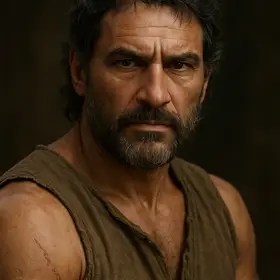 Odysseus
 Athena
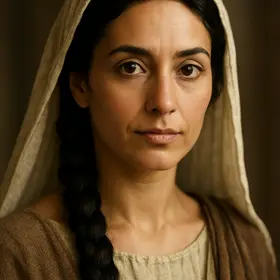 Penelope
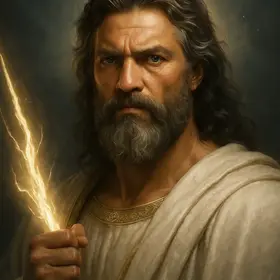 Zeus
Zeus Laertes
 The Suitors
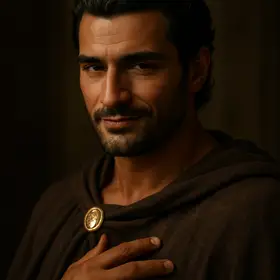 Antinous
 Eumaeus
All chapter summaries ›Characters ›
Read The Odyssey illustrated
Every scene in these notes comes from the Book2Life reader, where the full public-domain text is illustrated as you read, with character portraits and narration. Free in your browser and on iPhone.
