
The Baby in The Yellow Wallpaper
Minor character
An offstage infant whose presence in the nursery symbolizes the narrator’s prescribed role and intensifies her confinement.
Who is The Baby?
The Baby never appears onstage but is repeatedly implied by the family’s occupation of a top-floor nursery filled with childlike fixtures and barred windows. Its existence marks the narrator’s socially mandated identity as wife and mother and serves as a focal point for the domestic expectations that frame John’s strict ‘‘rest cure.’’ The narrator’s confinement in the nursery—where a repellent yellow wallpaper dominates—casts the baby as both a literal occupant of the room and a symbolic source of pressure: it underlines why the narrator is kept idle, discouraged from work, and treated as delicate. Because the baby remains offstage, it intensifies the emotional distance within the household and amplifies the story’s critique of rigid gender roles without ever acting directly. The Baby’s presence helps explain John’s caretaking posture and Jennie’s practical housekeeping, while amplifying the narrator’s sense of isolation that drives her obsessive study of the wallpaper and eventual breakdown.
In the book: The baby functions mainly as a symbolic presence that highlights the narrator’s prescribed role as wife and mother and intensifies her feelings of confinement and inadequacy. Its offstage existence underscores the emotional distance in the household and amplifies the story’s critique of rigid domestic expectations.
Personality
- symbolic
- The baby exists primarily as part of the ‘‘top-floor nursery’’ setting, signaling the narrator’s prescribed maternal role rather than performing independent action.
- absent
- The Baby is never described onstage; its offstage existence is implied by references to the nursery and the narrator’s obligations.
- pressure-inducing
- Its presence in the nursery helps justify John’s ‘‘rest’’ treatment and the restrictions that make the narrator feel controlled and inadequate.
- silent
- The Baby never interacts with other characters, reinforcing emotional distance in the household and the narrator’s isolation.
Character arc
Because the Baby never appears directly, it does not undergo change in a narrative sense; instead its meaning shifts only through the narrator’s perception. At first the Baby functions as part of the setting that explains why the couple occupies the nursery—an ordinary reason for retreating into a child’s room. As the narrator’s confinement deepens and her attention narrows to the yellow wallpaper, the Baby’s offstage status becomes more charged: it stands for the domestic and reproductive expectations that confine her, and for the social justification John uses to deny her autonomy. By the story’s climax, when the narrator tears away the wallpaper and declares she has ‘‘got out,’’ the Baby remains physically absent but thematically present—its unchanged silence contrasts with the narrator’s radical psychological break. Thus the Baby’s arc is not about development but about intensifying symbolic weight: from mundane occupant to emblem of the pressures that precipitate the narrator’s collapse.
Relationships
- The Narrator The Baby symbolizes the narrator’s socially mandated role as mother and contributes to her feelings of confinement and inadequacy.
- John The Baby helps justify John’s medical ‘‘rest’’ regimen and his paternal, controlling care for the household.
- Jennie Jennie’s practical housekeeping in the nursery is partly organized around caring for the space that the Baby occupies, highlighting domestic labor divisions.
- The Woman in the Wallpaper The Baby’s silent existence contrasts with the imprisoned woman the narrator sees in the wallpaper, emphasizing differing forms of entrapment.
Why The Baby matters
The Baby functions as a compact symbol of the story’s critique of domestic expectations: its offstage presence points to how motherhood and wifely duties can be used to constrain women’s autonomy. By never appearing directly, the Baby heightens the emotional distance in the household and gives John a socially acceptable basis for controlling the narrator. Its silence and absence therefore amplify themes of isolation, gendered authority, and the suffocating effects of ‘‘care’’ that denies agency, making the narrator’s obsession and eventual breakdown feel both personal and systemic.
Chapters with The Baby
More The Yellow Wallpaper characters
 JennieMinor character
 JohnAntagonist
 MaryMinor character
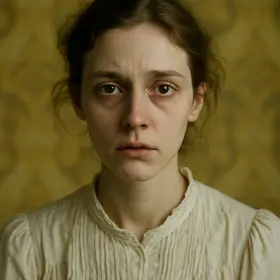 The NarratorNarrator
 The Woman in the WallpaperAntagonist
All chapter summaries ›Characters ›
Read The Yellow Wallpaper illustrated
Every scene in these notes comes from the Book2Life reader, where the full public-domain text is illustrated as you read, with character portraits and narration. Free in your browser and on iPhone.
Read The Yellow Wallpaper free
