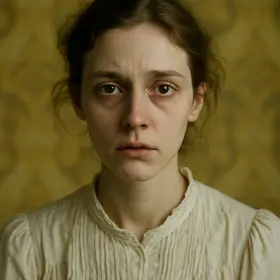
The Narrator in The Yellow Wallpaper
Narrator
A newly postpartum wife confined to a nursery under a 'rest cure,' who documents her mental unraveling in secret journal entries.
Who is The Narrator?
The narrator is a new mother prescribed a strict 'rest cure' by her physician-husband, John. Confined with him and Jennie in a rented colonial mansion for the summer, she is forbidden to work, write, or exert herself, so she keeps a covert journal that records her shifting perceptions and mounting obsession. Isolated in a top-floor nursery with barred windows and repellent yellow wallpaper, she fixates on the paper's pattern and odor, identifying a sub-pattern and a woman trapped behind it. She covertly studies and later peels at the wallpaper, believing it conceals a secret she must reveal. As her attention narrows, her narration alternates between rational observation and increasingly intense, symbolic language about the wallpaper and the imprisoned figure. On the final night she tears away yards of paper, locks the door against John, and proclaims she has 'got out' as she crawls over him while he faints. Through her journal she both resists and succumbs to the enforced passivity of the rest cure, making her the single lens through which the story examines medical authority, domestic confinement, and identity dissolution.
In the book: A newly postpartum wife and writer confined by her physician-husband for a “rest cure,” the narrator relates the story through diary entries that chart her thoughts and perceptions inside a single room. As our sole perspective, she is crucial for how the tale explores medical authority, domestic roles, and the erosion of self under enforced passivity. Her voice shapes the atmosphere, symbolism, and mounting tension that make the story a landmark of feminist and psychological literature, without relying on external viewpoints.
Personality
- Observant
- She studies the wallpaper's shifting sub-pattern and the trapped, stooping woman in it in minute detail.
- Secretive
- Despite John's prohibition on writing, she keeps a covert journal to record her thoughts.
- Obsessive
- Her fixation on the wallpaper grows until she spends days peering at it, watching its bars and forms by night.
- Defiant
- She peels away yards of wallpaper and locks the door, acting against John's prescriptions.
- Unraveling
- By the final night she identifies with the woman in the pattern, tears the paper away, and declares she has 'got out.'
Character arc
When she first appears the narrator is compliant in appearance: a new mother who accepts John's medical authority and the prescribed rest, though she feels controlled and stifled. Early entries show her hiding a journal and observing the room's details, especially the wallpaper, as a private outlet. As the summer progresses her attention narrows; what begins as curiosity about the wallpaper's ugly pattern becomes a sustained obsession with a sub-pattern and an image of a woman trapped behind it. Her clandestine acts—peeling paper, studying at night—mark a shift from quiet endurance to active resistance. Emotional and perceptual boundaries blur: she increasingly projects motion and intent onto the wallpaper, seeing bars and a stooping figure she aims to liberate. By the end she moves from covert rebellion to dramatic confrontation—tearing away the paper by the yard, locking the door, and physically crawling over John when he breaks in. Her final declaration that she has 'got out' completes a transformation from subdued patient to a figure who both enacts and embodies escape, even as her mental state shows profound disintegration.
Relationships
- John Her husband and physician whose rest cure and authority control her physical and mental life, prompting covert resistance.
- Jennie John's sister who helps care for the household and appears indifferent, accentuating the narrator's isolation.
- The Baby Her infant child, from whom she is separated emotionally by the rest cure and whom she references as part of her new-mother identity.
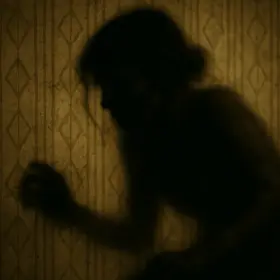
- The Woman in the Wallpaper A figure she perceives trapped behind the wallpaper whose imagined struggle becomes the focus of the narrator's identification and final act.
- Mary A member of the household environment mentioned on the cast list but not focal in the narrator's actions; part of the domestic sphere constraining her.
Why The Narrator matters
As the story's sole perspective, the narrator embodies the conflict between medical authority and female autonomy. Her journal voice exposes the patronizing 'rest cure' and domestic diminishment she endures while transforming a private obsession into a symbolic revolt against confinement. Through her mental breakdown and final identification with the woman in the wallpaper, the story interrogates how enforced passivity can erode selfhood and how forced silence prompts covert acts of resistance—making her central to the tale's themes of power, gendered control, and the costs of silencing women's experience.
Chapters with The Narrator
More The Yellow Wallpaper characters
 JennieMinor character
 JohnAntagonist
 MaryMinor character
 The BabyMinor character
 The Woman in the WallpaperAntagonist
All chapter summaries ›Characters ›
Read The Yellow Wallpaper illustrated
Every scene in these notes comes from the Book2Life reader, where the full public-domain text is illustrated as you read, with character portraits and narration. Free in your browser and on iPhone.
Read The Yellow Wallpaper free
