Hæthcyn in Beowulf
Minor character
A prince whose accidental killing of a kinsman sparks grief and long-running feuds between kin-groups.
Who is Hæthcyn?
Hæthcyn appears only in Beowulf’s long reminiscences about past kin-slayings and inter-tribal violence. As one of Hrethel’s sons, he accidentally shoots and kills Herebald, an event presented as an irreconcilable domestic tragedy that brings crushing sorrow on Hrethel and cannot be healed by compensation. His death (described as a fatal fall in later summary) becomes part of the chain of violence and revenge that fuels hostilities between Geats and Swedes and invites assaults by Ongentheow. Hæthcyn’s single fatal mistake and its aftermath are used by the narrator and by Beowulf to illustrate how private misfortune enlarges into public insecurity, shaping the political landscape the poem later confronts when Beowulf faces the dragon.
Personality
- Impulsive
- He accidentally shoots Herebald, a moment framed as a tragic error with irreversible consequences.
- Youthful
- He figures among Hrethel’s sons in Beowulf’s childhood reminiscences, the misdeed happening early in the household’s history.
- Unwittingly consequential
- His single act leads to long-running feuds and later assaults by Ongentheow, showing outsized political impact.
- Tragic
- Narration treats his death and the killing of Herebald as causes of Hrethel’s deep sorrow and familial collapse.
Character arc
Hæthcyn’s presence in the poem is concentrated in retrospective episodes that trace a brief but decisive trajectory: he first appears implicitly as one of Hrethel’s sons, a young man whose accidental shooting of Herebald transforms a private household into a scene of irreparable loss. That error produces profound grief for Hrethel and cannot be rectified by the normal system of compensation, so the incident becomes the seed of ongoing vengeance and border violence. Later narrative summaries record Hæthcyn’s own death (a fatal fall) and the violent reprisals that follow, especially Ongentheow’s assaults, making Hæthcyn both agent and victim in a cycle he neither intended nor survives to witness. He does not change or grow; instead his brief action fixes him in the poem as a catalyst whose mischance illustrates the stubborn persistence of feud and the fragility of kinship, leaving lasting consequences beyond his life.
Relationships
- Herebald A kinsman whom Hæthcyn accidentally shoots and kills, triggering family tragedy.
- Hrethel A member of Hrethel’s household and one of his sons, whose sorrow after the killing marks Hrethel’s decline.
- Ongentheow An enemy whose assaults and reprisals become entangled with the violence set off by Hæthcyn’s death.
- Swedes Members of the opposing group whose long-running hostility with the Geats is tied to the kin-slaying cycle that includes Hæthcyn’s act.
- Geats Hæthcyn belongs to the Geatish kin-network; his mistake weakens Geatish stability and contributes to later vulnerability.
- Beowulf Beowulf recalls Hæthcyn’s accident in a long reminiscence to illustrate the sorrow of old men and the cost of lost youths.
Why Hæthcyn matters
Hæthcyn embodies the theme of how private tragedy scales into public danger: a single accidental killing ruptures family bonds, cannot be legally or morally repaired, and fuels cycles of vengeance that shape national fate. His role underscores the poem’s interest in kinship, the limits of compensation, the unpredictability of youthful action, and the vulnerability of a people when its young warriors and rightful heirs are lost.
Chapters with Hæthcyn
More Beowulf characters
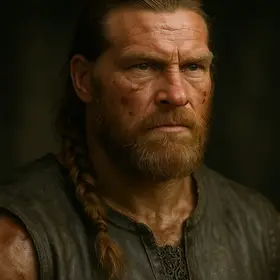 BeowulfProtagonist
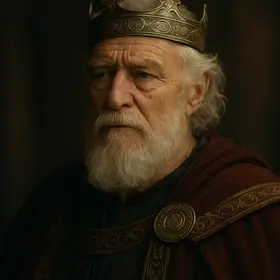 HrothgarMajor character
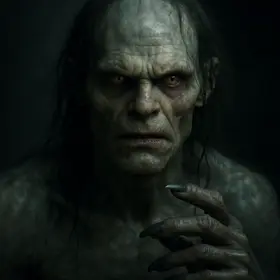 GrendelAntagonist
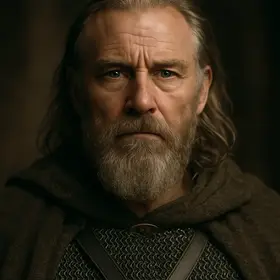 EcgtheowMinor character
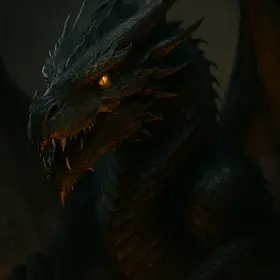 The DragonAntagonist
- HHealfdeneMinor character
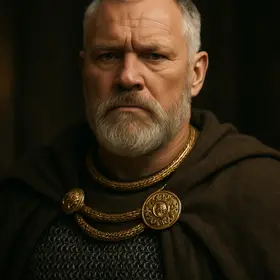 HygelacMajor character
- HHigelacMajor character
All chapter summaries ›Characters ›
Read Beowulf illustrated
Every scene in these notes comes from the Book2Life reader, where the full public-domain text is illustrated as you read, with character portraits and narration. Free in your browser and on iPhone.
