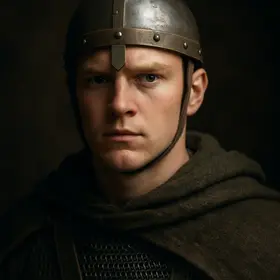
Wiglaf in Beowulf
Major character
A young kinsman and thane who stays loyal to Beowulf, aids him against the dragon, and assumes leadership duties after the king’s death.
Who is Wiglaf?
Wiglaf is a young thane and kinsman of Beowulf who exemplifies the comitatus ideal: loyalty, courage, and duty to his lord. When the dragon attacks, Wiglaf alone of the retainers remains at Beowulf’s side, rallies briefly rebuking the others, and retrieves an heirloom sword and shield to join the fight. He helps bring the dragon down and then ministers to Beowulf’s mortal wounds—washing his head, unbinding his helmet, and staying at the bedside. At Beowulf’s request Wiglaf enters the dragon’s barrow, gathers the treasure, and presents it so the dying king can see the hoard won for his people. After Beowulf dies, Wiglaf scolds the cowardly thanes who fled, insists on the building of a burial mound, marshals men for funeral preparations, and carries out the removal of the hoard and related rites. Throughout the closing episodes Wiglaf functions as both faithful retainer and emergent executor of Beowulf’s last commands, bridging the poem’s heroic past and an uncertain political future.
In the book: Wiglaf is a young thane of the Wægmundings and a kinsman and loyal retainer of Beowulf. He represents the ideal of comitatus—unwavering loyalty and courage—serving as the poem’s moral touchstone and the figure who embodies generational succession, duty, and the preservation of heroic values without revealing major plot turns.
Personality
- Loyal
- He remains at Beowulf’s side during the dragon attack while other thanes flee and rebukes them for abandoning their lord.
- Brave
- He rushes into the smoke to strike the dragon and later helps bring it down alongside Beowulf despite great danger.
- Duty-bound
- He obeys Beowulf’s dying command to fetch the hoard and to ensure the king can see the treasure before he dies.
- Practical
- He tends Beowulf’s wounds—washing his head and removing the helmet—and then organizes the removal of the hoard and funeral preparations.
- Condemning of cowardice
- He delivers a harsh rebuke to the thanes who fled, reminding them of Beowulf’s gifts and warning of the shame they will bring.
Character arc
Wiglaf appears in the poem as a devoted young retainer whose actions crystallize the poem’s moral code. At first he is defined by filial memory and oath—he recalls his father’s gifts and the pledge made in the mead-hall—and this motivates him to leap to Beowulf’s aid when the dragon attacks. During the fight he proves his courage by entering the fray alone and later by going into the dragon’s barrow to recover the hoard. After the battle, as Beowulf dies, Wiglaf shifts from warrior to minister and executor: he tends the king’s wounds, follows Beowulf’s final commands, and gathers the treasure so the king may see it before he dies. He then confronts and shames the fleeing thanes, framing their conduct as a political and moral crisis, and takes on leadership tasks—riding out to summon liegemen, organizing funeral rites, and directing the removal of the hoard. By the end Wiglaf moves from loyal follower to the acting steward of Beowulf’s final wishes and the community’s immediate defense, embodying continuity of heroic duty even as the old king dies.
Relationships
- Beowulf Lord and kinsman; Wiglaf is Beowulf’s faithful thane who tends him in his final hours and receives his heirlooms and commands.
- The Dragon Antagonist; Wiglaf fights the dragon alongside Beowulf and later enters its barrow to recover the hoard.
- Hygelac Regional lord and figure in the poem’s political memory whom Wiglaf invokes when warning of the dangers after Beowulf’s death.
- Heardred Part of the wider succession context Wiglaf references when explaining how the loss of a ruler exposes the people to raids and vengeance.
- Aeschere Representative of honored retainers and past losses Wiglaf alludes to when mourning the cost of heroic life and guarding treasure.
Quotes by Wiglaf
“I remember the time when, tasting the mead-cup, We promised in the hall the lord of us all Who gave us these ring-treasures, that this battle-equipment, Swords and helmets, we’d certainly quite him, Should need of such aid ever befall him:”
XXXVIWiglaf reminds his comrades of the oath and feast-time promises to defend the giver of treasures, calling them to honor.
“I would rather die than go home with out my suzerain. God wot in me, ’tis mickle the liefer The blaze should embrace my body and eat it With my treasure-bestower.”
XXXVIWiglaf declares his personal readiness to die with Beowulf rather than desert him, reinforcing the ideal of loyal service.
“He who soothness will utter Can say that the liegelord who gave you the jewels, The ornament-armor wherein ye are standing,”
XXXIXWiglaf begins his rebuke of the returning thanes by reminding them of Beowulf’s generosity and their ingratitude.
“Death is more pleasant To every earlman than infamous life is!”
XXXIXWiglaf pronounces the moral judgment that dishonorable living—cowardice and betrayal—is worse than death.
“The messenger speaks. “Now the free-giving friend-lord of the folk of the Weders,”
XLWiglaf begins his formal announcement, identifying Beowulf as the fallen lord to the gathered retainers.
“The folk-prince of Geatmen, is fast in his death-bed,”
XLWiglaf states directly that Beowulf is dying, making the private tragedy public and political.
Why Wiglaf matters
Wiglaf functions as the moral touchstone of the poem: his steadfast loyalty, courage, and practical action under pressure embody the comitatus code that the narrative valorizes. By remaining with Beowulf, rebuking deserters, carrying out the king’s last wishes, and organizing funeral and defensive measures, Wiglaf both preserves Beowulf’s honor and exposes the fragility of the social order once a great king is gone. He thus dramatizes themes of duty versus cowardice, generational succession, and the costs of heroic glory, standing as the poem’s living link between an ending heroic age and an uncertain future.
Chapters with Wiglaf
More Beowulf characters
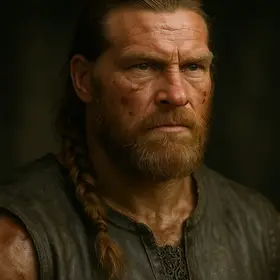 BeowulfProtagonist
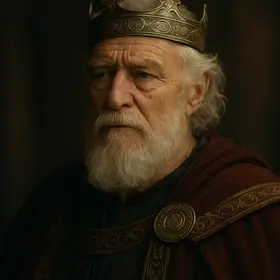 HrothgarMajor character
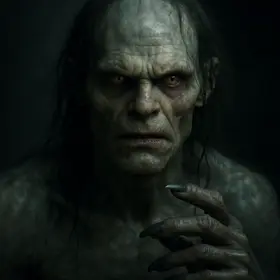 GrendelAntagonist
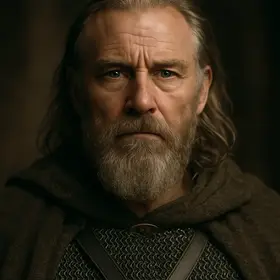 EcgtheowMinor character
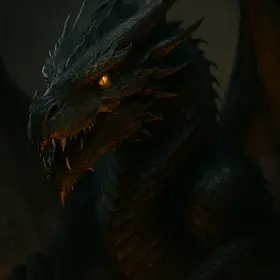 The DragonAntagonist
- HHealfdeneMinor character
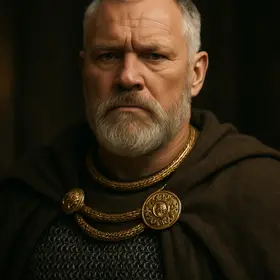 HygelacMajor character
- HHigelacMajor character
All chapter summaries ›Characters ›
Read Beowulf illustrated
Every scene in these notes comes from the Book2Life reader, where the full public-domain text is illustrated as you read, with character portraits and narration. Free in your browser and on iPhone.
