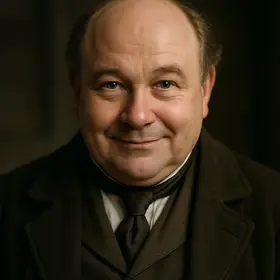
Porfiry Petrovich in Crime and Punishment
Major character
The astute, conversational examining magistrate who probes Raskolnikov with psychological tactics rather than brute evidence.
Who is Porfiry Petrovich?
Porfiry Petrovich is the investigating magistrate overseeing the murders of Alyona Ivanovna and Lizaveta. He appears as a well‑dressed, genial, and deliberately conversational man who prefers to unsettle suspects by casual talk, teasing anecdotes, and suggestive questions rather than immediate arrests. Porfiry listens for inconsistencies, tests theories about “extraordinary” men, and frames suspicion as moral and psychological pressure. He repeatedly engages Rodion Raskolnikov in private interviews and informal visits, pressing the student with insinuations about temperament, motive, and small factual points (the pledges, the date on a paper, Raskolnikov’s nocturnal movements). Porfiry also manages the police department’s staged moments—using witnesses and apparent surprises—to see how suspects react. Though he accumulates circumstantial leads, Porfiry emphasizes the value of voluntary confession, urging surrender as both legally prudent and spiritually salutary. His methods intensify Raskolnikov’s inner torment and drive key confrontations without relying on decisive physical proof.
In the book: Porfiry Petrovich is the examining magistrate in St. Petersburg who oversees the murder investigation central to the novel. An expert at psychological games, he engages the suspect in seemingly casual, conversational sparring that gradually tightens the noose. He embodies both the machinery of law and a nuanced, humane intelligence, pushing the story’s moral and philosophical tensions forward without brute force.
Personality
- Psychologically shrewd
- He probes Raskolnikov with teasing, insinuating questions about temperament and motive during their office interrogation (Chapter 5: Porfiry's Visit and Interrogation).
- Deliberately genial
- He greets Raskolnikov with rambling anecdotes, nervous laughter and jocular small talk to disarm him before making pointed insinuations (Chapter 5: Porfiry's Visit and Interrogation).
- Patient strategist
- He explains his doctrine of letting a suspect 'stew' under suspicion rather than rushing an arrest, preferring long psychological pressure (Chapter 5: Meeting with Porfiry).
- Morally persuasive
- He urges Raskolnikov to surrender voluntarily, arguing that confession and suffering will mitigate punishment and aid spiritual renewal (Chapter 2: Visit and Confrontation).
- Institutional yet humane
- He balances his role as magistrate with expressions of sympathy and personal appeals, framing law enforcement as concerned with moral as well as legal outcomes (Chapter 2: Porfiry’s Conversation and Proposition).
Character arc
Porfiry’s behavior remains consistent in method but advances in relational intensity: he first appears as an investigator whose reputation and casual reputation precede him—Razumikhin and others refer to his tactics—then he meets Raskolnikov formally in the investigating office, where his jocular, insinuating style reveals a deliberate plan to unsettle rather than to produce immediate proof (Meeting with Porfiry; Porfiry's Visit and Interrogation). He shifts from public, lightly teasing questioning (in Razumikhin’s presence) to private appeals that mix accusation with sympathy when he visits Raskolnikov’s lodging and later summons him to the department. Porfiry steadily reframes the case from one of raw evidence to one of temperament and conscience, culminating in his explicit whisper that he believes Raskolnikov guilty and his counsel that voluntary confession would be both legally prudent and spiritually beneficial (Porfiry’s Conversation and Proposition). An apparent breakthrough—the arrival of the young prisoner Nikolay—briefly undermines Porfiry’s pressure tactics, but he remains composed, promising further meetings; his final role is less about delivering a verdict than about pushing Raskolnikov toward an inward moral decision, using patience and psychological pressure rather than force.
Porfiry Petrovich in pictures

Relationships
- Rodion Romanovich Raskolnikov Porfiry engages Raskolnikov directly as his chief suspect, alternating teasing interrogation with appeals to confess and reform.
- Dmitri Prokofych Razumikhin Razumikhin brings Raskolnikov into Porfiry’s orbit and acts as a noisy intermediary during early meetings; Porfiry tolerates Razumikhin’s presence while probing Raskolnikov.
- Zametov Zametov is a subordinate or colleague present during conversations; he supplies corroboration about pledges and helps shape the inquiries Porfiry pursues.
- Nikolay Dementyev Porfiry controls the police theater that produces Nikolay’s sudden confession and uses that event to test reactions and cover investigative gaps.
- Sofya Semyonovna Marmeladov Porfiry is recommended to Sonia for handling pledged items; his reputation reaches her circle and indirectly links him to the social world around the victims.
Quotes by Porfiry Petrovich
“If I leave one man quite alone, if I don’t touch him and don’t worry him, but let him know or at least suspect every moment that I know all about it and am watching him day and night... He’ll fly straight into my mouth and I’ll swallow him, and that will be very amusing, he-he-he!”
Chapter 5Porfiry explains his investigative tactic of psychological pressure—letting suspicion gnaw at a suspect until he confesses.
“I’ve come to have it out with you, Rodion Romanovitch, my dear fellow! I owe you an explanation and must give it to you,”
Chapter 2Porfiry opens by claiming he must explain himself, signaling the conversation will mix apology and confrontation.
“Why, you, Rodion Romanovitch! You are the murderer,”
Chapter 2Porfiry quietly and directly tells Raskolnikov he believes him guilty, creating a sudden, intense moral pressure.
“Don’t disdain life!”
Chapter 2Porfiry urges Raskolnikov to accept life and suffering, framing confession as both pragmatic and redemptive.
Why Porfiry Petrovich matters
Porfiry embodies the novel’s exploration of law, conscience, and psychological justice: he demonstrates that legal inquiry can operate through moral persuasion as much as through evidence. His methods expose the limits of rationalist theories of crime by focusing on temperament, guilt, and inner confession rather than solely on physical proof. By urging voluntary surrender and framing suffering as a path to renewal, Porfiry amplifies the book’s central tensions between ideas of extraordinary moral claims and ordinary human accountability, forcing Raskolnikov to confront not just the risk of arrest but the spiritual consequences of his act.
Chapters with Porfiry Petrovich
More Crime and Punishment characters
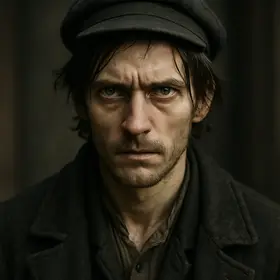 Rodion Romanovich RaskolnikovProtagonist
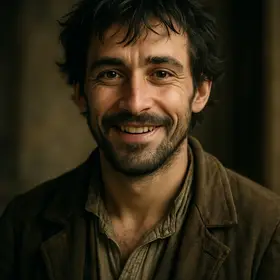 Dmitri Prokofych RazumikhinMajor character
 Avdotya Romanovna RaskolnikovaMajor character
 Sofya Semyonovna MarmeladovaMajor character
 Pulcheria Alexandrovna RaskolnikovaMajor character
 Nastasya PetrovnaMinor character
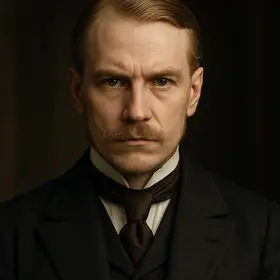 Pyotr Petrovich LuzhinAntagonist
 Katerina Ivanovna MarmeladovaMajor character
All chapter summaries ›Characters ›
Read Crime and Punishment illustrated
Every scene in these notes comes from the Book2Life reader, where the full public-domain text is illustrated as you read, with character portraits and narration. Free in your browser and on iPhone.
Read Crime and Punishment free
