
Sofya Semyonovna Marmeladova in Crime and Punishment
Major character
A impoverished young woman who prostitutes herself to support her family and becomes Raskolnikov’s compassionate spiritual anchor.
Who is Sofya Semyonovna Marmeladova?
Sofya Semyonovna Marmeladova (Sonia) is the gentle, religious daughter of the drunkard Semyon Zakharovich Marmeladov and the stepdaughter of Katerina Ivanovna. Driven by dire poverty and her family’s collapse, she turns to prostitution to provide for her stepmother and siblings, bearing shame quietly. She appears first at Marmeladov’s funeral and then in Raskolnikov’s life as a timid, devout presence who keeps a New Testament and reads scripture despite her circumstances. Sonia cares for the dying Marmeladov, endures public humiliation at the memorial dinner, is falsely accused then defended during Luzhin’s theft incident, and hosts Raskolnikov when he confesses the murders to her. Throughout the novel she performs small, concrete acts of service—tending the sick, organizing funerals, hiding money Svidrigaïlov gives her—and ultimately follows Raskolnikov after his confession, visiting him in Siberia and writing detailed letters about his condition. Sonia wants to preserve her family and to redeem suffering through faith; she acts by sacrificing herself, offering spiritual consolation, and remaining steadfastly present for Raskolnikov and her kin.
In the book: Sofya (Sonya) Marmeladova is an impoverished young woman who sacrifices herself to support her fractured family, becoming a figure of profound empathy and faith in the novel. Through her quiet strength, humility, and unwavering moral clarity, she serves as a spiritual counterpoint to Raskolnikov’s turmoil and a catalyst for his confrontation with conscience, illuminating themes of suffering, redemption, and human dignity without grand speeches or power, but with steadfast love.
Personality
- Self-sacrificing
- She has entered prostitution to support Katerina Ivanovna and the children, a fact Marmeladov confesses at his deathbed (Chapter 7).
- Devout
- She keeps a New Testament and reads the raising of Lazarus aloud to Raskolnikov in the green house, demonstrating her faith (Chapter 4: Visit to Sonia).
- Timid
- On first visiting Raskolnikov’s room she is described as modest and frightened, overwhelmed by attention and barely able to speak (Chapter 4: Sonia's First Visit).
- Compassionate
- When Raskolnikov confesses the murders she responds with overwhelming compassion, clings to him, and promises to follow him even to Siberia (Chapter 4: Confession to Sonia).
- Steadfast
- After Raskolnikov’s conviction she regularly visits him in Siberia and sends careful letters reporting on his health and habits (Epilogue I & II).
Character arc
Sonia enters the novel already burdened by sacrifice: she supports a disintegrating household and endures public shame. Early appearances emphasize her humility and piety—she tends her dying father, sits quietly at the funeral dinner, and absorbs Luzhin’s false accusation with terror until Lebezyatnikov exposes the truth (Chapters 2–3, 7). Her moral firmness deepens when Raskolnikov seeks her out; she responds to his intellectualized cruelty with steady compassion, reads scripture to him, and becomes the sole confidante to whom he admits the murders (Chapter 4: Visit to Sonia; Chapter 4: Confession to Sonia). Rather than collapse under revelation, Sonia offers concrete devotion—promising to accompany him and later taking spiritual and practical responsibility by following him after arrest. In the epilogue this steadfastness continues: she travels to Siberia, visits the convict, and becomes his primary link to human care. Sonia’s external circumstances change little—poverty and social stigma persist—but her role shifts from a privately suffering provider to an active moral agent whose presence initiates Raskolnikov’s slow movement toward repentance and renewal.
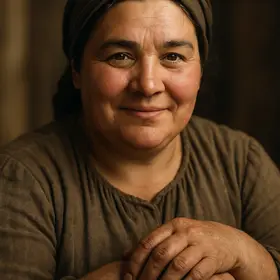
Sofya Semyonovna Marmeladova in pictures


Relationships
- Semyon Zakharovich Marmeladov Her father; she tends him at his deathbed and is revealed as the daughter he mourns (Chapter 7).
- Katerina Ivanovna Her stepmother; Sonia supports Katerina’s household and cares for her through public collapse and final illness (Chapters 2, 5, 7).
- Rodion Romanovich Raskolnikov Confidante and spiritual counterpoint; she receives his confession, offers compassion, and later follows him to Siberia (Chapters 4, 8, Epilogues).
- Pyotr Petrovich Luzhin Adversary figure in social terms; he publicly accuses her of theft at the memorial dinner to shame her, later revealed as a setup (Chapter 3).
- Andrey Semyonovich Lebezyatnikov Defender and eyewitness; he exposes Luzhin’s attempt to plant the banknote on Sonia (Chapter 3).
- Arkady Ivanovich Svidrigailov Ambiguous benefactor; he visits Sonia to give her money and instructions, creating unease though he helps materially (Chapter 6: Svidrigaïlov's Night Out).
Quotes by Sofya Semyonovna Marmeladova
“That is all about the raising of Lazarus,”
Chapter 4After emotionally reading the Gospel passage, Sonia closes the book; the episode highlights her faith and its emotional power.
““I have taken nothing,” Sonia whispered in terror, “you gave me ten roubles, here it is, take it.””
Chapter 3Sonia’s first terrified denial and attempt to return Luzhin’s ten-rouble gift under public accusation.
“Go at once, this very minute, stand at the cross-roads, bow down, first kiss the earth which you have defiled and then bow down to all the world and say to all men aloud, 'I am a murderer!'”
Chapter 4Sonia’s impassioned call to public confession and repentance, offering a moral and religious route to atonement.
Why Sofya Semyonovna Marmeladova matters
Sonia functions as the novel’s moral and spiritual conscience embodied in humble suffering. Her devotion and faith counterbalance Raskolnikov’s intellectual pride and rationalizations: where he theorizes about extraordinary men and justifiable crimes, Sonia demonstrates redemptive love through suffering and forgiveness. By remaining steady in the face of public shame and by answering Raskolnikov’s confession with mercy rather than condemnation, she exposes the human cost of his theories and opens the possibility of moral regeneration. Her presence links themes of poverty, dignity, and redemption—showing that suffering can both degrade and, when met with compassion, become the seed of spiritual renewal.
Chapters with Sofya Semyonovna Marmeladova
More Crime and Punishment characters
 Rodion Romanovich RaskolnikovProtagonist
 Dmitri Prokofych RazumikhinMajor character
 Avdotya Romanovna RaskolnikovaMajor character
 Pulcheria Alexandrovna RaskolnikovaMajor character
 Nastasya PetrovnaMinor character
 Pyotr Petrovich LuzhinAntagonist
 Katerina Ivanovna MarmeladovaMajor character
 Porfiry PetrovichMajor character
All chapter summaries ›Characters ›
Read Crime and Punishment illustrated
Every scene in these notes comes from the Book2Life reader, where the full public-domain text is illustrated as you read, with character portraits and narration. Free in your browser and on iPhone.
Read Crime and Punishment free
