Don Quixote Chapter 13 Summary

Conversation of the Two Squires

Sancho Panza and the Knight of the Grove compare the hardships and hopes of squires, drink, trade insults as compliments, and fall asleep.
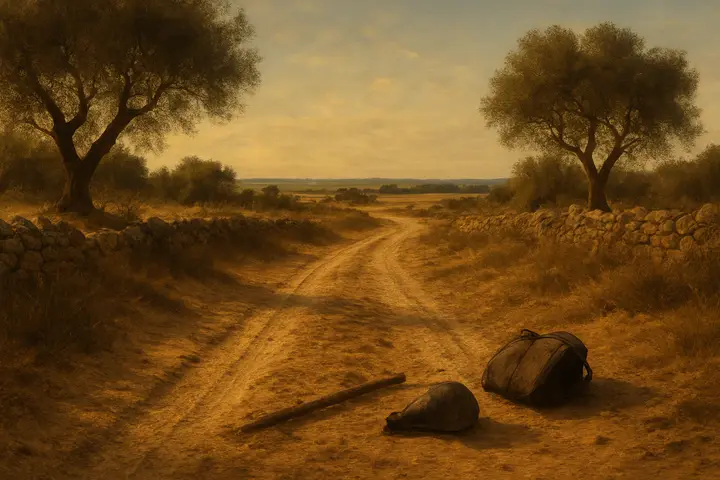
A sun-bleached country track threads between gnarled oaks and scrub, the dusty wheel-ruts catching late-afternoon light while a narrow grassy verge holds scattered tack — a battered bota, a leather alforja — half-buried in dust. Low, rolling fields and a distant hedgerow recede to an open horizon under a pale sky, the landscape wide and quietly parched.

Summary

In this chapter two squires — Sancho Panza and the man called the Knight of the Grove — withdraw from their masters and hold a long, candid conversation about the life of a squire to knights-errant. They begin by cataloguing the physical discomforts of their calling: exposure to heat and cold, irregular food, and the uncertain promise of reward. The Knight of the Grove argues that patience pays off because a squire might one day be rewarded with a governorship or benefice; Sancho replies that he would be content with the government of an island and repeats his master's oft-made promise. They compare the prospects their masters might offer — canonries, island governments — and weigh whether leaving the life for farming, hunting, or fishing would be wiser.

The talk turns domestic and comic: Sancho boasts of his children and his ass Dapple, defends his daughter's virtue against a coarse compliment from the other squire, and recounts family lore about wine-tasting. The Knight of the Grove admits his own wish to quit and raise his three children; he also reveals that his master is in love with Casildea de Vandalia and hints at further schemes. The squires trade jokes about covetousness, loyalty, and the follies of their masters, showing both weariness and attachment. The Knight produces a bota of wine and an enormous pasty; they feast heartily, debate the wine's origin (Ciudad Real), and Sancho boasts of ancestral wine-tasters. Exhausted and drunk, they fall asleep with the nearly empty bota and half-chewed food, and the narrative pauses to take up their masters' conversations next.

Key events

  1. Sancho Panza and the Knight of the Grove withdraw and compare the hardships of squires.
  2. They debate the value of staying with knights-errant versus returning home to a quieter life.
  3. The Knight of the Grove reveals his master's love for Casildea de Vandalia and his own desire to quit.
  4. Sancho boasts of his family, Dapple the ass, and tells a comic wine-tasting anecdote.
  5. The Knight produces wine and a huge pasty; both squires drink, praise the wine, and bond.
  6. They fall asleep drunkenly with the bota and half-chewed food, ending the scene.

Chapter 13 in pictures
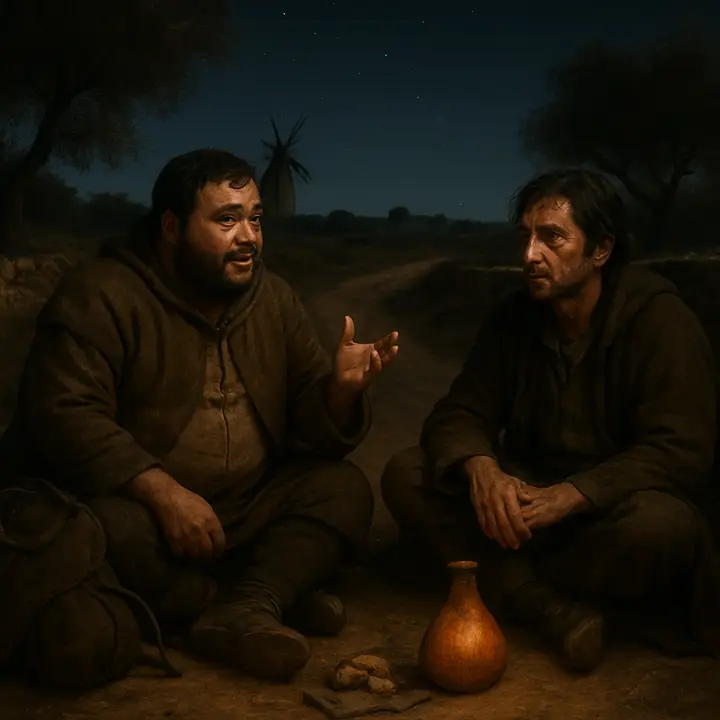
Two squires squat a little apart from a ring of knights under a cold, moonlit sky; Sancho Panza, animated and rueful, gestures with a spit still hanging from his lips as he boasts of Dapple, his children, and the found purse while the anonymous other squire listens with a weary, amused look. Their ragged cloaks and battered saddles sit beside them, a small heap of meagre provisions between them, illustrating the hard, hungry life they lament and mock. The conversation feels equal parts comic and bitter, loyalty tangled with longing for home.
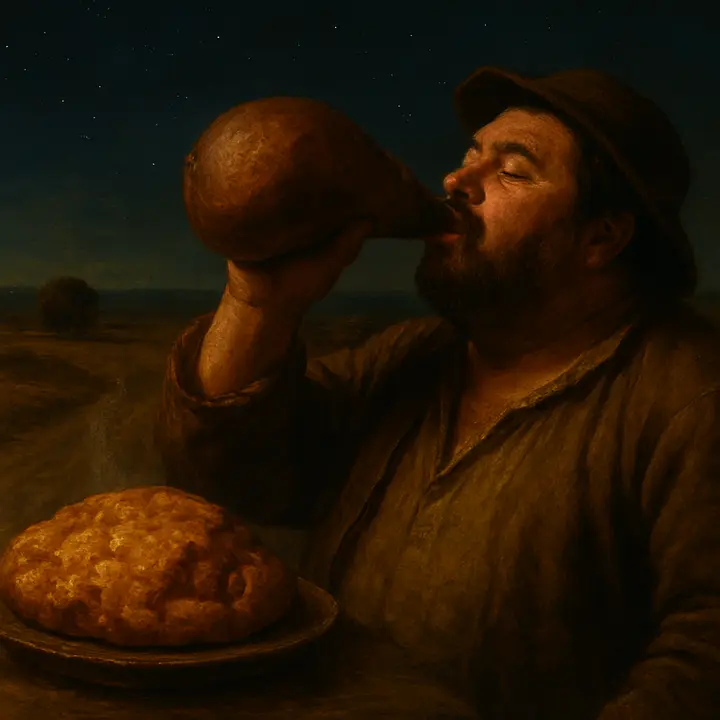
The Grove's squire returns triumphantly with a gargantuan pasty and an enormous bota of wine, the pasty steaming and absurdly large as if stuffed with a goat, while the squire kisses the bota and thrusts it toward Sancho. Sancho lifts the wineskin, gazes up at the stars for a long quarter hour, then tilts it back with delighted reverence, christening the wine with a bawdy nickname as he drinks, cheeks flushed by the first real feast they've seen in days.
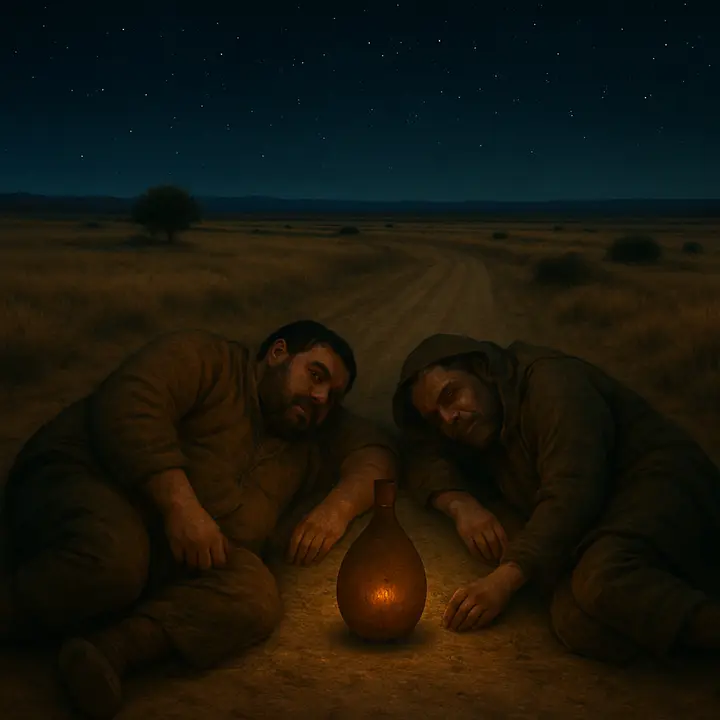
Night hangs 'dry and ropy' as both men sleep splayed on the ground, clutching the nearly empty bota between them, crumbs and half‑chewed morsels caught in their beards and mouths; the peaceful exhaustion of the moment replaces their earlier talk. The vast La Mancha sky spreads overhead, stars cold and indifferent, while the tiny human figures form a humble, tender tableau of comradeship and fatigue.
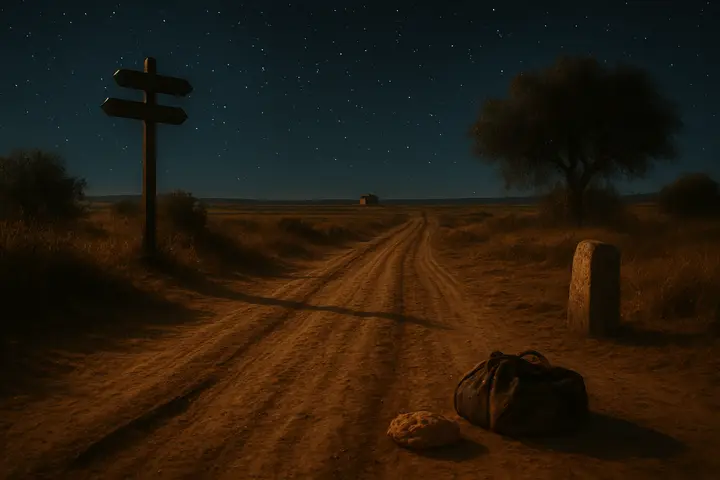
A moonless stretch of trail cuts a dark ribbon across scrubby plain beneath a vault of stars; pale grasses ripple in a faint breeze and a coppice silhouette punctuates the skyline. An upturned bota and a half-crusted loaf lie abandoned on the verge, dimly outlined by starlight, the scene hushed and parched under the wide night.
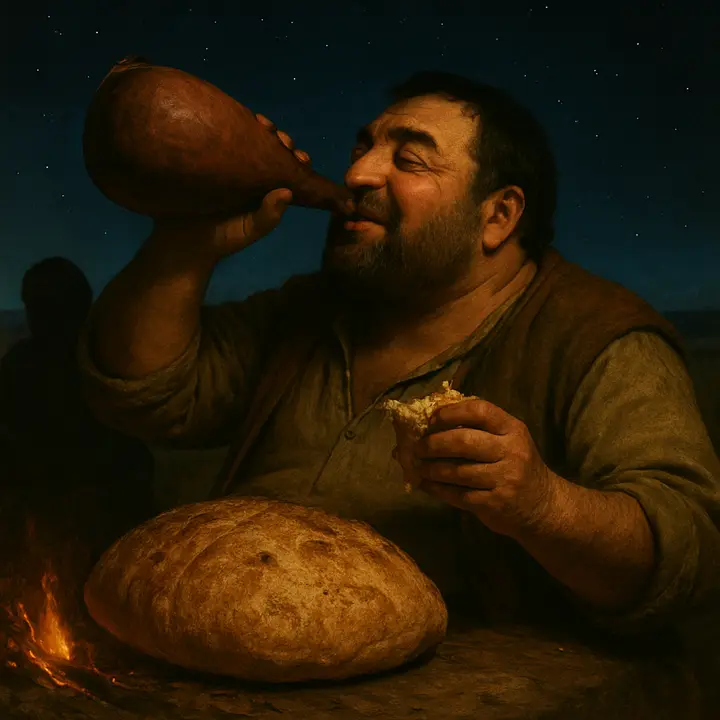
Beneath a wide starry sky two figures sit beside a blazing embers; a vast bota of wine and an absurdly huge pasty — so large Sancho mistakes it for a goat — dominate the foreground. Sancho, eyes bright and cheeks stained, devours meat in greedy, joyful mouthfuls and raises the bota to drink, the wine glinting as he sighs at its excellence.

Analysis

This chapter functions as a comic, humanizing counterpoint to the romantic exploits of the knights by dwelling on the practical, domestic perspective of their squires. Through prolonged dialogue the text exposes the contradictions of chivalric life: its lofty promises (islands, canonries) coexist with hunger, cold, and absurdity. The squires' talk reveals two attitudes toward service — pragmatic attachment (Sancho) and growing disillusionment (the Knight of the Grove) — which both complicate the reader's view of knighthood and its cost. Irony and burlesque operate here: noble-sounding rewards are named alongside low jokes and earthy details (giant pasties, wine, carobs), undermining heroic rhetoric.

Narratively, the chapter slows the pace, letting lower-status voices provide exposition and reflection while offering social color and realism. Repeated motifs — food and drink, promises of islands or benefices, mistrust of covetousness — foreshadow the recurring theme that idealized glory and everyday needs are in constant tension. The technique of letting characters talk at length also develops character: Sancho's practical wit, earthy wisdom, and loyalty emerge clearly, while the Knight of the Grove's weariness and quiet cunning appear through his proposals and anecdotes. The episode thereby deepens thematic concerns about illusion versus reality and prepares the reader for contrasting moral and comic strands elsewhere in the novel.

Important quotes

“A hard life it is we lead and live, señor, we that are squires to knights-errant; verily, we eat our bread in the sweat of our faces, which is one of the curses God laid on our first parents.”

the Knight of the GroveOpening line framing the squires' complaint about exposure, hunger, and hardship in the life of a squire.

“Ah, whoreson rogue, how catholic it is!”

Sancho PanzaSancho's exuberant, comic praise of the wine after drinking from the Knight's bota, showing earthy pleasure and linguistic play.

Characters in Chapter 13

Read Don Quixote illustrated

Every scene in these notes comes from the Book2Life reader, where the full public-domain text is illustrated as you read, with character portraits and narration. Free in your browser and on iPhone.

Read Don Quixote free

Download Book2Life on the App Store