
Sancho Panza in Don Quixote
Major character
A humble, shrewd peasant who serves as Don Quixote’s loyal squire, practical counterpoint, and occasional comic conscience.
Who is Sancho Panza?
Sancho Panza is a simple farmer who becomes Don Quixote’s squire in hopes of tangible reward—above all, an island to govern. Throughout the narrated chapters he performs domestic and bodily services (tending wounds, leading beasts, provisioning meals), offers down-to-earth counsel, and frequently negotiates or endures the comic consequences of his master’s delusions. Sancho speaks in proverbs, tells rambling tales to distract or soothe his lord, and shows both cowardice and courage: he sometimes resists dangerous impulses, sometimes assists in Don Quixote’s fanciful enterprises (untying Rocinante’s legs, helping in fights, mounting Clavileño), and even submits, for a prank, to the idea of public penance. He is repeatedly cheated, beaten, mocked, and bribed, yet remains attached by loyalty, self-interest, and a pragmatic affection that combines shrewd calculation with genuine sympathy. Sancho’s earthy wit, appetite, and knack for plain truth ground the pair’s adventures and provide most of the narrative’s human warmth and comic commentary.
In the book: A humble farmer who becomes Don Quixote’s squire, Sancho Panza is the practical, earthy counterbalance to his master’s idealism. His loyalty, humor, and common sense ground the pair’s adventures, while his own hopes for reward and status reveal a shrewd, empathetic character who often speaks in proverbs and provides the story’s human warmth and wit.
Personality
- Practical
- He repeatedly urges caution (e.g., proposing to hide in a church after the encounter with the muleteers) and offers commonsense solutions like suggesting they sleep where shelter is available.
- Loyal
- Despite beatings, theft of his ass, and repeated humiliations, he remains with Don Quixote and follows him on sally after sally, even agreeing to staged penances at the duke’s request.
- Shrewd
- He invents the Delphic stratagem of presenting a peasant girl as Dulcinea to placate his master and later fabricates accounts to protect Don Quixote’s feelings.
- Gullible-yet-canny
- He is quickly persuaded by the duke and duchess to expect a governorship and to mount Clavileño, yet he constantly negotiates terms and complains about loss and danger.
- Witty
- He uses proverbs and comic anecdotes (for example, his long rambling tales and the braying episode) to defuse tension and amuse hosts like the duchess.
Character arc
Sancho begins as a reluctant, pragmatic peasant who signs on for an island and a wage. Early chapters show him bargaining, tending to wounds, and trying to protect himself and his master from obvious hazards (warning about windmills, trying to avoid fights). As adventures accumulate he grows verbally adept—trading proverbs for counsel and telling stories to distract Don Quixote—yet his fundamental goals remain material: food, payment, and social advancement. He is repeatedly humiliated (beatings at inns, theft of his ass, public jokes) but responds with a mixture of anger, resignation, and tactical compliance. Under the duke and duchess’s elaborate mockeries he is coaxed into accepting the fiction of a governorship and even a staged penance; he negotiates conditions and writes letters home, showing a rising competence at navigating the aristocratic theatre. By the episodes at the duke’s court he displays a new ease with performative roles—playing governor-in-waiting, enduring theatrical enchantments, and reveling in small gratifications—while still preserving his earthy skepticism. Across the chapters he does not become an idealist like his master, but he deepens from a simple hired hand into a resourceful, emotionally resilient companion who can both exploit and be exploited by the social games around him.
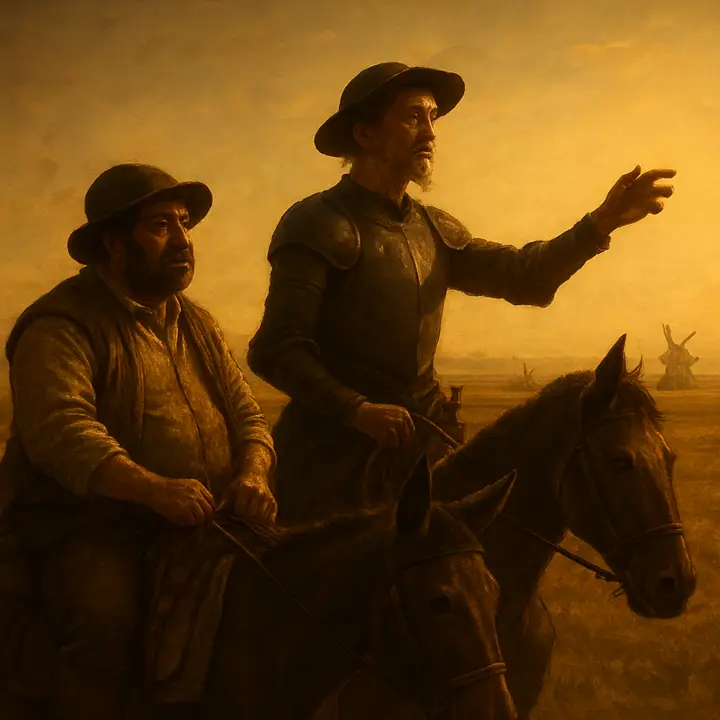
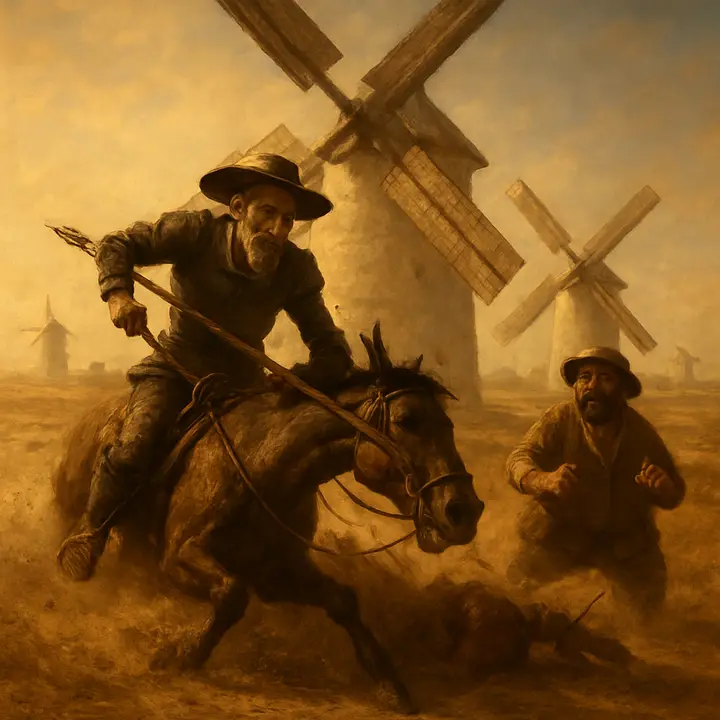
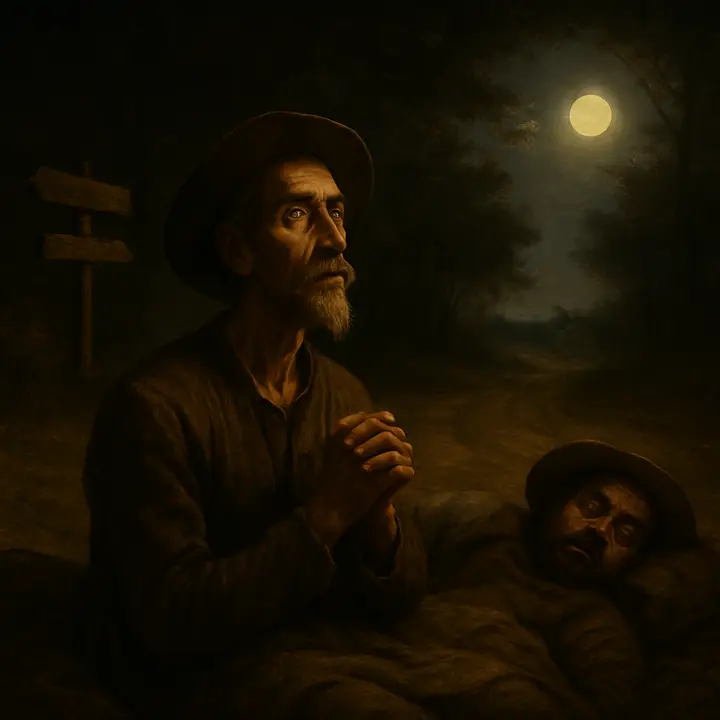
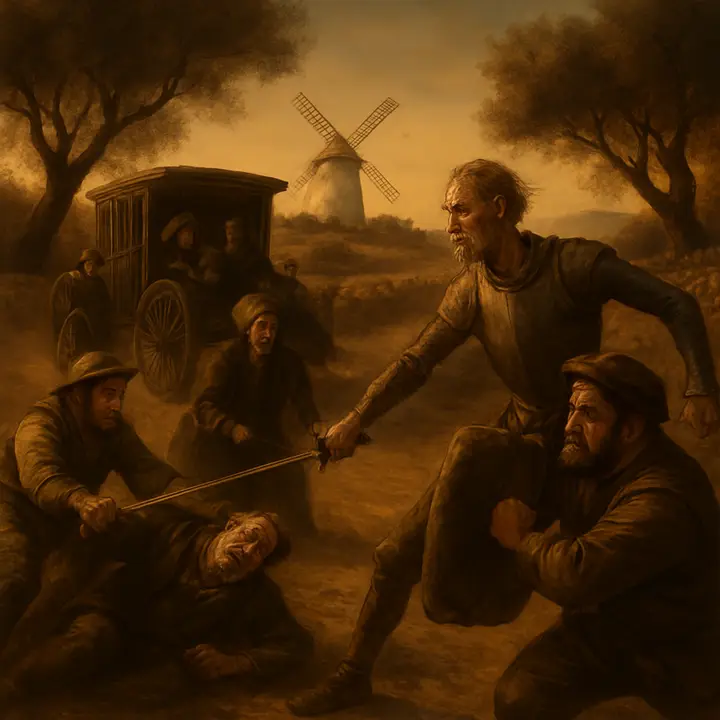
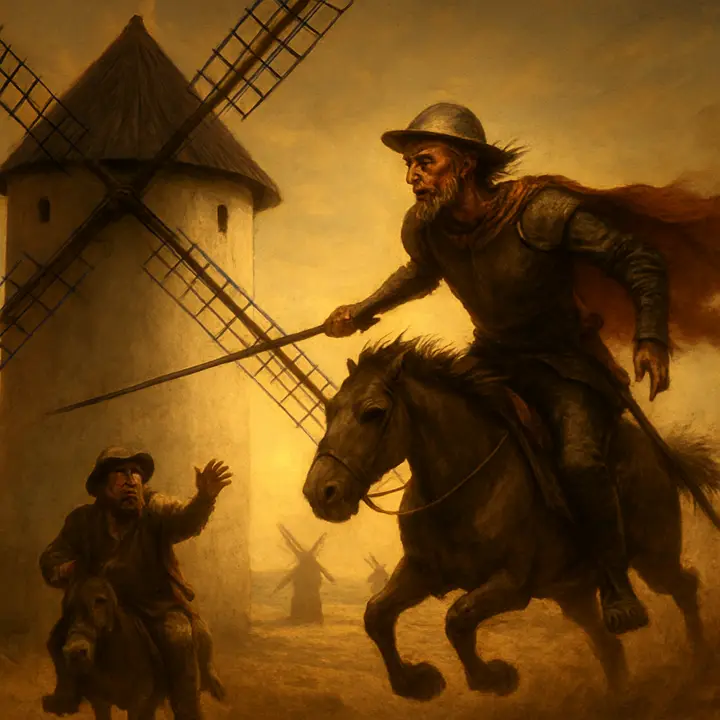
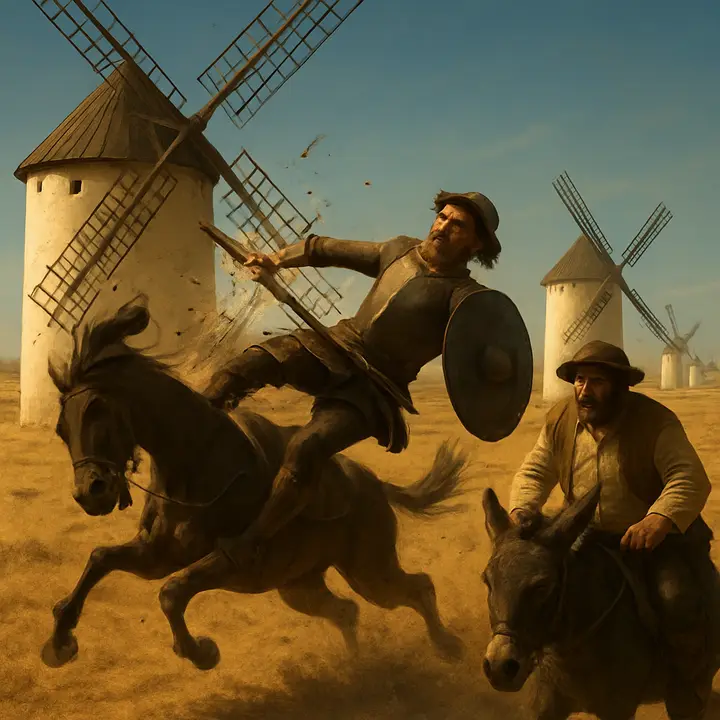
Sancho Panza in pictures
Relationships
- Don Quixote His master and the object of Sancho’s loyalty; Sancho follows him for promised rewards and out of personal attachment, providing practical aid and comic commentary.
- Teresa Panza Sancho’s wife, who anchors his domestic concerns and negotiates terms for his service, pressing him about family, reputation, and the promises of advancement.
- Dulcinea del Toboso The idealized lady whose favour Don Quixote seeks; Sancho fabricates and manipulates reports about her to placate his master and to preserve Don Quixote’s illusions.
- The Duke A noble patron who indulges and manipulates Sancho with promises of an island and staged honors, turning Sancho into the object of an elaborate practical joke.
- Dorotea An ally in the party’s deceptions; Sancho interacts amiably with her during the princess ruse and later benefits from the social management she and others provide.
- Ginés de Pasamonte A betrayed acquaintance who steals Sancho’s ass and later reappears in disguise, underscoring the vulnerability of Sancho’s possessions and the risks of trusting freed convicts.
Quotes by Sancho Panza
“What we see there are not giants but windmills, and what seem to be their arms are the sails that turned by the wind make the millstone go.”
Chapter 8Sancho’s pragmatic correction of Don Quixote’s illusion, highlighting the contrast between common sense and the knight’s fantasy.
“May it please your worship, Señor Don Quixote, to give me the government of that island which has been won in this hard fight, for be it ever so big I feel myself in sufficient force to be able to govern it as much and as well as anyone in the world who has ever governed islands.”
Chapter 10Sancho kneels and renews his demand for the island Don Quixote promised as reward for faithful service.
“Don Quixote of La Mancha," answered Sancho Panza, "and he is a knight-adventurer, and one of the best and stoutest that have been seen in the world this long time past.”
Chapter 16Sancho introduces his master to the inn's servants, framing Don Quixote's identity in comic, boastful terms.
“I hear nothing but a great bleating of ewes and sheep,”
Chapter 18Sancho argues calmly that the dust clouds are flocks, not armies, foreshadowing Don Quixote's misguided charge.
““Unlucky me!” answered Sancho; “if this adventure happens to be one of phantoms, as I am beginning to think it is, where shall I find the ribs to bear it?””
Chapter 19Sancho's fearful, comic reaction to the moving lights shows his practical dread and contrasts with Don Quixote's eagerness for adventure.
“By God the basin is a good one, and worth a real of eight if it is worth a maravedis,”
Chapter 21Sancho appraises the abandoned brass basin pragmatically, undercutting Don Quixote’s pretensions by calling it an ordinary barber’s object of modest value.
Why Sancho Panza matters
Sancho functions as the moral and comic foil to Don Quixote’s idealism: his proverbs, material goals, and bodily concerns highlight the absurdity and human cost of chivalric delusion while also supplying compassion and loyalty that humanize the knight. He embodies pragmatic wisdom and the peasant point of view, translating lofty rhetoric into consequences for ordinary life. Through Sancho Cervantes interrogates authority, social mobility, and the gap between language and reality: Sancho’s repeated bargaining for an island and his readiness to play along with aristocratic theatricality reveal how social roles are performed and exchanged. His mixture of gullibility and shrewdness makes him crucial to the book’s comic ethics—he preserves humane common sense without crushing generosity, and his presence keeps the narrative grounded amid fantasy.
Chapters with Sancho Panza
- INTRODUCTION › THE AUTHOR’S PREFACE
- Chapter 7
- Chapter 8
- Chapter 9
- Chapter 10
- Chapter 11
- Chapter 12
- Chapter 13
- Chapter 16
- Chapter 17
- Chapter 18
- Chapter 19
- Chapter 20
- Chapter 21
- Chapter 22
- Chapter 23
- Chapter 24
- Chapter 25
- Chapter 26
- Chapter 27
- Chapter 29
- Chapter 30
- Chapter 31
- Chapter 32
- Chapter 35
- Chapter 36
- Chapter 37
- Chapter 38
- Chapter 42
- Chapter 43
- Chapter 44
- Chapter 45
- Chapter 46
- Chapter 47
- Chapter 48
- Chapter 49
- Chapter 50
- Chapter 52
- Chapter 2
- Chapter 3
- Chapter 4
- Chapter 5
- Chapter 6
- Chapter 7
- Chapter 8
- Chapter 9
- Chapter 10
- Chapter 11
- Chapter 12
- Chapter 13
- Chapter 14
- Chapter 15
- Chapter 16
- Chapter 17
- Chapter 18
- Chapter 19
- Chapter 20
- Chapter 21
- Chapter 22
- Chapter 23
- Chapter 24
- Chapter 25
- Chapter 26
- Chapter 27
- Chapter 28
- Chapter 29
- Chapter 30
- Chapter 31
- Chapter 32
- Chapter 33
- Chapter 34
- Chapter 35
- Chapter 36
- Chapter 37
- Chapter 38
- Chapter 39
- Chapter 40
- Chapter 41
- Chapter 42
- Chapter 43
- Chapter 44
- Chapter 45
- Chapter 46
- Chapter 47
- Chapter 48
- Chapter 49
- Chapter 50
- Chapter 51
- Chapter 52
- Chapter 53
- Chapter 54
- Chapter 55
- Chapter 56
- Chapter 57
- Chapter 58
- Chapter 59
- Chapter 60
- Chapter 62
- Chapter 63
- Chapter 64
- Chapter 65
- Chapter 66
- Chapter 68
- Chapter 69
- Chapter 70
- Chapter 71
- Chapter 72
- Chapter 73
- Chapter 74
More Don Quixote characters
 Don QuixoteProtagonist
 Dulcinea del TobosoMinor character
- RRocinanteMajor character
 The DukeMajor character
- DDappleMinor character
 The BarberMajor character
 Cide Hamete BenengeliNarrator
 The DuchessMajor character
All chapter summaries ›Characters ›
Read Don Quixote illustrated
Every scene in these notes comes from the Book2Life reader, where the full public-domain text is illustrated as you read, with character portraits and narration. Free in your browser and on iPhone.
