Don Quixote Chapter 14 Summary
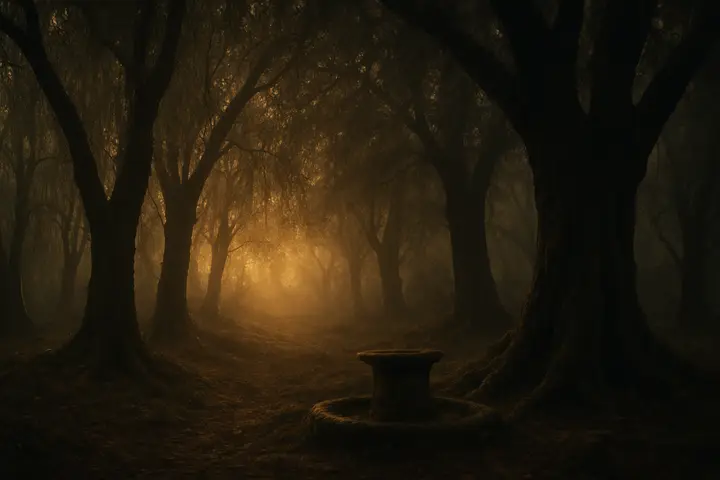
Continued Adventure: The Grove
Don Quixote argues with a boastful Knight of the Grove, prepares a duel at dawn, and unhorses a masked opponent revealed as Samson Carrasco.
Summary
The chapter continues the encounter between Don Quixote and the Knight of the Grove, who explains at length that he has been undertaking humiliating and dangerous tasks to win the favour of the incomparable Casildea de Vandalia. Boasting that he has travelled across much of Spain to force knights to confess her superiority and claiming to have defeated “that so famous knight Don Quixote of La Mancha,” he presents himself as victor and bearer of transferred renown. Don Quixote restrains himself from blunt contradiction, instead suggesting enchanters may have altered shapes; the two agree to a formal duel at sunrise with the vanquished to submit to chivalric terms. Their squires are roused and, despite Sancho Panza’s comic reluctance and fear (especially of a monstrous, long-nosed squire), are set to take part in their masters’ fight.
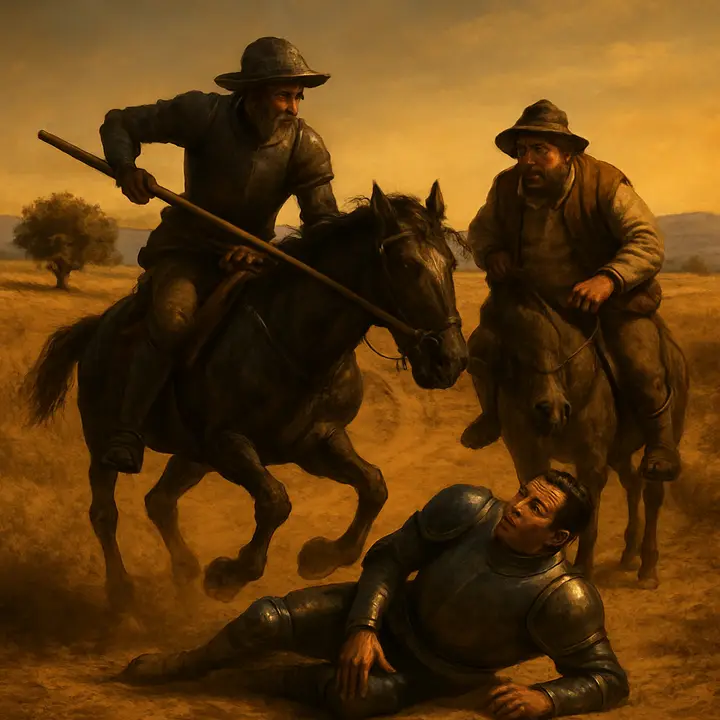
At daybreak the combatants mount. Don Quixote insists on seeing his opponent’s face, but the Knight of the Mirrors (as he appears) refuses to lift his visor. The squires prepare for a surrogate fight with padded bags and stones, though Sancho resists, and Sancho even climbs a cork tree to watch. As both knights charge, Don Quixote’s steed Rocinante moves faster than usual and Don Quixote, with momentum and skill, unseats his rival. The fallen knight appears dead; when Don Quixote unlaces the helmet he finds the face of Samson Carrasco — to his astonishment and to Sancho’s. The supposed monstrous nose the squire had displayed turns out to be a pasteboard mask; the “noseless” squire is Tom Cecial. The beaten Samson (or one presented as him) confesses to Don Quixote that Dulcinea surpasses Casildea and promises to visit El Toboso to witness it. Don Quixote accepts the confession and, with his belief in enchantment intact, allows the beaten knight to rise; both parties part and Don Quixote and Sancho resume their journey toward Saragossa.
Key events
- Knight of the Grove boasts of tasks for Casildea and claims to have vanquished Don Quixote
- Don Quixote proposes enchanters may have altered shapes; duel agreed for sunrise
- Squires prepare for skirmish; Sancho refuses to fight and fears the long nose
- At dawn knights mount; Don Quixote charges and unhorses the Knight of the Mirrors
- Helmet removed to reveal Samson Carrasco; the long nose is a pasteboard mask
- Defeated knight confesses Dulcinea’s superiority and promises to visit El Toboso
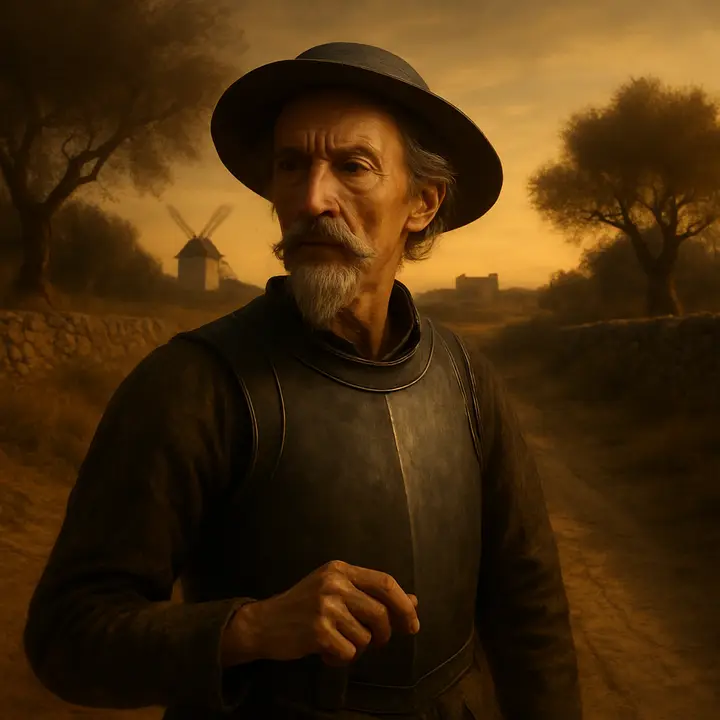
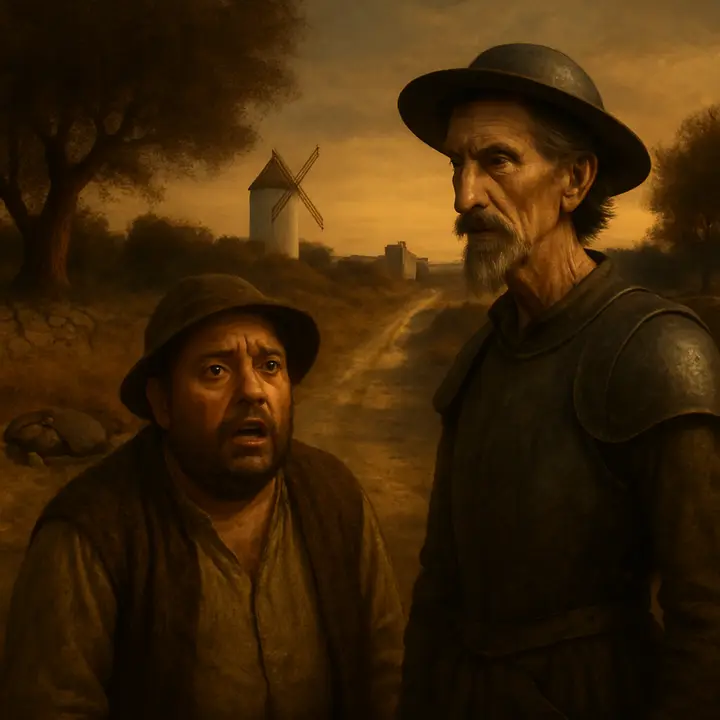
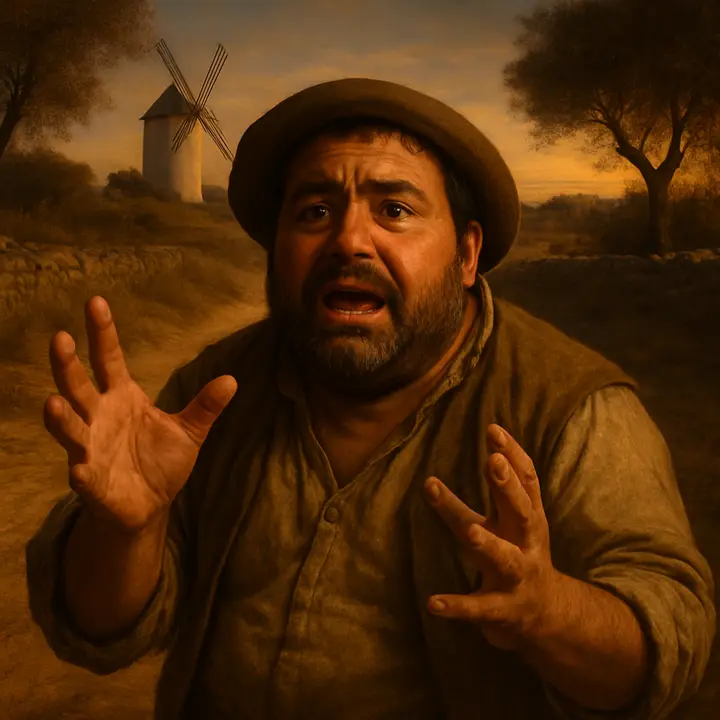
Chapter 14 in pictures
Analysis
This chapter advances the novel’s recurring play with identity, reputation, and illusion. The Knight of the Grove’s inflated claims and Don Quixote’s measured response stage a contest not only of arms but of narrative authority: who may claim another’s fame, and how is reputation transferred or fabricated? Cervantes uses the duel as an arena for testing Don Quixote’s self-conception: rather than explode with anger at the usurped glory, he entertains a supernatural explanation (enchanters) that preserves both his friend’s honour and his own chivalric worldview. The unmasking of Samson Carrasco — a fellow townsman and critic of Don Quixote — literalizes the theme of appearance vs. reality; the pasteboard nose underscores theatricality and the artificiality of social performance. Sancho’s comic reluctance and earthy pragmatism balance Don Quixote’s idealism, and his fear of the fabricated nose highlights how superstition and spectacle shape perception. Structurally, the episode interleaves romance conventions (formal combats, vows of submission) with satirical inversion (a beaten knight who admits Dulcinea’s superiority), reinforcing the novel’s hybrid form: part chivalric pastiche, part modern novelistic irony. The narrator’s frequent commentary—“the history tells us”—keeps attention on mediation and authorship, preparing readers to question whose account they accept and how narrative truth is constructed in the text.
Important quotes
“He saw, the history says, the very countenance, the very face, the very look, the very physiognomy, the very effigy, the very image of the bachelor Samson Carrasco!”
NarratorDon Quixote, after unhorsing his opponent and removing the helmet, recognizes Samson Carrasco and is astonished.
“I have it here in my pocket,”
the squire of the MirrorsThe squire reveals that the hideous long nose was a pasteboard mask, pulling it from his pocket to prove the trick.
Characters in Chapter 14
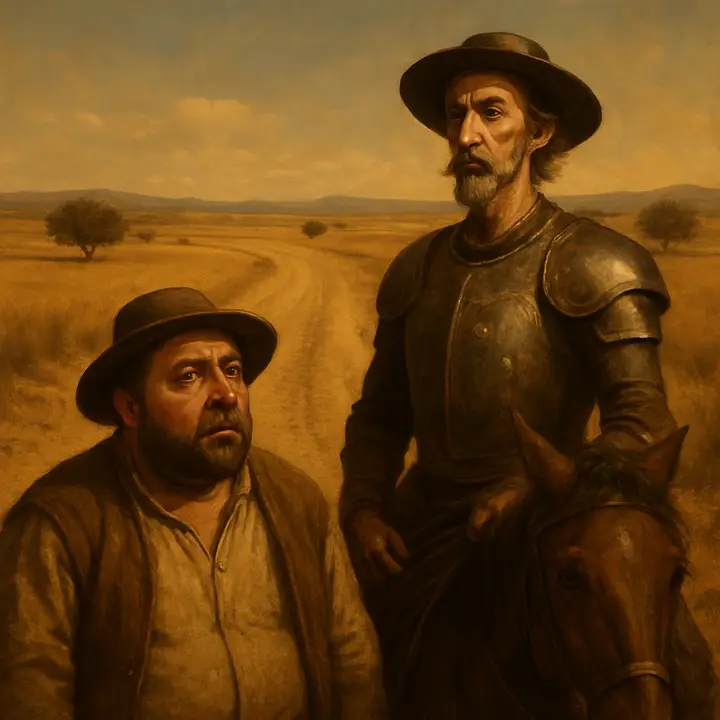
- Don Quixote
- Knight of the Grove
- Sancho Panza
- Samson Carrasco
- Tom Cecial
- the squire of the Grove
- the squire of the Mirrors
- Rocinante
- Casildea de Vandalia
- Dulcinea del Toboso
All chapter summaries ›Characters ›
Read Don Quixote illustrated
Every scene in these notes comes from the Book2Life reader, where the full public-domain text is illustrated as you read, with character portraits and narration. Free in your browser and on iPhone.
