Don Quixote Chapter 12 Summary
The Knight of the Grove
Don Quixote and Sancho meet a doleful, singing knight in the night who speaks of unrequited love; their squires withdraw to gossip.
Summary
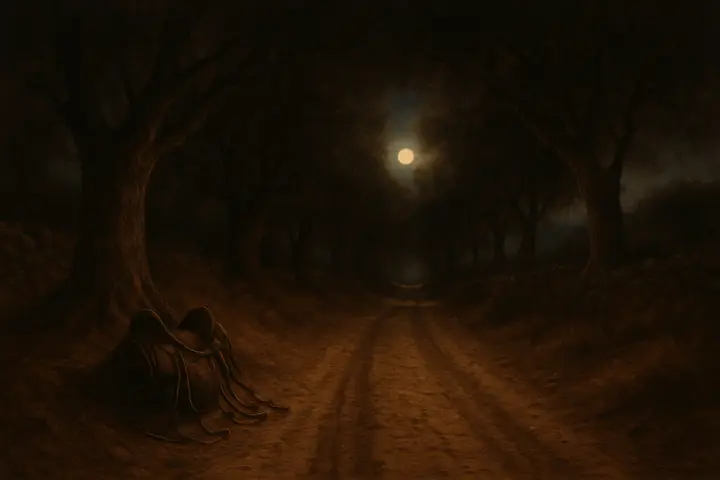
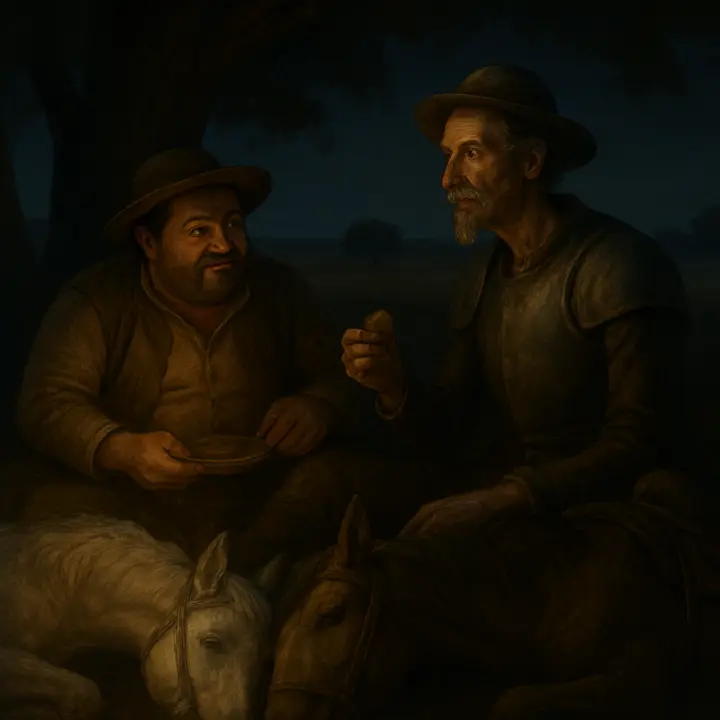
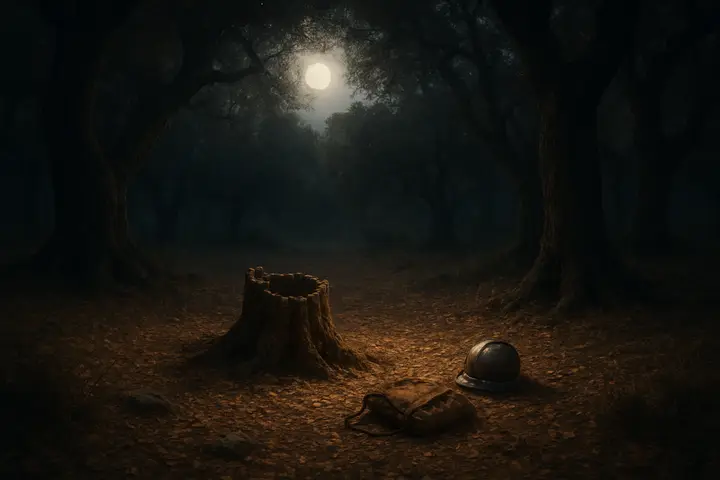
After the previous day's encounter with Death, Don Quixote and Sancho Panza pass the night in the fields beneath trees; Sancho eats from Dapple's provisions and the two converse, trading proverbs and reflections on plays and the equality of all before death. Their talk shows Sancho's growing verbal agility under his master's influence, though his attempts at fine speech still lapse into proverbs and comic malapropisms. They make camp without removing Rocinante’s saddle, following Don Quixote’s rule, and the narrative even amusingly extols the deep friendship between Rocinante and Dapple.
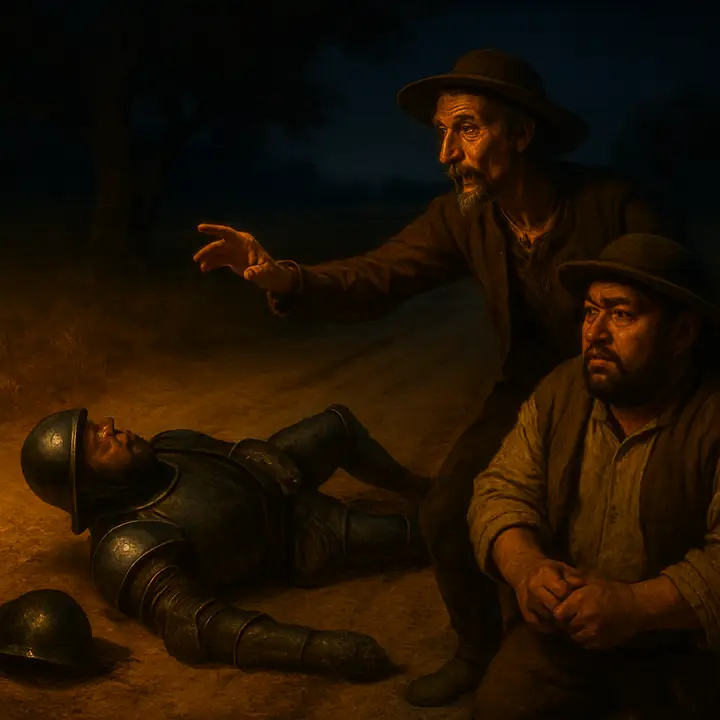
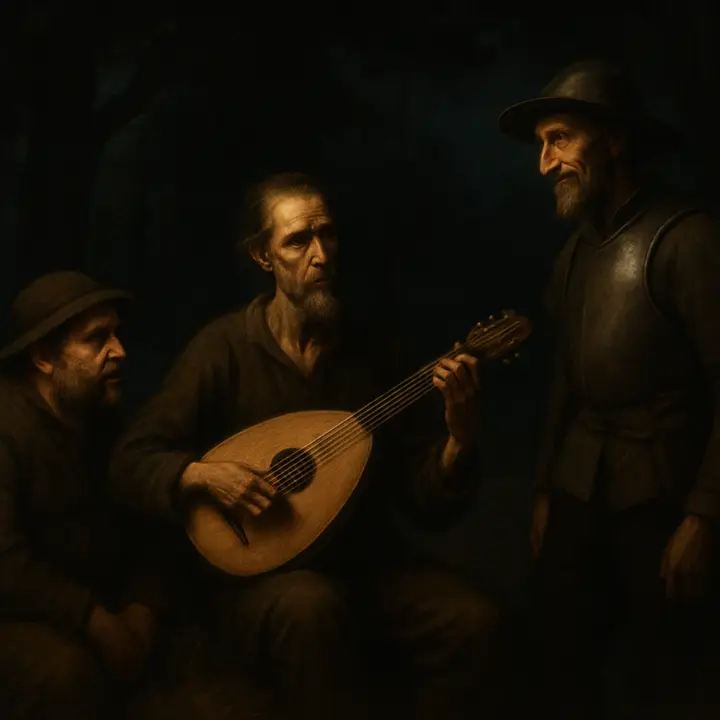
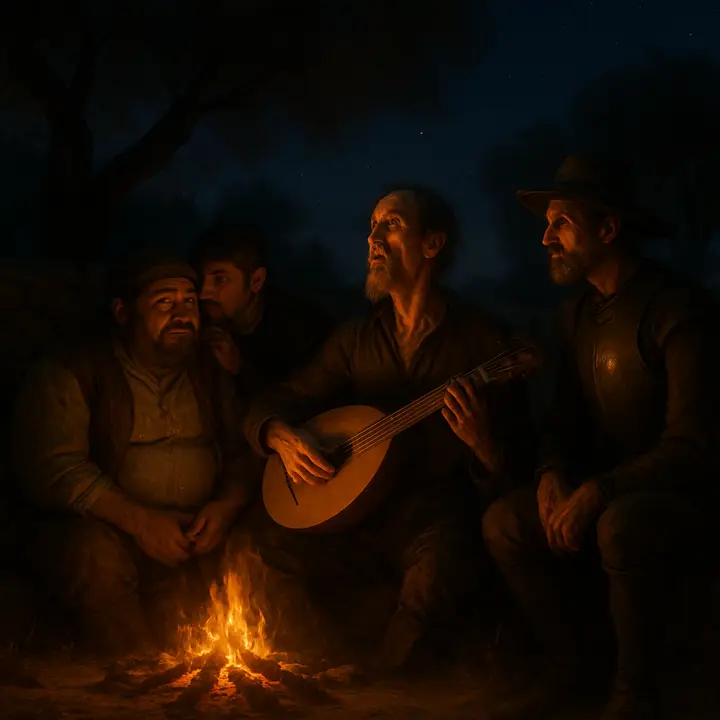
Shortly after falling asleep, Don Quixote is roused by noises and discovers two horsemen nearby; one has flung himself on the ground in melancholy and begins tuning a lute and singing a sonnet to his ungrateful lady, Casildea de Vandalia. Don Quixote and Sancho approach, and the melancholy knight greets them with courteous gloom. The new knight and Don Quixote exchange confidences about love and sorrow, each recognizing the other as a fellow knight-errant; their squires, meanwhile, retire to talk separately, promising a comic counterpoint to their masters’ grave exchange. The scene ends with the two masters sitting together on the ground, poised between conversation and the likely duel that often follows such meetings of knights in the night.
Key events
- Don Quixote and Sancho share food and reflect on plays, death, and social roles.
- Sancho shows improved speech but lapses into proverbs; Rocinante and Dapple are left to graze together.
- Two horsemen arrive; one throws himself down and sings a lament to Casildea de Vandalia.
- Don Quixote and Sancho approach; the melancholy rider identifies himself as a knight-errant.
- Masters converse about love and sorrow while their squires withdraw to gossip apart.
Chapter 12 in pictures
Analysis
This chapter functions as a compact microcosm of Don Quixote’s blend of idealism, comic realism, and metafictional commentary. The extended discussion about plays and the equality of people before death stages Don Quixote as a philosopher-knight: he interprets theatricality as moral mirror and insists on a dignified code even as the narrative delights in irony. Sancho’s talk illustrates his gradual transformation under Quixote’s tutelage—the comic buffoon gaining flashes of practical wisdom while still embodying earthy proverbs. The arrival of the melancholy, singing knight (the Knight of the Grove) introduces a parallel to Don Quixote: both are lovers and sufferers, both enact the romanticized identity of the errant knight. Their polite, sorrowful exchange foregrounds a recurrent theme: the thin line between genuine feeling and affected performance.
Structurally, Cervantes juxtaposes high speech (the sonnet and Don Quixote’s reflections) with low comic detail (the squires’ aside, the animals’ friendship) to create tonal variety and to highlight social theatricality. The narrator’s asides—about the horses’ friendship and the author’s omitted chapters—underscore the book’s self-aware voice, inviting readers to question historicity and narrative reliability. The night setting and the chance meeting foreshadow typical knight-errant episodes (confession, challenge, or duel), while the squires’ withdrawal promises comic commentary that will often undercut the masters’ nobility. Symbols include the contrasting trees (oak and cork) as stable anchors for the two men’s rest and the lute/sonnet as markers of courtly love that the knightly code both honors and makes tragic.
Important quotes
“At the same time, Sancho,” replied Don Quixote, “if thou hadst let me attack them as I wanted, at the very least the emperor’s gold crown and Cupid’s painted wings would have fallen to thee as spoils, for I should have taken them by force and given them into thy hands.”
Don QuixoteDon Quixote defends his imagined spoils and elevates theatrical props into objects of knightly conquest, revealing his chivalric mindset.
“Here, hard or soft, I offer you my breast,”
NarratorA line from the Knight of the Grove's sonnet that expresses the lover-knight's submission and highlights courtly-love rhetoric in the field scene.
“A knight I am of the profession you mention, and though sorrows, misfortunes, and calamities have made my heart their abode, the compassion I feel for the misfortunes of others has not been thereby banished from it.”
Don QuixoteDon Quixote asserts his identity and moral disposition when the melancholy knight greets him, framing chivalry as both personal suffering and public sympathy.
Characters in Chapter 12
- Don Quixote
- Sancho Panza
- Rocinante
- Dapple
- Knight of the Grove
- Casildea de Vandalia
- the squire of the Grove
All chapter summaries ›Characters ›
Read Don Quixote illustrated
Every scene in these notes comes from the Book2Life reader, where the full public-domain text is illustrated as you read, with character portraits and narration. Free in your browser and on iPhone.
