Don Quixote Chapter 14 Summary
Marcela's Defense and the Grave
A mournful lay is read for the dead shepherd, Marcela appears to defend herself, Don Quixote orders respect, and Chrysostom is buried.
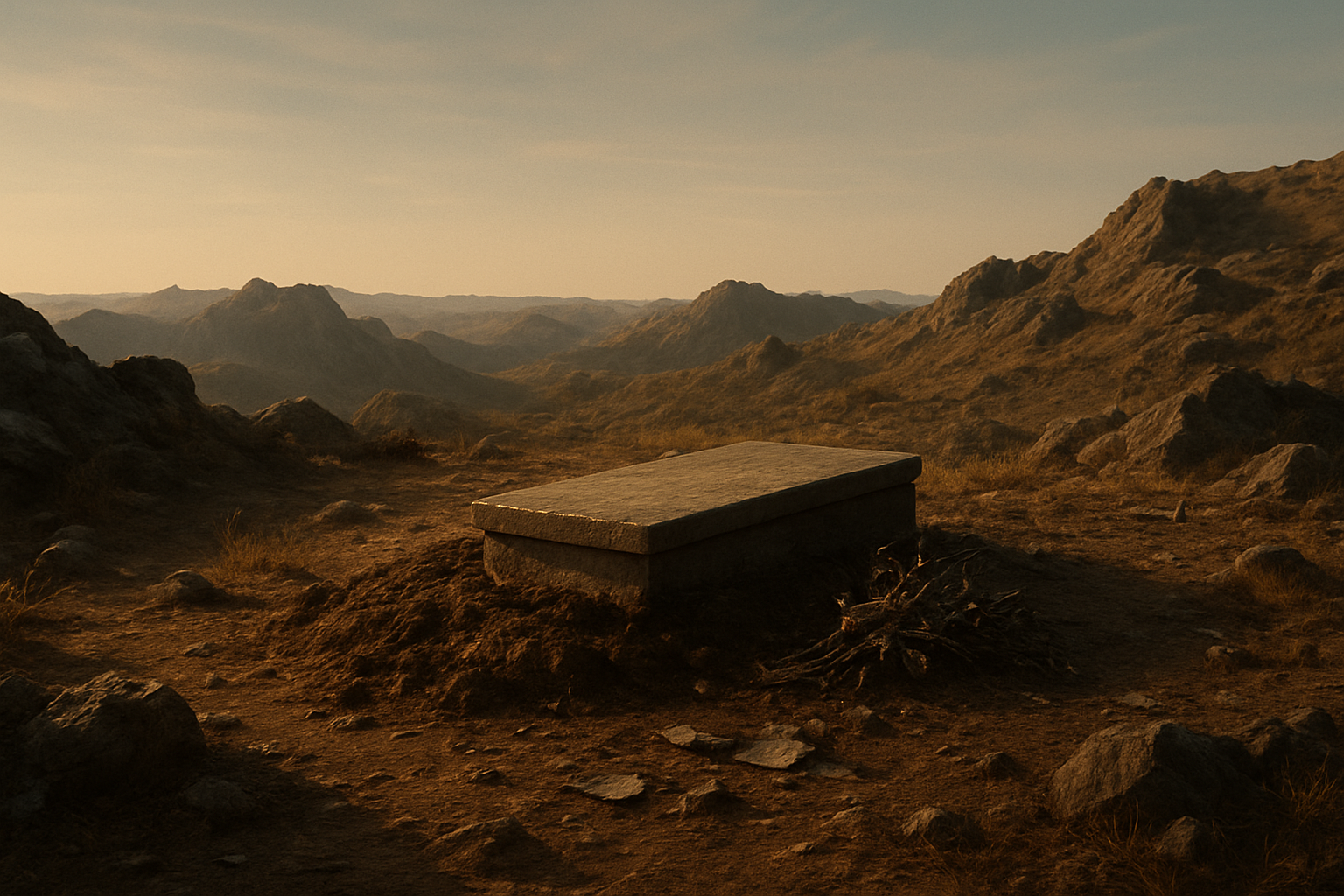
Summary
A poem called "The Lay of Chrysostom," an overwrought lament blaming jealousy, absence, and disdain, is read aloud by the company gathered to bury the dead shepherd. The lay’s speaker catalogs every torment of love and frames his death as the fitting funeral of a lover undone by unrequited passion. Listeners react: one reader doubts the poem’s fit with what they know of Marcela’s character, and Ambrosio explains Grisóstomo’s (Chrysostom’s) prior voluntary absence and jealous imaginings, which softened the apparent indictment of Marcela.
As the men prepare the grave and burn the dead shepherd’s papers, Marcela suddenly appears on the rock above them. She speaks plainly and forcefully, addressing Ambrosio and the assembled mourners: she insists that beauty does not oblige her to return love, that she chose solitude, that she refused Grisóstomo openly, and that his persistence and despair are his own responsibility. Marcela argues that to expect a woman to love simply because she is loved is absurd and unjust; she defends her freedom, modesty, and decision to live apart in the fields. After she departs into the wood, some men attempt to follow despite her words, but Don Quixote intervenes, insisting that no one pursue Marcela and praising her virtue and resolution. The company completes the burial and lays an epitaph for Grisóstomo; travelers urge Don Quixote to go to Seville, but he declines, saying he will first rid the mountains of robbers. The chapter closes with Don Quixote resolving to seek out Marcela and offer his chivalric service.
Key events
- The "Lay of Chrysostom" (a despairing love poem) is read at the burial.
- Ambrosio explains Grisóstomo’s jealous absence and defends Marcela's reputation.
- Marcela appears on the rock and delivers a public, rational defense of her conduct.
- She rejects blame for Grisóstomo’s death, asserting her freedom and choice of solitude.
- Don Quixote forbids anyone to follow Marcela and commends her virtue.
- Grisóstomo is buried, papers burned, and Don Quixote resolves to seek Marcela.
Chapter 14 in pictures


Analysis
This chapter juxtaposes lyric mourning with a clear, argumentative defense, shifting the narrative tone from elegy to public debate. The inserted lay dramatizes the lover’s subjectivity—jealousy, suspicion, and romantic rhetoric—while Marcela’s speech offers a counter-voice grounded in reason, autonomy, and social principle. The exchange foregrounds major novel themes: the conflict between passionate possession and individual liberty, the social expectations placed on women, and the dangers of misattributing responsibility for romantic suffering. Marcela functions as both symbol and agent: she is the locus of desire and a deliberate defender of freedom, challenging pastoral and chivalric conventions that equate female beauty with obligation. Narratively, the chapter disrupts sentimental closure by giving space to a woman’s perspective, and Don Quixote’s chivalric proclamation reframes her as an object of honor rather than pursuit—yet it also stages his readiness to act according to knightly ideals, linking his madness to a protective impulse. The burning of papers and the epitaph underscore how narrative authority and memory are contested: Grisóstomo’s self-expression is consumed even as others write his public legacy. The chapter thus operates as a microcosm of Cervantes’s project—undermining romantic mythologies while probing the ethics of love, voice, and reputation.
Important quotes
“I come not, Ambrosio for any of the purposes thou hast named," replied Marcela, "but to defend myself and to prove how unreasonable are all those who blame me for their sorrow and for Chrysostom’s death; and therefore I ask all of you that are here to give me your attention,”
MarcelaMarcela begins her public defense, rejecting charges that her beauty obliges her to return love or caused Grisóstomo’s death.
“Let no one, whatever his rank or condition, dare to follow the beautiful Marcela, under pain of incurring my fierce indignation.”
Don QuixoteDon Quixote intervenes to protect Marcela’s freedom and honor, framing her refusal as virtuous and deserving of respect.
Characters in Chapter 14
- Grisóstomo
- Marcela
- Ambrosio
- Vivaldo
- Don Quixote
All chapter summaries ›Characters ›
Read Don Quixote illustrated
Every scene in these notes comes from the Book2Life reader, where the full public-domain text is illustrated as you read, with character portraits and narration. Free in your browser and on iPhone.
