Don Quixote Chapter 17 Summary
The Lions' Adventure
Don Quixote insists on confronting caged lions being transported to court, proves his courage, and renames himself Knight of the Lions.
Summary
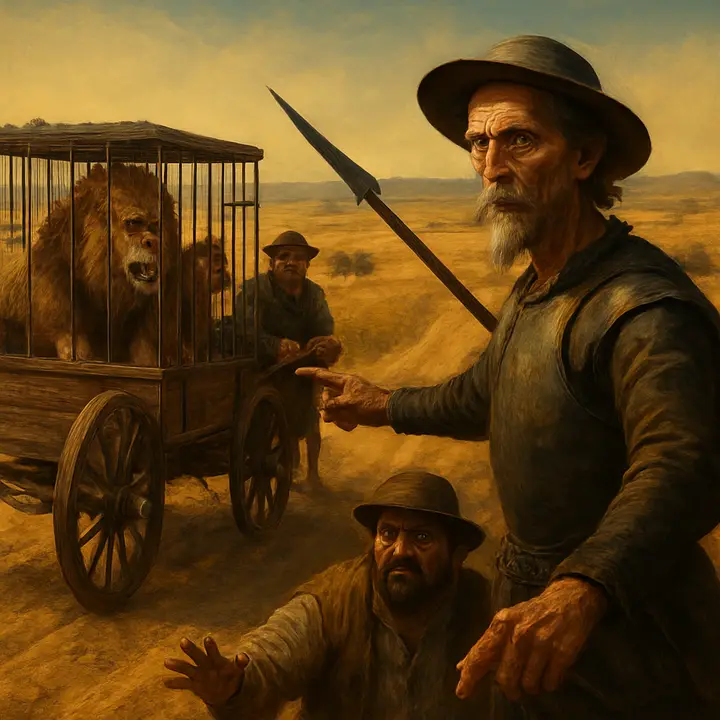
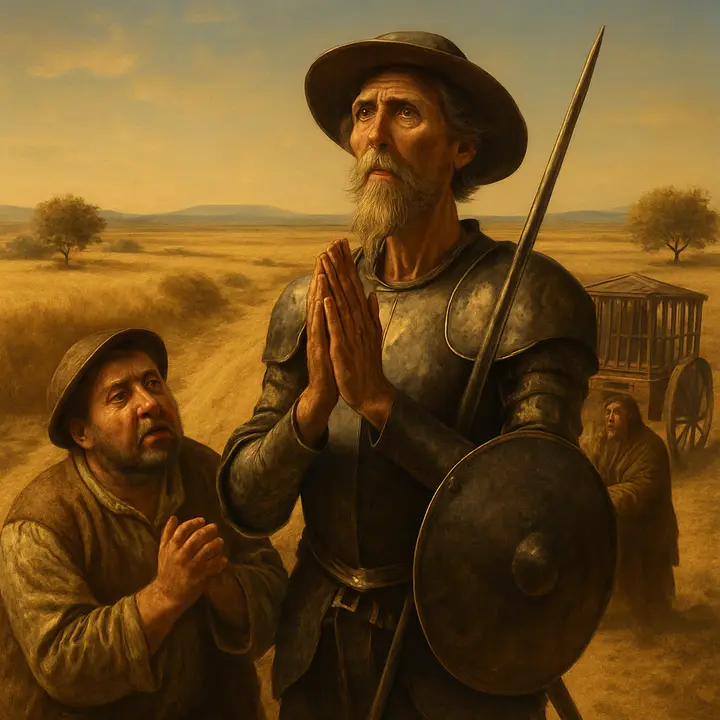
Don Quixote and his household encounter a cart carrying two caged lions bound for the king. Sancho Panza, delayed buying curds, stuffs them into Don Quixote’s helmet; the curds spill and spoil Don Quixote’s appearance but he interprets it as an enchantment aimed at him. Seeing the cart with royal flags and the lions, Don Quixote demands the keeper open the cages so he may do battle. A nearby gentleman (Don Diego de Miranda, the Knight of the Green Gaban) and the carter try to dissuade him, warning that attempting such an enterprise is temerity, not valor. Sancho pleads and flees with tears, convinced his master will be killed. Don Quixote, however, dismounts, arms himself on foot, and declares he will face the beasts to prove his knightly duty.
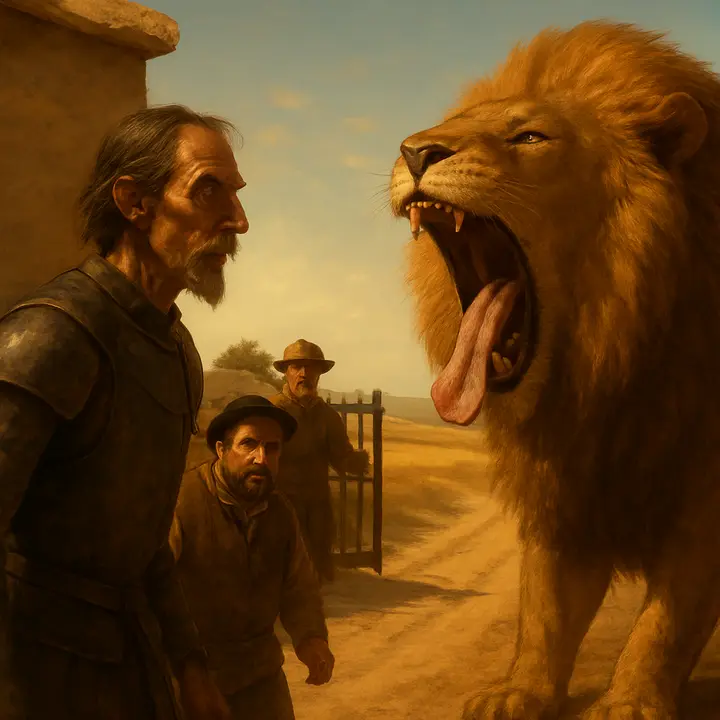
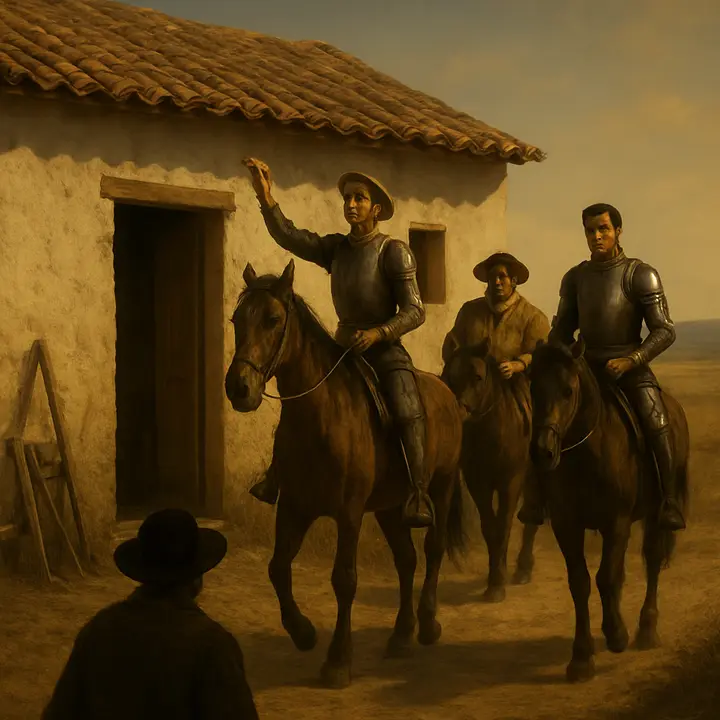
The keeper reluctantly opens the first cage. The male lion yawns, washes itself, looks around, and then calmly lies down, refusing to come out. Don Quixote insists the keeper provoke it; the keeper refuses, warns that the lion will harm him, and explains that the lion’s refusal already demonstrates Don Quixote’s courage. Don Quixote asks for a written certificate of what he has done, pays the keeper and carter to set off again, and proclaims he will henceforth be called the Knight of the Lions. Don Diego observes these events with puzzlement—Don Quixote’s speech is coherent and elevated, but his actions are reckless—finally inviting him to his village, which Don Quixote accepts.
Key events
- Sancho hides curds in Don Quixote’s helmet; curds soil his face and beard.
- A cart bearing royal flags brings two caged lions to be sent to court.
- Don Quixote demands the keeper open the cages and threatens violence if refused.
- Don Quixote dismounts and stands on foot before the lion’s cage, ready to fight.
- The lion yawns, inspects, then calmly lies down and does not leave the cage.
- Keeper closes the cage, praises Don Quixote’s courage, and receives payment; Don Quixote renames himself Knight of the Lions.
- Don Diego de Miranda reflects on Don Quixote’s mix of eloquence and madness and invites him to his home.
Chapter 17 in pictures
Analysis
This chapter stage-manages a controlled test of Don Quixote’s knightly code: it contrasts theatrical bravado with genuine danger and shows how perception shapes heroism. The episode mixes comic and sublime tones—Sancho’s curds create low comedy that punctures the knight’s seriousness, while the lion scene supplies grandeur and pathos. The lion’s refusal to engage functions as a foil to Don Quixote’s readiness for self-sacrifice; his courage is more rhetorical and performative than practical. The keeper’s pragmatic reactions and the gentleman’s warnings position the world as sane and cautious, while Don Quixote’s insistence on duty defines him as anachronistic and idealistic.
Narratively, Cervantes uses this set piece to develop Don Quixote’s identity: the renaming to “Knight of the Lions” is an act of self-fashioning that follows medieval chivalric practice yet reads as deluded reinvention. The narrator’s brief burst of unrestrained praise (“O doughty Don Quixote!”) interrupts the realism and signals metafictional play—Cervantes both parodies and venerates chivalric rhetoric. Symbolically, the lions represent real, uncontrollable nature; their calm suggests that true nobility doesn’t require theatrical conquest. The chapter also advances Sancho’s pragmatic loyalty and Don Diego’s role as the audience within the story who judges Quixote’s mixture of eloquence and folly, preparing the ground for further contrast between imagined glory and everyday consequences.
Important quotes
“By the life of my lady Dulcinea del Toboso, but it is curds thou hast put here, thou treacherous, impudent, ill-mannered squire!”
Don QuixoteDon Quixote discovers curds packed in his helmet and accuses Sancho, mixing chivalric oath with comic disgust.
“I am not bound to do more; enchantments avaunt, and God uphold the right, the truth, and true chivalry!”
Don QuixoteAfter the lion refuses to come out, Don Quixote claims his challenge suffices and invokes chivalric truth to justify his action.
“I take the invitation as a great favour and honour, Señor Don Diego,”
Don QuixoteDon Quixote accepts Don Diego de Miranda’s offer to rest at his house after the episode, showing his continued social grace despite his folly.
Characters in Chapter 17
- Don Quixote
- Sancho Panza
- Don Diego de Miranda
- the keeper
- the carter
- the gentleman (the Knight of the Green Gaban)
- Dulcinea del Toboso
- Rocinante
- Dapple
All chapter summaries ›Characters ›
Read Don Quixote illustrated
Every scene in these notes comes from the Book2Life reader, where the full public-domain text is illustrated as you read, with character portraits and narration. Free in your browser and on iPhone.
