Don Quixote Chapter 61 Summary
Don Quixote Enters Barcelona
Don Quixote and Sancho reach Barcelona, are warmly received by horsemen yet mocked by boys who irritate their mounts, and are led to a nobleman's house.
Summary
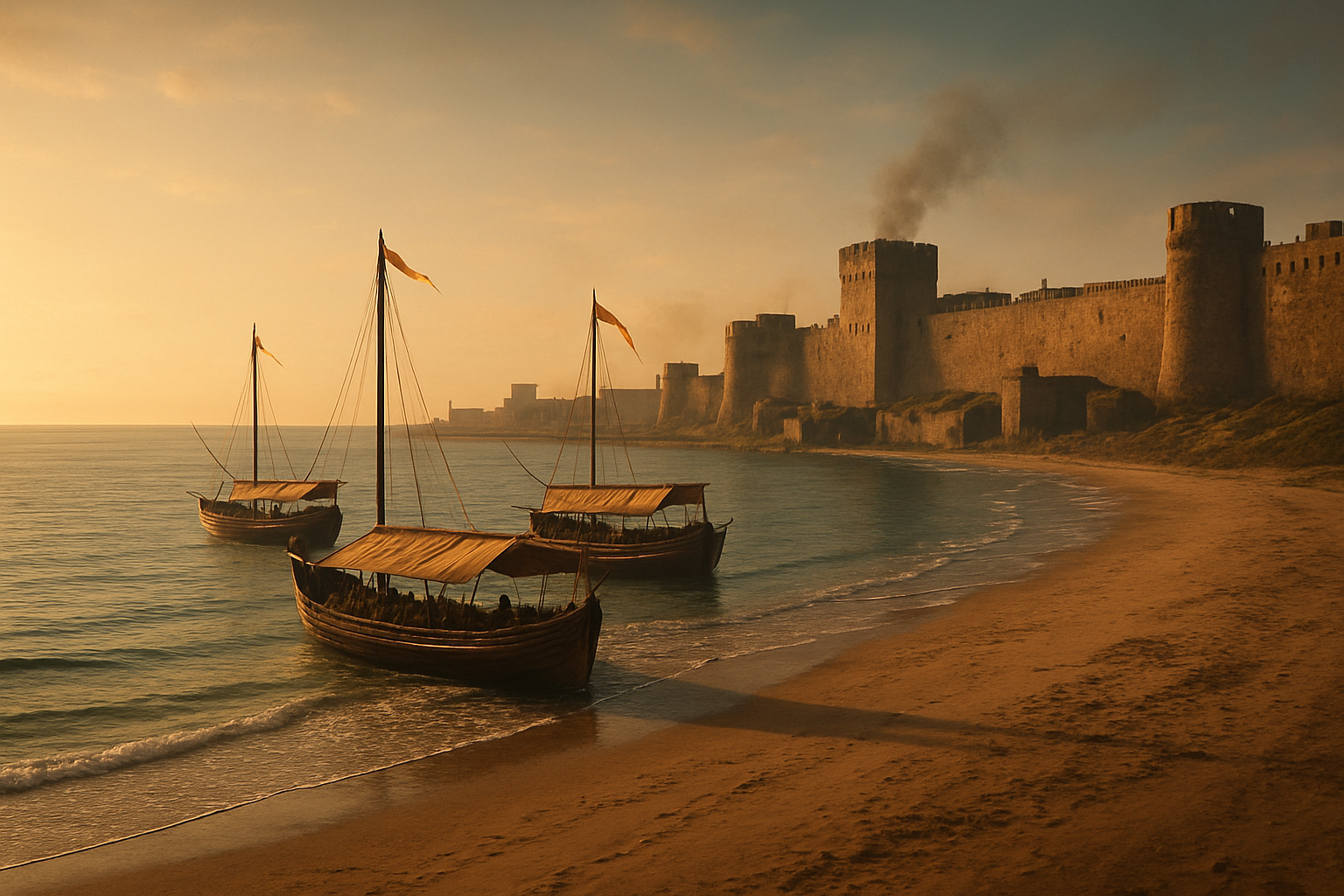
Don Quixote, Sancho, Roque, and six squires travel by secret routes toward Barcelona after three difficult days with Roque’s restless company. Roque, fearing capture because of proclamations by the viceroy, keeps a furtive life; he parts from Don Quixote and Sancho on Saint John’s Eve after giving Sancho the promised ten crowns. Don Quixote and Sancho remain on the strand, waiting for dawn, and behold the sea for the first time, amazed by its expanse and by the array of galleys and martial pageantry along the beach.
At daybreak a large military and civic display unfolds: galleys maneuver and fire, horsemen in liveries ride out, and drums, trumpets, and cannon create a spectacle that delights the crowd. A group of horsemen approach Don Quixote, acclaim him as the true knight-errant described by Cide Hamete Benengeli, and invite him to the city as friends of Roque Guinart. Riding under their music and cheers, Don Quixote and Sancho suffer a practical joke when two boys thrust bunches of furze under the tails of Rocinante and Dapple; the animals react violently, throwing their riders and causing Don Quixote and Sancho shame before the crowd. Their escorts fail to catch the culprits, and after remounting the pair is escorted to a large gentleman’s house where they are received amid continued music and acclamation. The chapter ends with the narrator pausing the immediate action to follow Cide Hamete’s narrative plan.
Key events
- Roque lives a furtive, restless existence and prepares to leave by secret paths.
- Roque parts from Don Quixote and Sancho on Saint John’s Eve and gives Sancho ten crowns.
- At sunrise Don Quixote and Sancho see the sea and a martial display of galleys and horsemen.
- A cavalier greets Don Quixote publicly, calling him the true knight-errant of Benengeli’s history.
- Two boys thrust furze under the tails of Rocinante and Dapple, causing both horses to fling their riders.
- Don Quixote and Sancho are escorted into the city to a rich gentleman’s house amid music and acclamations.
Chapter 61 in pictures


Analysis
This chapter shifts the novel’s action into a new urban and maritime setting, Barcelona, and juxtaposes romantic recognition with comic humiliation. The vivid dawn scene and first sight of the sea underline Don Quixote’s continuing capacity for wonder—he experiences the world with the eyes of the idealist—while the military and civic display situates his chivalric fantasies within real civic spectacle. The public greeting by the cavalier, who invokes Cide Hamete Benengeli, plays with the book’s metafictional frame: the narrator-inserted historian is named to authenticate Don Quixote’s identity even as the invited honours echo the constructed reputation that books generate.
At the same time, the furze prank on Rocinante and Dapple punctures the grandeur with slapstick, reminding readers of the comic vulnerabilities that constantly undercut Don Quixote’s dignity. This alternation of exaltation and ridicule reinforces major themes: the conflict between idealism and material reality, the social theatre surrounding fame and reputation, and the porous boundary between narrative fiction and public perception. Structurally the chapter also functions as a bridge—ending with the party entering a gentleman’s house—allowing the narrator to shift focus while keeping the momentum of reception and spectacle moving forward. The narrative voice balances picturesque description and ironic commentary, maintaining Cervantes’s characteristic blend of empathy and gentle satire.
Important quotes
“They saw the galleys along the beach, which, lowering their awnings, displayed themselves decked with streamers and pennons that trembled in the breeze and kissed and swept the water, while on board the bugles, trumpets, and clarions were sounding and filling the air far and near with melodious warlike notes.”
NarratorDescriptive passage showing Don Quixote and Sancho's wonder at the sea and the military pageantry they encounter on arriving at Barcelona.
“These gentlemen have plainly recognised us; I will wager they have read our history, and even that newly printed one by the Aragonese.”
Don QuixoteDon Quixote interprets the horsemen's greeting as evidence that his fame and printed history have made him known and admired.
“The poor beasts felt the strange spurs and added to their anguish by pressing their tails tight, so much so that, cutting a multitude of capers, they flung their masters to the ground.”
NarratorNarration of the comic episode in which boys put furze under the horses' tails, causing both Rocinante and Dapple to throw their riders and shame them publicly.
Characters in Chapter 61
- Roque
- Don Quixote
- Sancho
- Rocinante
- Dapple
- a cavalier
- two boys
- Cide Hamete Benengeli
All chapter summaries ›Characters ›
Read Don Quixote illustrated
Every scene in these notes comes from the Book2Life reader, where the full public-domain text is illustrated as you read, with character portraits and narration. Free in your browser and on iPhone.
