
Cide Hamete Benengeli in Don Quixote
Narrator
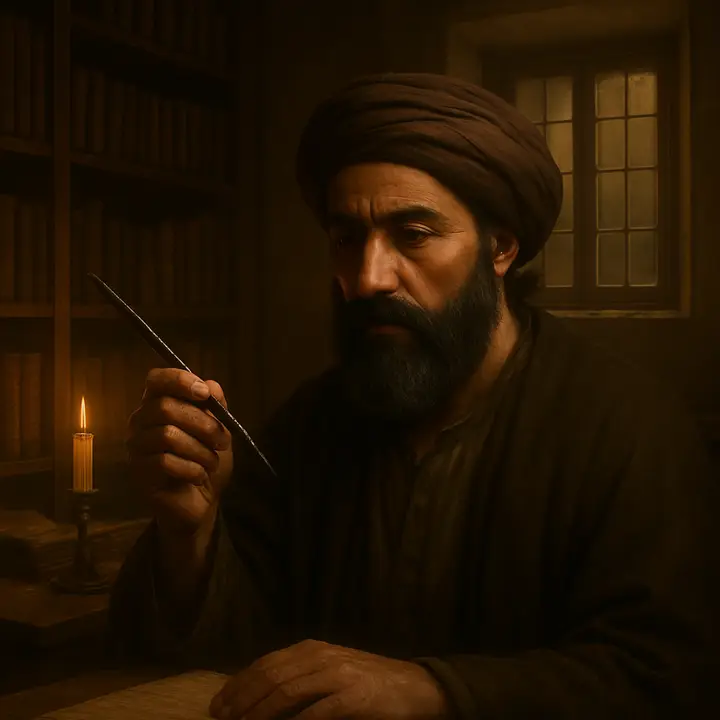
A fictional Moorish chronicler presented as the ‘original’ author whose Arabic manuscript the Spanish narrator translates.
Who is Cide Hamete Benengeli?
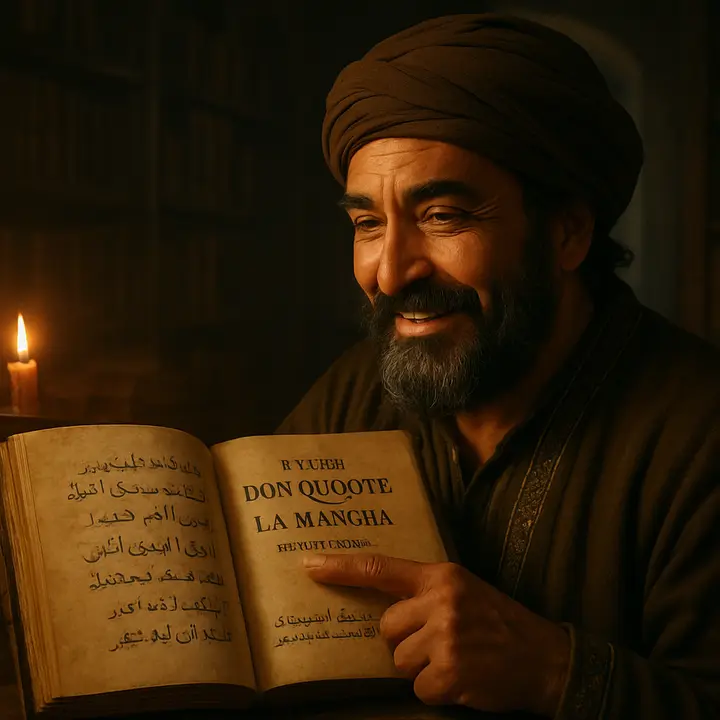
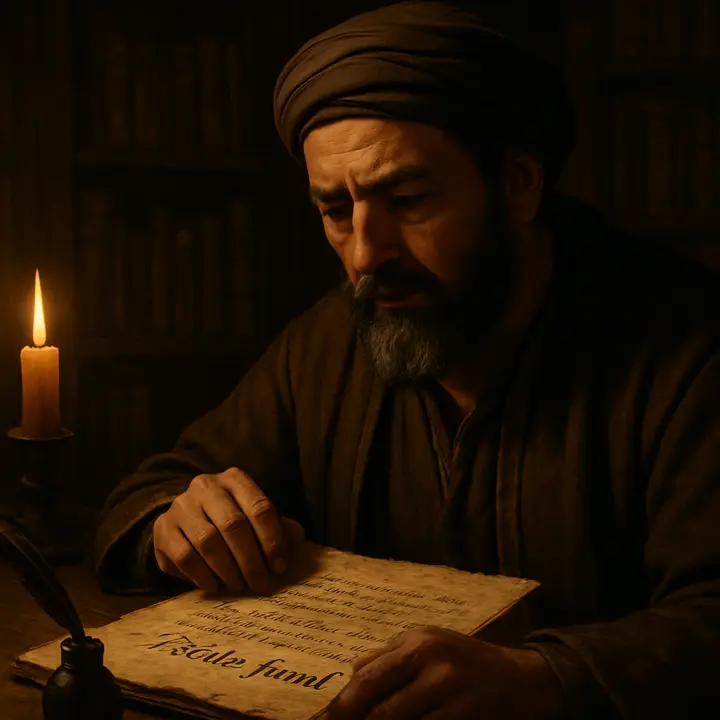
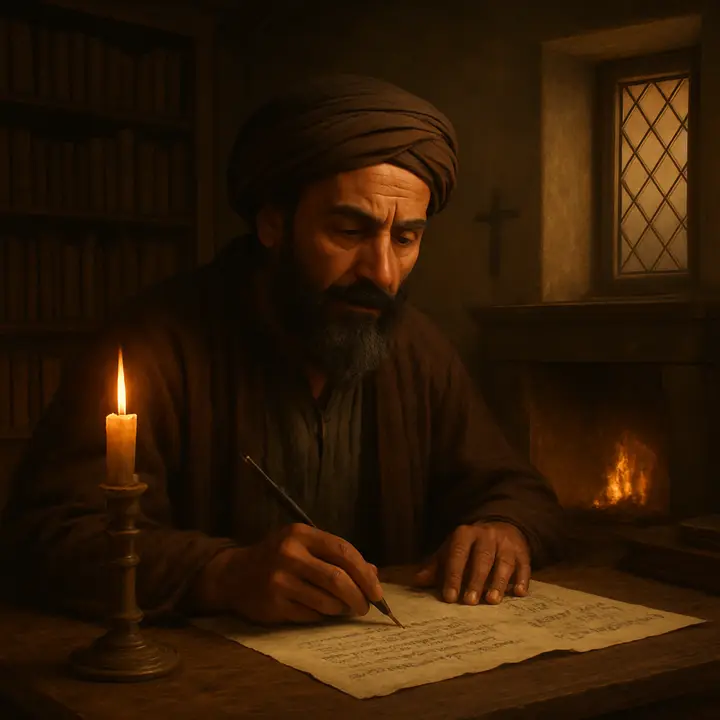
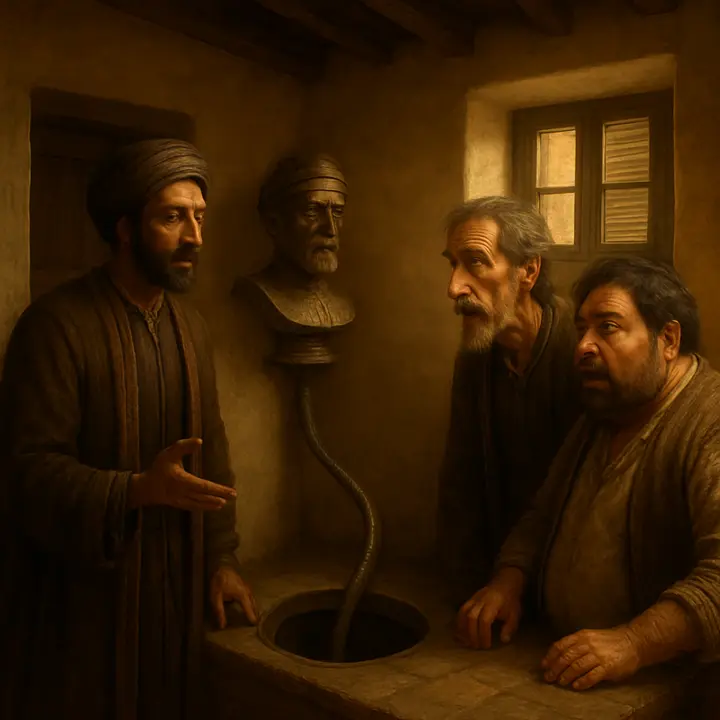
Cide Hamete Benengeli is the purported Arab historian to whom Cervantes attributes the original account of Don Quixote’s adventures. Introduced when the Spanish narrator claims to have obtained and translated Hamete’s manuscript, he functions as a framing device that both legitimizes and playfully questions the tale’s truth. Across the provided chapters, the chronicler appears indirectly through claims about manuscript discovery, printed pamphlets, marginal notes, and explicit asides that defend or delimit his work: he blesses Allah at the opening of journeys, inserts marginal doubts about episodes (such as Montesinos’ cave), and is invoked when the narrator promises fidelity to Hamete’s account. In the Second Part the “historian” is credited for restraint—avoiding long interpolated novels—and for painstaking exactness; the narrator also criticizes or excuses him for omissions or comic errors. Hamete’s presence structures the narrative’s self-conscious play with authorship, translation, and reliability while allowing Cervantes to alternate solemn historicizing tone and ironic distance.
In the book: Cide Hamete Benengeli is the fictional Moorish chronicler whom Cervantes presents as the “original” author of Don Quixote’s history, with the Spanish narrator claiming to translate his manuscript. This metafictional device lets Cervantes play with questions of authorship, reliability, and historical truth, framing the adventures through a supposedly external, scholarly voice that both legitimizes and slyly undercuts the tale.
Personality
- self-aware
- The narrator cites Hamete’s marginal note expressing doubt about the cave of Montesinos (Chapter 24), showing the chronicler’s own uncertainty about events.
- scholarly
- He is presented as a meticulous historian whose manuscript yields precise details and even printed illustrations that the narrator examines (Chapter 9).
- restrained
- The chronicler (as cited by the narrator) claims in the Second Part to avoid inserting long novels and limits himself to episodes arising naturally (Chapter 44).
- defensive
- The narrator defends Hamete’s authenticity while playfully criticizing him for alleged omissions and comic errors regarding events and names (Chapters 9 and 3).
Character arc
Cide Hamete Benengeli’s presence is less a psychological change than a shifting narrative function revealed in stages. At his first invocation he appears as the authoritative source whose Arabic manuscript legitimizes the continuation of Don Quixote’s adventures; the Spanish narrator stresses the discovery and translation of Hamete’s work to give the tale a documentary tone (Chapter 9). As the story proceeds the chronicler’s voice becomes more complex: the narrator quotes Hamete’s marginal note that hedges the reality of fantastic episodes (Chapter 24), and later credits him with methodological restraint in the Second Part, limiting digressions and promising fidelity (Chapter 44). Rather than overturning doubts, these interventions deepen the metafictional game: Hamete alternately confers credibility and invites skepticism. By the end of the provided sequence his role has crystallized as the self-consciously fallible historian—careful and learned, yet open to correction—whose claimed exactness is itself a narrative maneuver that frames readers’ reception of truth, parody, and authority throughout the book.
Cide Hamete Benengeli in pictures
Relationships
- Don Quixote Hamete is presented as the chronicler whose manuscript records Don Quixote’s life and deeds, making Quixote the subject of his history.
- Sancho Panza Sancho repeatedly refers to Hamete by name when discussing the circulating book about their adventures, showing Hamete’s presence in popular rumor (Chapters 2–3).
- Samson Carrasco Samson names and jokes about the Moorish author when he and Don Quixote debate the circulating account, treating Hamete as the source of the published narrative (Chapter 3).
- Ginés de Pasamonte Hamete’s chronicle records Ginés’s boastful account and memoir among the galley slaves freed by Don Quixote (Chapter 22 and 27).
- The Duke The duke’s entertainments repeatedly interact with and stage episodes that the narrator attributes to Hamete’s careful reporting of events at the duke’s castle (Chapters 34, 38, 40, 44).
- The Duchess Like the duke, the duchess participates in the staged episodes and practical jokes that Hamete’s narrative dutifully records, making her a recurring figure in the chronicled episodes (Chapters 34, 38, 44).
Quotes by Cide Hamete Benengeli
“I cannot convince or persuade myself that everything that is written in the preceding chapter could have precisely happened to the valiant Don Quixote; and for this reason, that all the adventures that have occurred up to the present have been possible and probable;”
Chapter 24A marginal note expresses doubt about the veracity of the Montesinos adventure and invites the reader to judge.
““I swear as a Catholic Christian;””
Chapter 27The chronicler begins the chapter with an oath, framing his account of Master Pedro and the ape as truthful.
Why Cide Hamete Benengeli matters
Cide Hamete Benengeli embodies Cervantes’s interrogation of authorship, translation, and historical truth: by attributing the tale to an external Moorish chronicler and insisting on translation and manuscript discovery, the book destabilizes straightforward claims to authority. Hamete’s marginal doubts, defenses, and purported methodological choices invite readers to notice the story as artifice—simultaneously authenticating and undermining its own veracity. This metafictional framing foregrounds themes of reliability, narrative mediation, and cultural encounter while allowing irony to operate through the guise of scholarly exactness.
Chapters with Cide Hamete Benengeli
More Don Quixote characters
 Don QuixoteProtagonist
 Sancho PanzaMajor character
 Dulcinea del TobosoMinor character
- RRocinanteMajor character
 The DukeMajor character
- DDappleMinor character
 The BarberMajor character
 The DuchessMajor character
All chapter summaries ›Characters ›
Read Don Quixote illustrated
Every scene in these notes comes from the Book2Life reader, where the full public-domain text is illustrated as you read, with character portraits and narration. Free in your browser and on iPhone.
