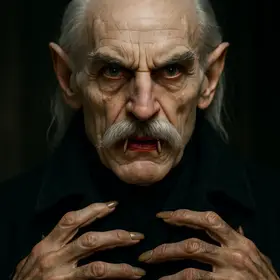
Count Dracula in Dracula
Antagonist
A mysterious Transylvanian noble vampire who leaves his castle to spread undead influence into England.
Who is Count Dracula?
Count Dracula is the ancient Transylvanian noble at the heart of the novel’s threat. He wants to extend his reach from his remote castle into modern England, establishing safe havens of native earth and preying on living victims to strengthen himself. He lures Jonathan Harker to Transylvania under the pretense of business, imprisons him in the castle, and later sends boxes of earth and himself by ship to England. In London he stalks Lucy Westenra and Mina Harker, feeding on and marking Mina, and he uses uncanny powers—shape, speed, influence over animals and the weak-minded—to evade the pursuing group. The men and Van Helsing study folklore and forensic clues to trace Dracula’s lairs, destroy his earth-boxes, and ultimately follow him back to Transylvania to confront and kill him. Throughout, Dracula acts deliberately and predatory, blending aristocratic ceremony with monstrous assaults on the living.
In the book: Count Dracula is the enigmatic Transylvanian noble at the center of the novel, a predatory force who leaves his remote castle to extend his reach into modern England. Serving as the story’s principal antagonist, he embodies ancient evil colliding with science and faith, testing the resolve of a small group of protagonists who unite to uncover his nature and stop his spreading influence without fully understanding the scope of his powers.
Personality
- Predatory
- He repeatedly attacks and feeds on Lucy and later Mina, and forces himself upon Mina while Jonathan lies stuporous (Chapter 21).
- Secretive
- He keeps Jonathan imprisoned in the castle, arranges that Harker’s clothes and presence appear in nearby towns, and conceals his earth-boxes in London houses (Chapters 2, 4, 20).
- Supernaturally powerful
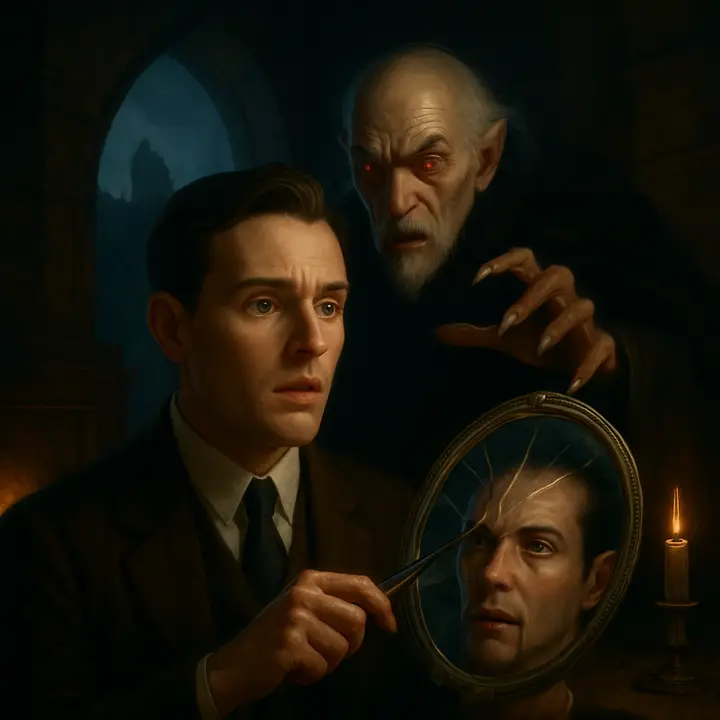
- He descends the sheer castle wall like a lizard, controls wolves and rats, casts no reflection in a shaving-glass, and moves with inhuman speed when bursting into the Harkers’ house (Chapters 2, 3, 19, 23).
- Calculating
- He ships fifty boxes of native earth to England, times movements by ship and agent, and plans an escape back to Varna once discovered (Chapters 20, 24).
- Vulnerable to faith and relics
- He recoils at a crucifix when Jonathan brandishes it and is driven back by crucifixes and the Sacred Wafer during his raid on the Harkers (Chapters 2, 21, 23).
Character arc
Dracula appears first as a courtly, hospitable Transylvanian noble who receives Jonathan Harker with ceremony and English books, masking his monstrous nature (Chapters 1–2). As Harker discovers the castle’s locked doors, missing reflection, and the Count’s nocturnal predations with the three women, Dracula is revealed as an imprisoning, vampiric predator who prepares a long-term plan to move to England (Chapters 2–4). Once in England his strategy plays out in secrecy: he sends earth-boxes, stalks victims, and corrupts weaker minds (Chapters 12–20). Confrontations intensify as Van Helsing and the group uncover the lairs and sterilise many boxes, forcing Dracula into direct conflict; he attacks the Harkers and escapes repeatedly (Chapters 19–23). Ultimately the hunters trace him back to Transylvania; in a final struggle Jonathan and Quincey open Dracula’s last box and kill him, his body crumbling to dust (Chapter 27). Throughout, Dracula refuses moral transformation—he remains a calculating, predatory force from first to last—until his bodily destruction ends his threat, though his influence leaves lasting scars on survivors like Mina.
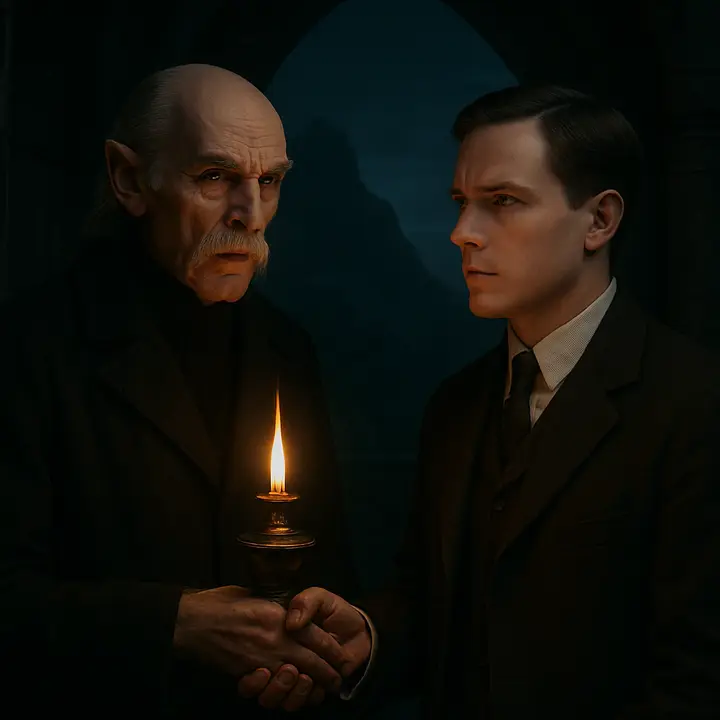
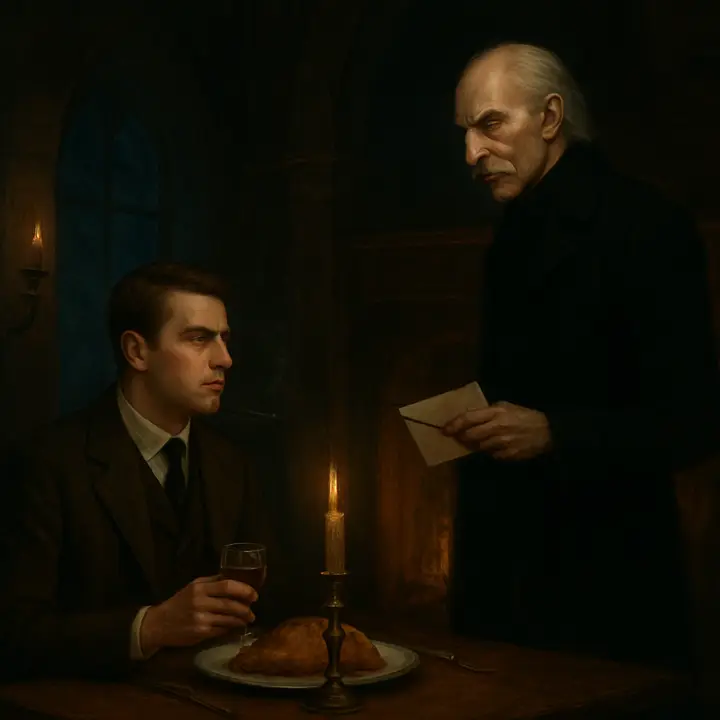
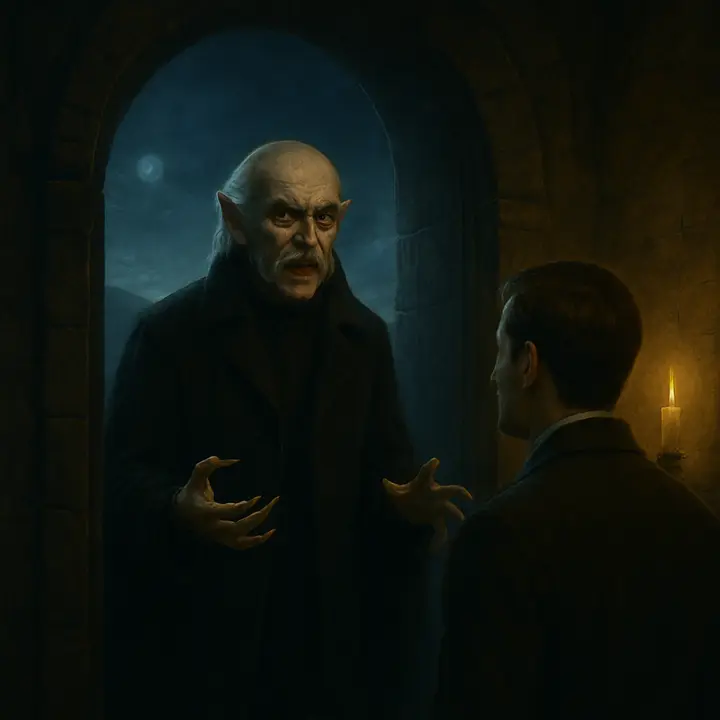
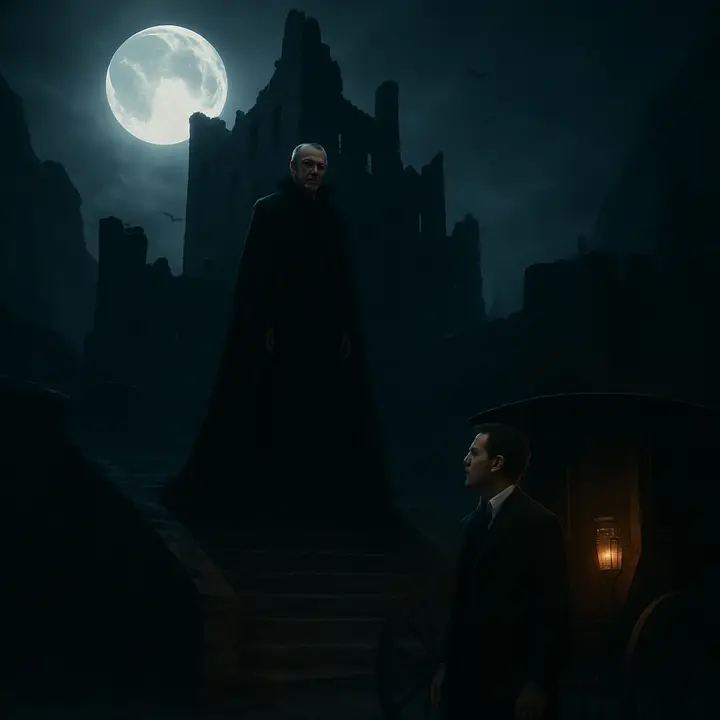
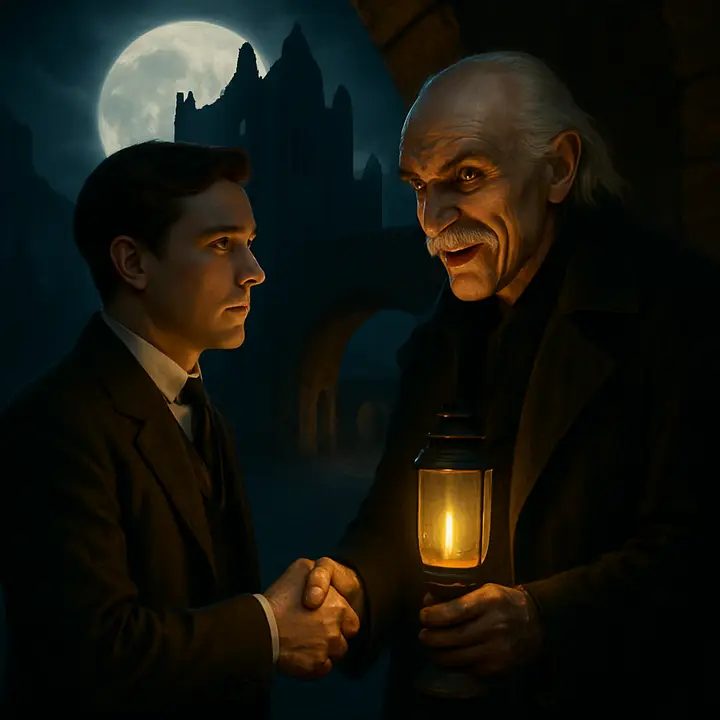
Count Dracula in pictures
Relationships
- Jonathan Harker Victim and prisoner whom Dracula imprisons in his castle and whose identity and clothes Dracula uses to cover his movements (Chapters 1–4, 23).
- Mina Harker Target and marked victim whom Dracula feeds upon and whose blood he forces her to swallow, leaving a scar and a psychic bond (Chapters 21, 24, 27).
- Lucy Westenra Prey whom Dracula fatally drains and whose transformation and posthumous un-death precipitate Van Helsing’s countermeasures (Chapters 12–13).
- Dr. John Seward Adversary in the sense that Seward helps investigate Renfield’s reports and joins Van Helsing’s committee to track and destroy Dracula’s lairs (Chapters 12, 17–19, 23).
- Abraham Van Helsing Intellectual opponent whose folkloric expertise and moral resolve lead the hunt to identify Dracula’s nature and to destroy him (Chapters 12, 18, 23–24).
- Renfield A disturbed intermediary whom Dracula influences and whose delirium and final testimony reveal the Count’s nocturnal incursions (Chapters 17, 21).
Quotes by Count Dracula
“My Friend.—Welcome to the Carpathians. I am anxiously expecting you. Sleep well to-night. At three to-morrow the diligence will start for Bukovina; a place on it is kept for you. At the Borgo Pass my carriage will await you and will bring you to me.”
Chapter 1The Count’s formal, courteous letter both welcomes Harker and arranges the mysterious onward journey; it establishes Dracula’s remote control over events.
“Welcome to my house! Enter freely and of your own will!”
Chapter 2The Count says this in English as he opens the great door and gestures Jonathan into the castle, a formal, ceremonial greeting that immediately carries a charged tone.
“Listen to them—the children of the night. What music they make!”
Chapter 2Count Dracula utters this as Jonathan hears wolves howling in the valley, revealing the Count's strange pleasure in the wild and foreshadowing his affinity with nocturnal creatures.
“How dare you touch him, any of you? How dare you cast eyes on him when I had forbidden it? Back, I tell you all! This man belongs to me!”
Chapter 3Dracula’s furious intervention during the women’s attack, declaring possession of Jonathan and asserting his dominance.
“The first should be June 12, the second June 19, and the third June 29.”
Chapter 4Dracula dictates the exact post-dated schedule that reveals the period he intends to control Harker’s movements and life.
“You think to baffle me, you—with your pale faces all in a row, like sheep in a butcher’s. You shall be sorry yet, each one of you!”
Chapter 23Dracula taunts the group as he escapes after their failed attempt to stop him, promising long revenge and asserting his claim on their loved ones.
Why Count Dracula matters
Dracula embodies the collision of ancient supernatural menace with modern, scientific inquiry: his vampirism challenges medical knowledge, legal procedure, and Victorian faith. As a foreign aristocrat who invades English domestic spaces, he dramatizes anxieties about contagion, migration, and the erosion of secure boundaries. His predatory assaults on women force the protagonists to blend science, faith, and ritual, making the novel an exploration of how communities mobilise reason and belief to confront an enemy that resists classification. In that clash, Dracula functions as both literal antagonist and symbol of persistent cultural fears the group must comprehend and annihilate.
Chapters with Count Dracula
More Dracula characters
 Jonathan HarkerProtagonist
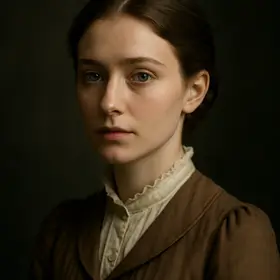 Mina HarkerMajor character
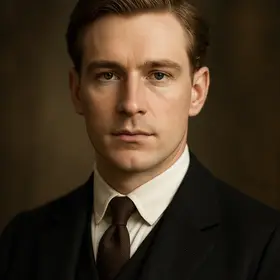 Arthur HolmwoodMajor character
 Lucy WestenraMajor character
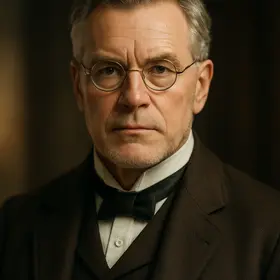 Abraham Van HelsingMajor character
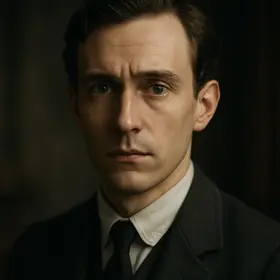 John SewardMajor character
 Quincey MorrisMajor character
 Mrs. WestenraMinor character
All chapter summaries ›Characters ›
Read Dracula illustrated
Every scene in these notes comes from the Book2Life reader, where the full public-domain text is illustrated as you read, with character portraits and narration. Free in your browser and on iPhone.
