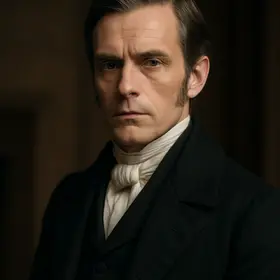
John Knightley in Emma
Major character
Isabella Knightley’s husband, a sensible, blunt London barrister who visits Highbury and steadies his household and relatives.
Who is John Knightley?
John Knightley is Isabella Knightley’s husband and a London barrister who brings his lively family to Hartfield and Randalls. He values practical sense, steadiness, and the comforts of proper domestic management; he disapproves of fuss, affected social postures, and needless sentimentalism. In the course of the story he arrives to visit Emma’s family, offers candid commentary on Emma’s behaviour and Highbury gossip, defends his wife’s household decisions, and participates in social outings and dinners (Randalls, Donwell, Box Hill). He provides a plainspoken counterpoint to more romantic or meddling impulses in the neighbourhood, quietly supports his sister’s and father-in-law’s comforts, and teases and comforts Emma in turn. Though not central to the romantic plots, he influences practical arrangements (carriage seating, children’s visits) and contributes to the novel’s social gatherings and moral judgments.
In the book: When we first meet him, John Knightley is the cool, sharp-tongued London barrister who comes down to Highbury with his gentle wife, Isabella—Emma’s sister—and their lively children. He doesn’t care for fuss or country chatter, but he’s protective of his family and refreshingly frank, the sort who will quietly puncture small talk and make Emma think twice.
Personality
- practical
- He grumbles about ill-advised journeys and defends Isabella’s decisions when Mr. Perry’s opinions are invoked (Chapter 12).
- frank
- He bluntly calls Emma’s intimacy with Harriet ‘a bad thing’ and warns that Emma’s superiority has never been properly challenged (Chapter 5).
- protective
- He insists on sensible arrangements for his wife and children visiting Hartfield and reproves behaviors that might distress Mr. Woodhouse (Chapter 11–12).
- impatient
- He shows sharp displeasure at Mr. Woodhouse’s fidgety anxieties about travel and at impractical social plans, complaining about leaving warm homes in bad weather (Chapter 11, 15).
Character arc
John Knightley’s presence is steady rather than dramatically transformative. He appears early as a perceptive, plainspoken foil to Emma’s social experiments, voicing concern about Emma’s influence on Harriet and warning of the effects of unchallenged superiority (Chapter 5). His visits bring the bustle of family life to Hartfield and expose Emma to a practical perspective: he defends domestic choices, manages logistics (carriage seats, children’s comforts), and teases Emma into modesty without moralizing (Chapters 11–13). At social gatherings he aids conviviality through good-humored banter and by taking his share in household responsibilities, and he contributes to the smooth running of dinners and outings (Chapters 12, 16). He does not undergo a personal transformation in the narrative; instead his role consistently underlines steadiness and common sense. Across the chapters he reinforces domestic propriety, tempers Mr. Woodhouse’s anxieties, and acts as a reliable family anchor while others (Emma, Frank, Jane, Harriet) experience more overt emotional change.
Relationships
- Isabella Knightley His wife, whom he supports, defends, and visits Hartfield with, showing domestic partnership and mutual regard (Chapter 11–12).
- Emma Woodhouse His sister-in-law and frequent conversational sparring partner; he teases and reproves her candidly, prompting reflection (Chapter 5, 12, 7 references).
- Mr. Woodhouse His father-in-law, whose nervous fidgeting about health and travel he tolerates but sometimes reproves to protect household order (Chapter 11–12).
- Mr. Knightley His brother (George Knightley); they greet one another with easy cordiality and mutual attachment, discussing law and farming (Chapter 12).
- Philip Elton A fellow guest whom John unexpectedly offers a seat to in his carriage and whose social choices he later observes with some disapproval (Chapter 13, 15).
- Jane Fairfax An acquaintance he greets sociably and teases politely at dinners, showing civil concern for her wellbeing (Chapter 16).
Quotes by John Knightley
“I never in my life saw a man more intent on being agreeable than Mr. Elton. It is downright labour to him where ladies are concerned.”
Chapter 13John Knightley criticizes Elton's affected politeness, contrasting earnestness and performance among male suitors.
“Will you?" said he, offering his hand.”
Chapter 2Knightley asks Emma to dance; the gesture affirms their close, affectionate relationship and ends the scene on a warm personal note.
Why John Knightley matters
John Knightley embodies the novel’s value of practical common sense and familial duty. His candid observations and managerial steadiness counterbalance Emma’s social experiments and romantic guesses, underscoring themes of responsibility, domestic order, and the limits of well-meaning interference. By defending Isabella and moderating Mr. Woodhouse’s anxieties, he also highlights the importance of sensible conduct within family life—the everyday stabilizer that allows moral growth and reconciliations elsewhere in the story.
Chapters with John Knightley
More Emma characters
 Emma WoodhouseProtagonist
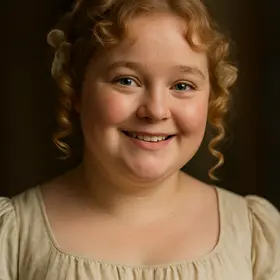 Harriet SmithMajor character
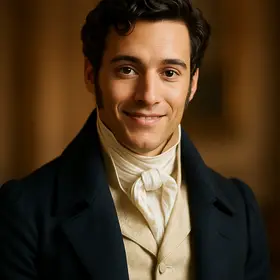 Frank ChurchillMajor character
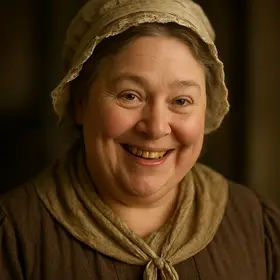 Miss BatesMajor character
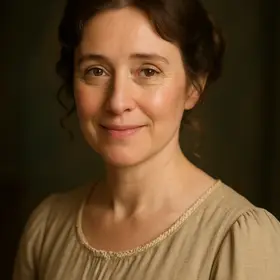 Mrs WestonMajor character
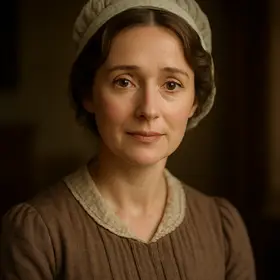 Isabella KnightleyMajor character
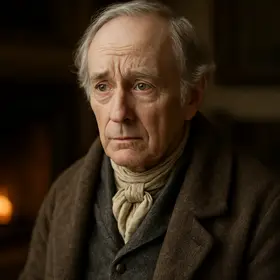 Mr WoodhouseMajor character
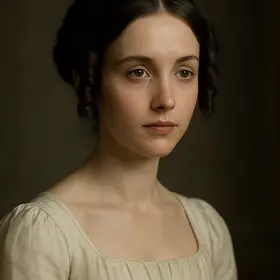 Jane FairfaxMajor character
All chapter summaries ›Characters ›
Read Emma illustrated
Every scene in these notes comes from the Book2Life reader, where the full public-domain text is illustrated as you read, with character portraits and narration. Free in your browser and on iPhone.
