Mr. Elton in Emma
Major character
the vain, socially ambitious vicar of Highbury whose comportment and choices unsettle Emma's matchmaking plans.
Who is Mr. Elton?
Mr. Elton is the local clergyman whose polite attentions, flattery, and social ambition make him a central focus of Emma Woodhouse’s matchmaking schemes. Emma persuades herself that his warmth toward Harriet Smith and his eagerness to assist (framing a portrait, volunteering to select it in London, praising Harriet’s improvements) indicate romantic feeling, and she orchestrates situations to bring Elton and Harriet together. In truth, Elton is self-interested and mindful of social advantage; he later announces an engagement that reveals he chooses a match on status and fortune rather than on the sentimental signs Emma reads. His behavior—cheerful gallantry in company, solicitous civility to households like the Westons, and a formal, exclusionary farewell note—deepens Harriet’s attachment and then leaves her wounded when Elton departs for Bath and when his engagement becomes known. Elton’s actions precipitate Emma’s humiliation, prompt her to console Harriet, and expose the limitations of Emma’s confidence in her own social judgments.
Personality
- socially ambitious
- In Chapter 4 he revels in his engagement to Miss Hawkins and speaks with self-satisfaction about his new success.
- flattering
- In Chapter 6 he repeatedly praises Harriet’s improvement and expresses animated tenderness while reading aloud during the portrait sittings.
- self-interested
- In Chapter 8 Mr. Knightley suggests Elton will act according to interest, a view borne out when Elton chooses an advantageous match.
- courteously evasive
- In Chapter 17 he sends a formal note to Mr. Woodhouse announcing his departure for Bath and excludes Emma by not calling personally.
- cheerful host/companion
- In Chapter 18 he plays cards with Mr. Weston and Mr. Woodhouse and behaves with excessive cheerfulness at Mrs. Elton's drawing room.
Character arc
Mr. Elton first appears as a polite, flattering neighbor whose gallantry and attentions Emma interprets as romantic encouragement toward Harriet. Early chapters show him volunteering favors (offering to take the portrait to London, reading aloud at sittings) and responding to Emma’s social manipulations with apparent warmth. As gossip and encounters accumulate, Emma's conviction grows while Mr. Knightley warns that Elton will follow interest rather than sentiment. That warning proves accurate when news breaks of Elton’s engagement and his triumphant return to Highbury, revealing him as socially ambitious and self-satisfied rather than devoted to Harriet. His departure for Bath (Chapter 17) and the curt note excluding Emma intensify the disappointment and expose the misreading of his motives. By his later appearance in the Westons’ circle, Elton is comfortably settled in the conventions of society—cheerful, talkative, and attentive to social display—having propelled Harriet into private grief and prompted Emma’s chastened resolve to be more careful and less meddlesome.
Relationships
- Emma Woodhouse Emma reads his attentions as encouragement for Harriet and he participates in her social schemes, but his true motives confound and humiliate her.
- Harriet Smith Harriet receives Elton’s flattering attentions and comes to adore him, only to be left disappointed when his engagement is announced.
- Mr. Woodhouse He calls on Mr. Elton as a neighbor and receives a formal parting note from Elton when Elton goes to Bath.
- Mr. Weston Mr. Weston converses with Elton in social settings (e.g., card games) and is involved in house-party talk that surrounds Elton’s connections.
- Mrs. Weston Mrs. Weston observes Elton’s behavior at social gatherings and participates in the circle that watches his interactions with Emma and Harriet.
- Augusta Elton Mrs. Elton presides over a drawing room where Elton’s social ease and the surrounding gossip are on display.
Quotes by Mr. Elton
“It was not lost on me. But still I cannot imagine she would not be persuaded.”
Chapter 6Mr. Elton insists Harriet can be persuaded to sit for a portrait, showing his interest and readiness to assist.
“Then she is a greater simpleton than I ever believed her. What is the foolish girl about?”
Chapter 8Knightley reacts with incredulous displeasure when Emma reveals Harriet refused Robert Martin's written proposal.
“Let her marry Robert Martin, and she is safe, respectable, and happy for ever;”
Chapter 8Knightley argues that marrying Martin would secure Harriet’s social and material well-being, contrasting Emma's higher aspirations for her.
“He wrote a letter to poor Mrs. Weston, to congratulate her, and a very proper, handsome letter it was.”
Chapter 11Mr. Woodhouse recalls Frank Churchill's congratulatory letter, introducing Frank as an off-stage but socially relevant character.
“Three-and-twenty!—is he indeed?—Well, I could not have thought it—and he was but two years old when he lost his poor mother!”
Chapter 11Mr. Woodhouse's surprised aside emphasizes his anxious, detail-focused mind and frames Frank Churchill in a sentimental light.
“We want only two more to be just the right number. I should like to see two more here,—your pretty little friend, Miss Smith, and my son—and then I should say we were quite complete.”
Chapter 14Mr. Weston announces Frank Churchill’s expected visit and frames it as completing the household, prompting discussion of its likelihood.
Why Mr. Elton matters
Mr. Elton embodies themes of social ambition, the limits of charity, and the danger of misreading manners for meaning. His polished civility and pursuit of advantageous marriage expose the gap between outward decorum and inner motive, undermining Emma’s confidence in her matchmaking and revealing how social position shapes romantic choices. Through Elton’s actions the novel critiques class-conscious calculation and shows how personal vanity and social self-advancement can harm the vulnerable—most clearly Harriet—while forcing Emma to confront the ethical consequences of her interventions.
Chapters with Mr. Elton
More Emma characters
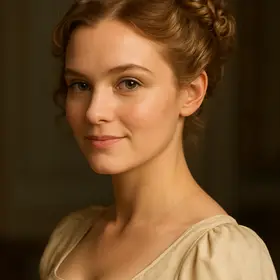 Emma WoodhouseProtagonist
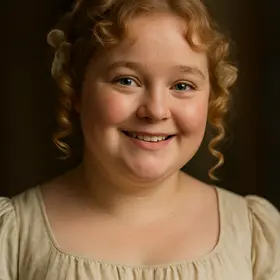 Harriet SmithMajor character
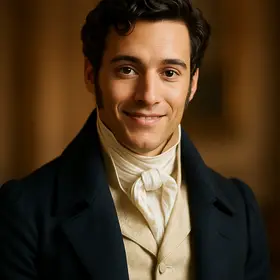 Frank ChurchillMajor character
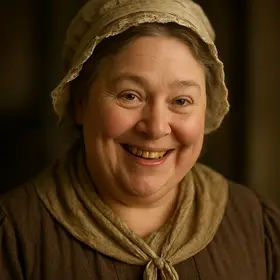 Miss BatesMajor character
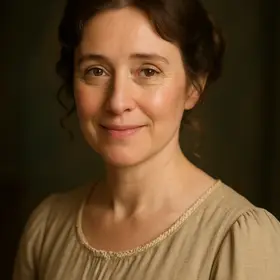 Mrs WestonMajor character
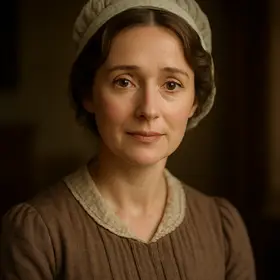 Isabella KnightleyMajor character
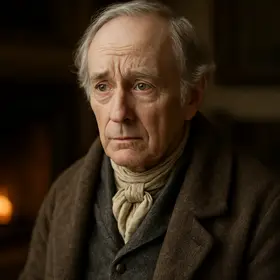 Mr WoodhouseMajor character
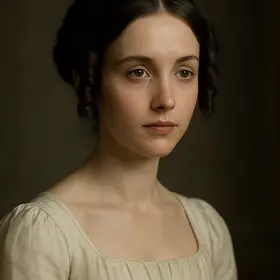 Jane FairfaxMajor character
All chapter summaries ›Characters ›
Read Emma illustrated
Every scene in these notes comes from the Book2Life reader, where the full public-domain text is illustrated as you read, with character portraits and narration. Free in your browser and on iPhone.
