Mr. Perry in Emma
Minor character
Highbury apothecary consulted by the Woodhouse household and mentioned in local conversation.
Who is Mr. Perry?
Mr. Perry is the village apothecary of Highbury who appears as a practical, professional presence in the social world around Hartfield. He is called on for medical opinion and reassurance: in Chapter 2 Mr. Woodhouse consults him about the supposed dangers of wedding-cake, and in Chapter 13 he is mentioned as a possible attendant for Harriet Smith’s sore throat. He does not drive the plot but provides local, medical expertise and a calm counterpoint to Mr. Woodhouse’s anxieties and the town’s social talk. His role is functional—he offers authority that comforts hypochondriac fears, and he is woven into the circle of neighbors who exchange news about Frank Churchill’s letter and other events. Mr. Perry’s presence helps make the community feel lived-in and credible, showing how everyday services and professional contacts support the principal families.
Personality
- practical
- Mr. Woodhouse consults Mr. Perry about whether the wedding-cake is dangerous, treating him as an authority on health (Ch. 2).
- reassuring
- His professional opinion helps relieve Mr. Woodhouse’s fears about the cake being unhealthy (Ch. 2).
- connected
- He is mentioned among the local visitors and considered as the likely attendant for Harriet’s sore throat, showing his place in neighborhood networks (Ch. 13).
- discreet
- He is referred to as a sound, proper choice for attending an infectious sore throat without any dramatic involvement (Ch. 13).
Character arc
Mr. Perry does not undergo notable change across his appearances; he is introduced and remains the steady, professional apothecary the community expects. In Chapter 2 he appears indirectly as the medical authority whom Mr. Woodhouse consults about the safety of wedding-cake, providing a small but decisive reassurance that calms Mr. Woodhouse’s nerves. Later, in Chapter 13, his role reappears in neighborhood practicalities when he is considered as the likely medical attendant for Harriet Smith’s sore throat—again as a dependable figure quietly available to serve his clients. He neither intervenes in the central social misunderstandings nor participates in matchmaking or moral lessons; instead, he consistently provides the ordinary services and expertise that allow the main characters to fret, to be soothed, and to carry on. His arc is therefore one of constancy: present where a sensible, local professional is needed and unchanged in function from first mention to last.
Relationships
- Mr. Woodhouse Mr. Woodhouse’s apothecary and medical consultant, whose authority he seeks to calm health anxieties (Ch. 2).
- Harriet Smith A potential patient when Harriet develops a sore throat and Mr. Perry is named as a possible attendant (Ch. 13).
- Mrs. Weston Part of the same Highbury social circle in which Mr. Perry is known and whose domestic matters sometimes require local professional services (Ch. 2).
- Mr. Weston A neighbor and member of the same community who appears in the local conversations where Mr. Perry is mentioned (Ch. 2).
- Mrs. Perry Fellow local resident who takes part in the neighborhood talk that surrounds Mr. Weston’s letter and other news (Ch. 2).
Quotes by Mr. Perry
“Ah, poor Miss Taylor! She would be very glad to stay.”
Chapter 2Shows Mr. Woodhouse’s habitual, anxious tenderness and his tendency to pity domestic change.
“Then she is a greater simpleton than I ever believed her. What is the foolish girl about?”
Chapter 8Knightley reacts with incredulous displeasure when Emma reveals Harriet refused Robert Martin's written proposal.
“Let her marry Robert Martin, and she is safe, respectable, and happy for ever;”
Chapter 8Knightley argues that marrying Martin would secure Harriet’s social and material well-being, contrasting Emma's higher aspirations for her.
“He wrote a letter to poor Mrs. Weston, to congratulate her, and a very proper, handsome letter it was.”
Chapter 11Mr. Woodhouse recalls Frank Churchill's congratulatory letter, introducing Frank as an off-stage but socially relevant character.
“Three-and-twenty!—is he indeed?—Well, I could not have thought it—and he was but two years old when he lost his poor mother!”
Chapter 11Mr. Woodhouse's surprised aside emphasizes his anxious, detail-focused mind and frames Frank Churchill in a sentimental light.
“Did she know?—had she heard any thing about her, since their being at Randalls?—he felt much anxiety—he must confess that the nature of her complaint alarmed him considerably.”
Chapter 15Elton expresses anxious concern about Harriet's sore throat, revealing his professed attention to her that Emma has observed.
Why Mr. Perry matters
Mr. Perry embodies the ordinary, practical infrastructure of Highbury—the medical professional whose presence steadies more dramatic domestic anxieties. He contrasts with Mr. Woodhouse’s fretful hypochondria by supplying an authoritative, calming judgment, and he anchors scenes of social gossip and domestic care in realistic everyday needs. Though minor, he helps the novel show how community life relies on such dependable figures, reinforcing themes of social interdependence and the balance between fussiness and sensible care.
Chapters with Mr. Perry
More Emma characters
 Emma WoodhouseProtagonist
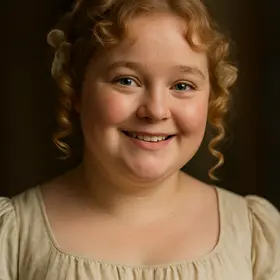 Harriet SmithMajor character
 Frank ChurchillMajor character
 Miss BatesMajor character
 Mrs WestonMajor character
 Isabella KnightleyMajor character
 Mr WoodhouseMajor character
 Jane FairfaxMajor character
All chapter summaries ›Characters ›
Read Emma illustrated
Every scene in these notes comes from the Book2Life reader, where the full public-domain text is illustrated as you read, with character portraits and narration. Free in your browser and on iPhone.
