Frankenstein Chapter 11 Summary
Awakening and Observation
The Creature awakens, learns senses and fire, finds shelter, and secretly watches a poor cottage family.
Summary
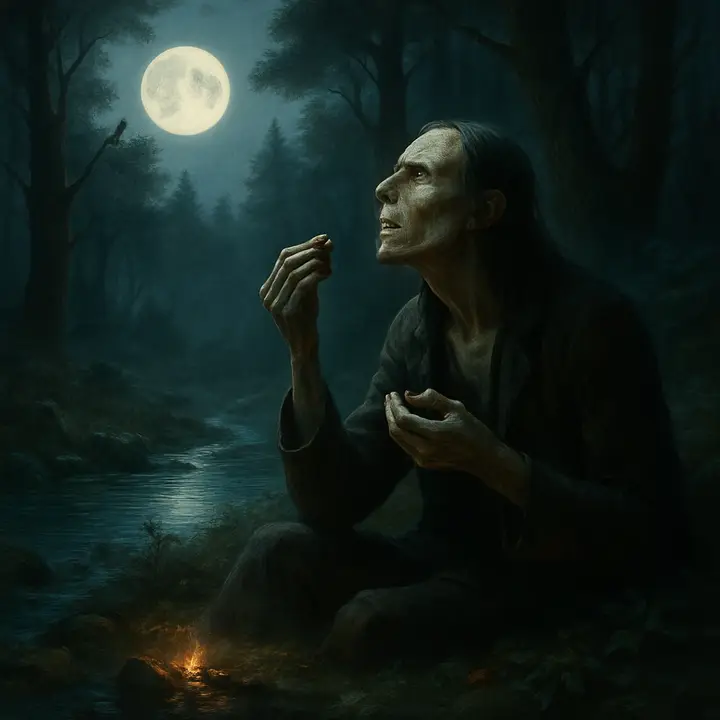
The Creature recalls the confused origins of his consciousness: a rush of simultaneous sensations—sight, sound, smell, touch—through which he slowly learns to distinguish separate perceptions. Emerging into sunlight near Ingolstadt, he wanders, experiences hunger and thirst, eats berries, and sleeps among the trees. Over a sequence of days and nights his senses sharpen: he recognizes the moon, birdsong, insects, plants, and different herbs; he experiments with noises and tries to imitate birds but cannot produce sweet sounds.
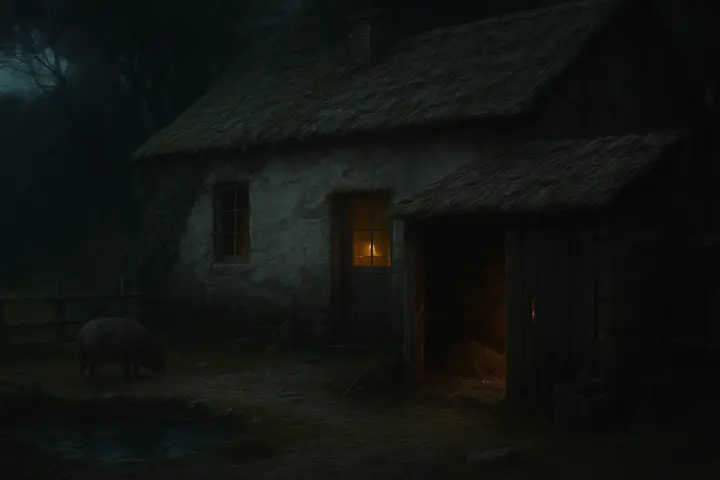
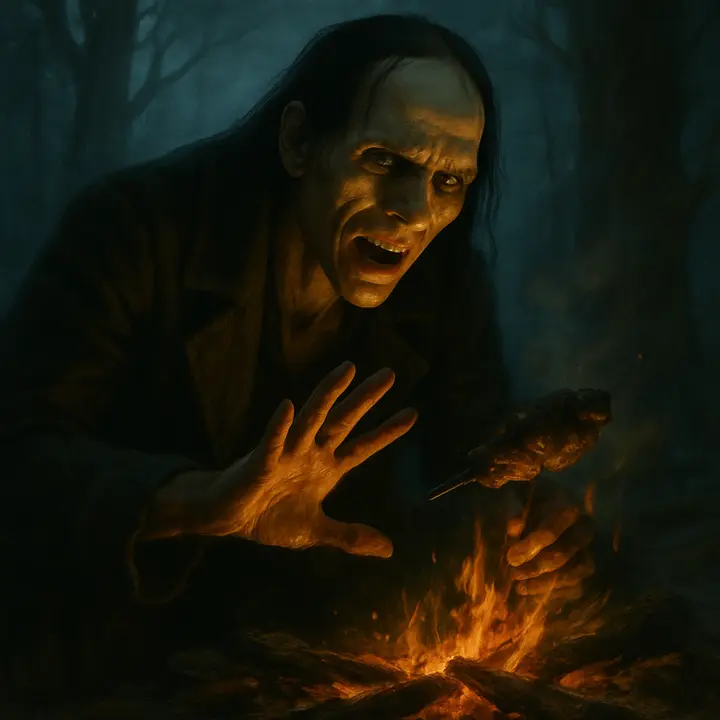
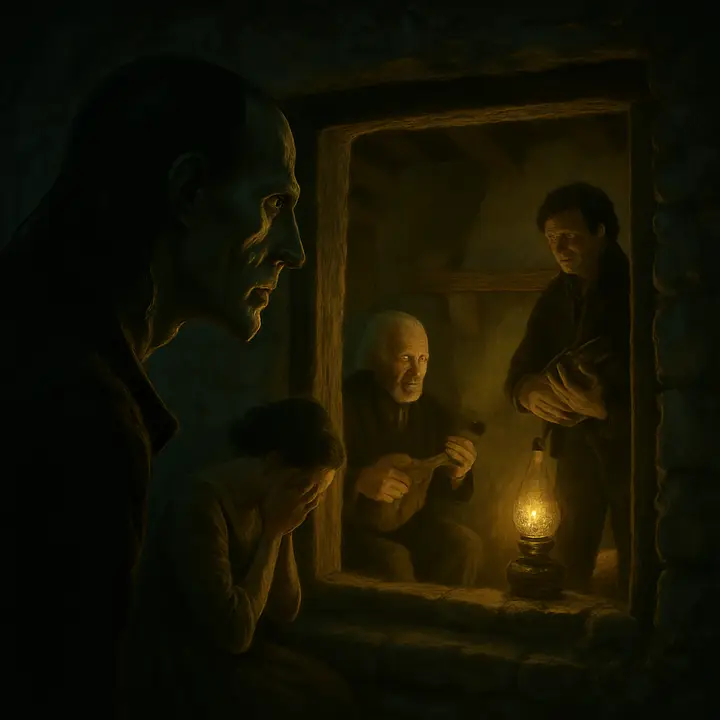
During his wanderings he discovers a fire left by beggars, learns warmth from it, burns his hand, and observes how wet wood dries and then burns; he refines methods to tend the fire and to roast food. Finding the forest resources insufficient, he moves into open country, suffers cold and hunger in snowy fields, and enters a shepherd’s hut where he steals and sleeps. After being chased from a village and attacked by its inhabitants, he takes refuge in a low wooden hovel adjoining a neat cottage. From a small chink he watches the cottage’s occupants: an old man, a young woman, and a young man. The Creature becomes enraptured by their gentle manners, the old man’s benign face and music, the woman’s kindness, and the young man’s melancholy care. He observes their daily labors, meals, music, and evening routine, feeling intense, mixed emotions—pleasure and pain—at encountering human beauty and affection for the first time.
Key events
- Creature awakens in forest near Ingolstadt and struggles to separate sensations
- Learns about fire after finding embers left by beggars and experiments with cooking
- Leaves forest for open country; endures snow and cold; enters a shepherd’s hut
- Is attacked and driven from a village after inhabitants see him
- Secures refuge in a low hovel attached to a cottage and discovers the cottagers
- Secretly watches the old man, young woman, and young man, enchanted by their music and kindness
Chapter 11 in pictures

Analysis
This chapter functions as the Creature’s origin-in-miniature: a sensory education that frames him as a thinking, feeling being rather than a mere monster. The narrative shifts from raw physical impressions to nascent curiosity and observation, mapping a cognitive development similar to a child’s learning. Fire becomes a key symbol—both a source of comfort and injury—prefiguring the double-edged nature of knowledge and technology: it sustains life but can harm. The Creature’s discovery of music, domestic routine, and human affection establishes empathy and desire for companionship as central motives; simultaneously, his experience of rejection and violence (the village attack) sets up the social conflict that will shape his actions.
Shelley uses close, first-person interiority to create sympathy for the Creature while also allowing irony: he admires human warmth yet is forced into concealment by their fear. The gradual accumulation of simple details—birdsong, bread, tools, a chinked window—builds verisimilitude and contrasts innocence with the harsher social reality outside the cottage. Foreshadowing arises in the Creature’s mixed emotions at the family’s tenderness and in the villagers’ aggression: the capacity for human goodness and cruelty coexist and will influence his development. Structurally, this chapter bridges the Creature’s random survival with a moral education learned by watching others, preparing him for language, social yearning, and later conflicts.
Important quotes
“I was a poor, helpless, miserable wretch; I knew, and could distinguish, nothing; but feeling pain invade me on all sides, I sat down and wept.”
NarratorThe Creature describes his early confusion and emotional response upon awakening and experiencing pain and deprivation.
“One was old, with silver hairs and a countenance beaming with benevolence and love; the younger was slight and graceful in his figure, and his features were moulded with the finest symmetry, yet his eyes and attitude expressed the utmost sadness and despondency.”
NarratorThe Creature observes the cottage family, contrasting the old man’s benign appearance with the young man’s melancholy and highlighting his admiration.
“I was enchanted by the appearance of the hut; here the snow and rain could not penetrate; the ground was dry; and it presented to me then as exquisite and divine a retreat as Pandæmonium appeared to the dæmons of hell after their sufferings in the lake of fire.”
NarratorThe Creature marvels at finding shelter, comparing the hut’s relief to a dramatic classical image to show his intense gratitude.
Characters in Chapter 11
- The Creature
- Old man
- young girl
- young man
- wandering beggars
All chapter summaries ›Characters ›
Read Frankenstein illustrated
Every scene in these notes comes from the Book2Life reader, where the full public-domain text is illustrated as you read, with character portraits and narration. Free in your browser and on iPhone.
