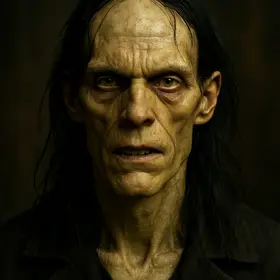
The Creature in Frankenstein
Major character
A self-taught, anguished artificial being who seeks companionship and justice from his creator and human society.
Who is The Creature?
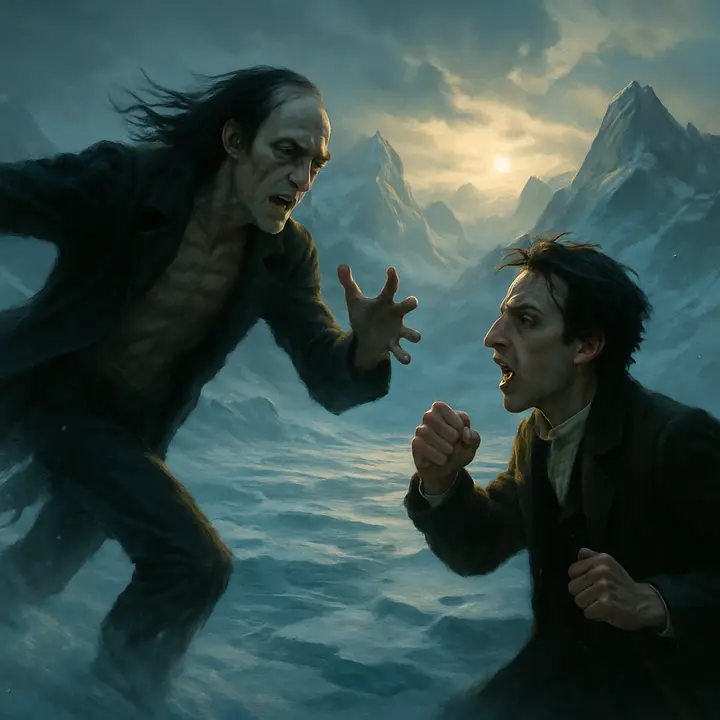
The Creature is the artificial being Victor Frankenstein assembles and animates. Left abandoned at 'birth,' he awakens to sensation and slowly teaches himself language, reading, and moral ideas by observing a poor family, the De Laceys. Longing for acceptance, he performs kind acts for the cottagers and educates himself on human history and virtue, only to be violently rejected when he reveals himself. Rebuffed and enraged, he alternates between appeals for compassion and calculated vengeance. He confronts Victor on Montanvert, tells his life story, and demands a female companion as restitution for his loneliness. When Victor initially consents but later destroys the unfinished mate, the Creature escalates his vengeance: he murders Victor’s younger brother William, indirectly causes Justine’s execution, kills Henry Clerval, and finally murders Elizabeth on her wedding night. After Victor’s pursuit across continents ends with Victor’s death aboard Walton’s ship, the Creature expresses remorse and vows to end his own life in the polar wastes.
In the book: The Creature is Victor Frankenstein’s artificial being, brought to life by scientific ambition and abandoned at birth, whose search for acceptance and companionship drives the novel’s central conflict. Intelligent, sensitive, and eloquent, he reflects the consequences of unchecked creation and the moral duties of a maker to his work. Through his encounters with humanity and his turbulent bond with Victor, the story explores isolation, prejudice, responsibility, and the struggle between compassion and vengeance without simple heroes or monsters.
Personality
- Intelligent
- He teaches himself speech and reads Paradise Lost, Plutarch, and Werter, which shape his moral and political thought (Chapters 13–15).
- Sensitive
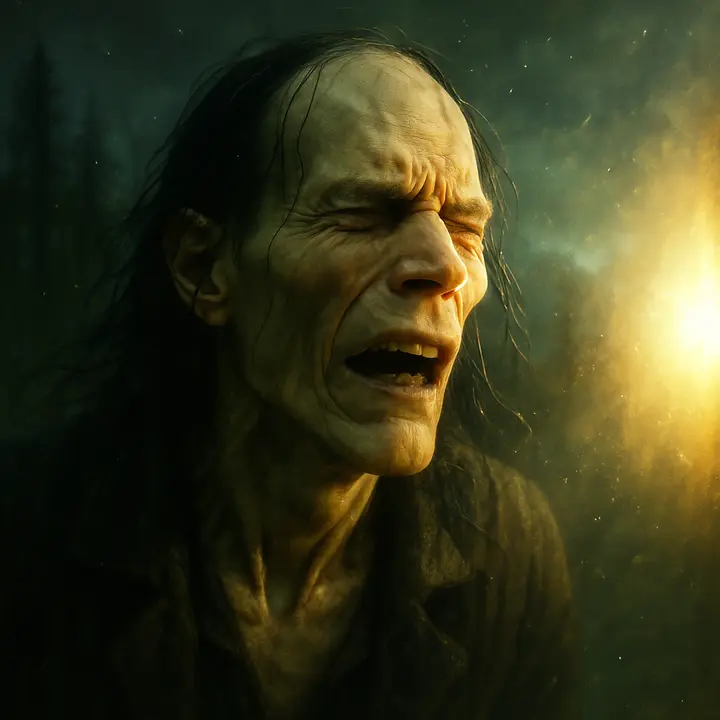
- He responds with deep anguish to the De Laceys’ virtues and to his own reflection, weeping when he recognizes his deformity (Chapters 12–15).
- Vengeful
- After the De Laceys flee and he learns of his creator’s rejection, he resolves on revenge and strangles William, later killing Clerval and Elizabeth (Chapters 16, 21, 23).
- Eloquent
- On the glacier he calmly recounts his suffering and frames a reasoned demand that Victor create a companion before threatening vengeance (Chapter 10, 17).
- Isolated
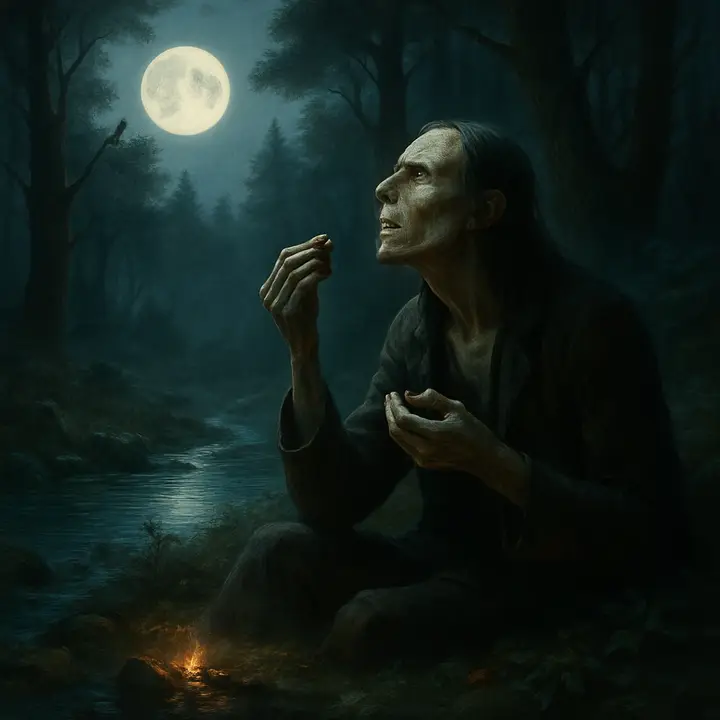
- He lives hidden in a hovel and travels at night, driven into solitude by universal hatred and by Victor’s abandonment (Chapters 11–16).
Character arc
The Creature's life begins in bewildered innocence after animation: he learns sensation, language, and moral ideas while watching the De Lacey family and cultivating hope for human fellowship. That hope hardens into despair when physical appearance and social prejudice provoke violent rejection—most painfully when the younger family members attack him after his appeal to the blind De Lacey (Chapter 15). Abandoned, he descends into deliberate cruelty: he burns the cottage, follows the route toward Geneva, and commits murders intended to wound Victor. Yet his actions are framed as responses to abandonment and a calculated demand for a companion as a remedy for loneliness (Chapters 16–17). When Victor first agrees to make a mate, the Creature briefly trusts his creator, but Victor's later destruction of the unfinished female (Chapter 20) triggers the Creature's final turn to merciless vengeance—murdering Elizabeth and taunting Victor across continents (Chapters 23–24). At the end, confronted with Victor's death, he shows remorse and declares an intention to end his own life, closing his arc from innocent learner to vengeful destroyer and, finally, repentant mourner (Chapter 24).
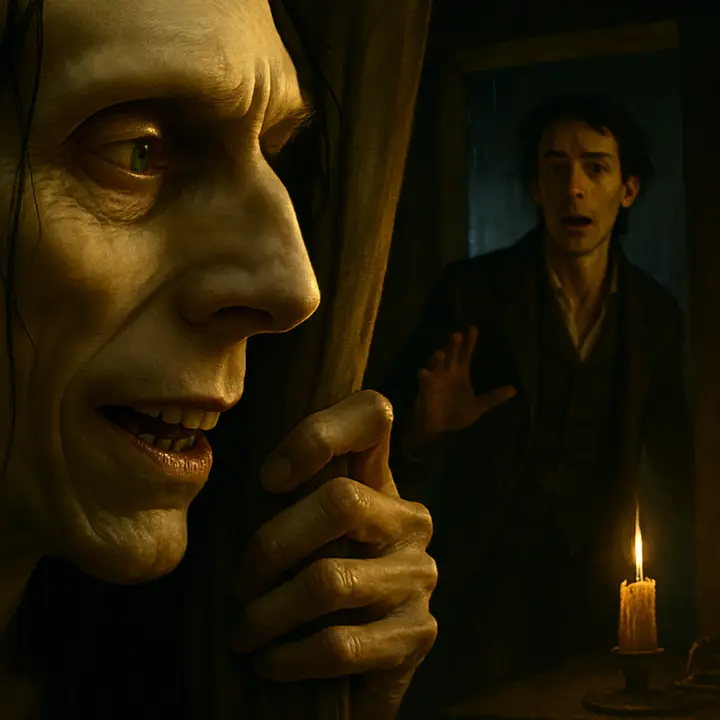
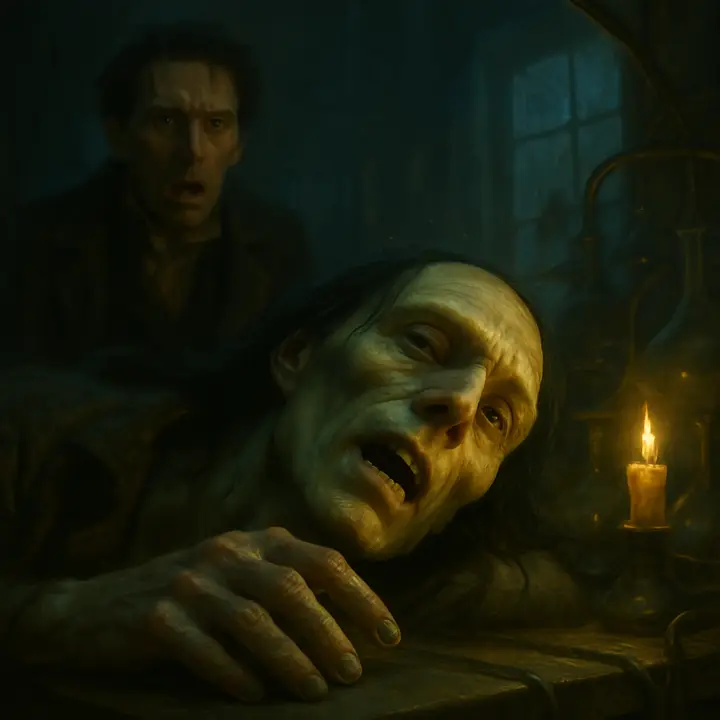
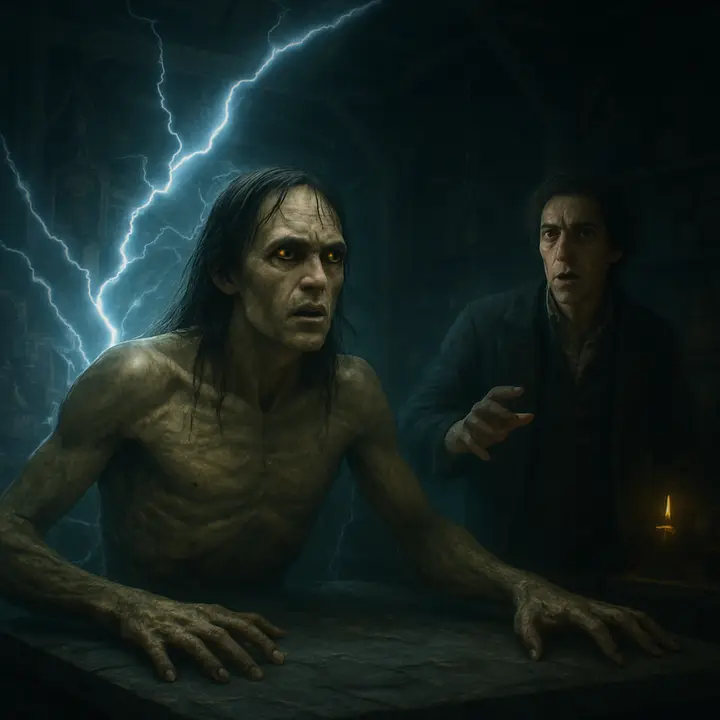
The Creature in pictures
Relationships
- Victor Frankenstein Creator and chief antagonist/object of demand; the Creature holds Victor morally culpable for his abandonment and demands a mate from him.
- De Lacey Blind patriarch whom the Creature approaches first for sympathy and who responds kindly before the younger members return (Chapter 15).
- Felix De Lacey Young man of the cottage whose violent rejection precipitates the Creature’s loss of hope and turn to vengeance (Chapter 15).
- Agatha De Lacey Felix’s sister whose frightened reaction helps drive the Creature from the cottage and ends his chance of acceptance (Chapter 15).
- Safie The foreign woman whose arrival accelerates the Creature's language education and whose presence deepens his awareness of what he lacks (Chapters 13–14).
- William Frankenstein Victim of the Creature’s first murder, whose death marks the beginning of the Creature’s campaign to hurt Victor through loss (Chapter 16).
Quotes by The Creature
““I expected this reception,” said the dæmon.”
Chapter 10The Creature immediately anticipates Victor's rage, signaling his repeated experience of hatred and setting up his plea for a hearing.
““Hear my tale; it is long and strange, and the temperature of this place is not fitting to your fine sensations; come to the hut upon the mountain.”
Chapter 10The Creature requests that Victor listen to his story in the hut, initiating the embedded narrative that will explain his perspective.
“She appeared affected by different feelings; wiping a few tears from her lovely eyes, she held out her hand to Felix, who kissed it rapturously and called her, as well as I could distinguish, his sweet Arabian.”
Chapter 13Describes Safie’s first interaction with Felix and the immediate affection she inspires in the household.
“Through this work I obtained a cursory knowledge of history and a view of the several empires at present existing in the world; it gave me an insight into the manners, governments, and religions of the different nations of the earth.”
Chapter 13Explains how reading Volney’s book expands the Creature’s understanding of human societies and sets up his moral reflections.
“Of what a strange nature is knowledge! It clings to the mind when it has once seized on it like a lichen on the rock.”
Chapter 13A key reflection on the irreversible and burdensome nature of the Creature’s newly acquired knowledge.
“I found on the ground a leathern portmanteau containing several articles of dress and some books.”
Chapter 15Opens the episode that brings the three formative books into the Creature's possession, triggering his intellectual development.
Why The Creature matters
The Creature embodies the novel’s central moral and philosophical questions: responsibility of creators for their creations, the social causes of monstrosity, and the human need for sympathy. His education-style narrative shows how knowledge and self-awareness can produce both moral insight and existential suffering when social bonds are absent. By alternating eloquent appeals and brutal revenge, he complicates simple categories of monster and victim, forcing the reader to face how neglect, prejudice, and broken duty produce violence and tragedy throughout the text.
Chapters with The Creature
More Frankenstein characters
 Victor FrankensteinProtagonist
 Elizabeth LavenzaMajor character
 Alphonse FrankensteinMajor character
 Henry ClervalMajor character
 William FrankensteinMinor character
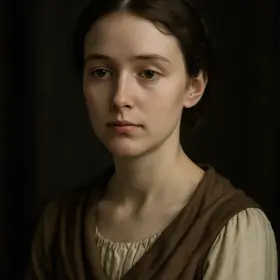 Justine MoritzMinor character
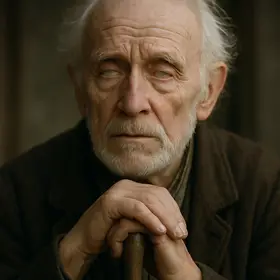 De LaceyMinor character
 Felix De LaceyMajor character
All chapter summaries ›Characters ›
Read Frankenstein illustrated
Every scene in these notes comes from the Book2Life reader, where the full public-domain text is illustrated as you read, with character portraits and narration. Free in your browser and on iPhone.
